Ask ten people about the scope of digital marketing in Mexico and you will get ten different answers, most of them either wildly optimistic or dismissive. The honest version sits in the middle, and it is more interesting than either extreme: Mexico has one of the fastest-growing digital advertising markets in Latin America, a genuine shortage of skilled practitioners, and a set of structural constraints that limit how far that opportunity actually extends.
This guide walks through what the numbers actually say — market size, adoption, e-commerce demand, salaries, hiring demand, and the specific skills that get people hired — and separates that from the recruitment-brochure version of the story.
The Short Answer
Digital marketing in Mexico is a growing, under-supplied field with real career and business opportunity, concentrated heavily in a handful of cities and a handful of sectors. The market is expanding at roughly double-digit annual rates, adoption is close to saturation among the population that can afford to buy online, and demand for people who can actually run campaigns outpaces the supply of people trained to do it.
The constraint is not demand. It is that a large share of that demand sits with a relatively small number of large advertisers and agencies, and that pay scales — while strong relative to local cost of living — remain well below what equivalent roles earn in the United States or Western Europe.
Mexico's Digital Advertising Market in Numbers
Mexico's digital ad spend is valued at roughly $13.1 billion in 2026, and is projected to reach about $18.3 billion by 2029 — an annual growth rate of around 11.6%. For context, that follows a period of roughly 9.2% annual growth between 2020 and 2025, meaning the market is not just growing but accelerating.
Two details matter more than the headline figure. First, video is now the dominant format, accounting for roughly 39% of digital ad revenue — which tells you where budgets and therefore roles are concentrated. Second, Google alone controls more than a third of Mexico's digital ad market, according to market analysis of Mexico's digital advertising sector, which means platform-specific expertise on a small number of channels carries disproportionate career value.
Mexico represents about 2.3% of the global digital advertising market. That sounds small, and it is — but it also makes Mexico the second-largest digital ad market in Latin America, and the growth rate is meaningfully higher than in mature Western markets that are largely saturated.
Internet and Social Media Penetration
The audience side of the equation is already close to built out. Mexico has roughly 110 million internet users, or about 83.5% of the population — a figure that leaves real room for growth but no longer describes an emerging market.
Social media adoption is similarly deep: around 99 million social media identities, close to 75% of the population. YouTube reaches roughly 85 million users, about 77% of the country's internet audience. TikTok's advertising reach grew 22% in a single year, the fastest of any major platform, according to DataReportal's Digital 2026 Mexico report.
The strategic implication is that Mexico is a mobile-first, video-first, social-first market to a degree that many Western marketers underestimate. Campaign approaches built around desktop search behavior and long-form written content translate poorly. That mismatch is itself part of the opportunity — practitioners who understand the local consumption pattern are genuinely more valuable than those importing a template from elsewhere.
E-Commerce Is the Engine Behind the Demand
Digital marketing demand does not grow because marketers want it to. It grows because businesses start selling online and need someone to bring them buyers. In Mexico that shift is well underway.
The e-commerce market reached roughly $54.4 billion in 2025 and is projected to reach about $175.8 billion by 2034 — a compound annual growth rate near 13.9%, per IMARC Group's analysis of the Mexican e-commerce market. Roughly 77 million Mexicans made an online purchase during 2025.
That trajectory is what converts abstract "digital growth" into actual job postings. Every retailer that moves online needs paid media, analytics, content, and increasingly retention marketing. The e-commerce curve is a fairly reliable leading indicator for how many marketing roles exist two or three years out.
Where the Jobs Actually Are
Hiring is concentrated. Mexico City accounts for the largest share of digital marketing roles by a wide margin, followed by Monterrey and Guadalajara. Guadalajara in particular has developed a genuine technology cluster, which pulls performance marketing and product-adjacent growth roles along with it.
Outside those three metros, in-house digital marketing roles thin out quickly. This matters for anyone assessing the field realistically: the national-level statistics describe an opportunity that is, in practice, geographically concentrated — unless the role is remote.
Job listing volumes in the thousands nationally, with roughly 15% annual growth in postings, indicate a market expanding faster than the general economy. Demand skews toward performance and analytics roles rather than traditional brand or communications positions.
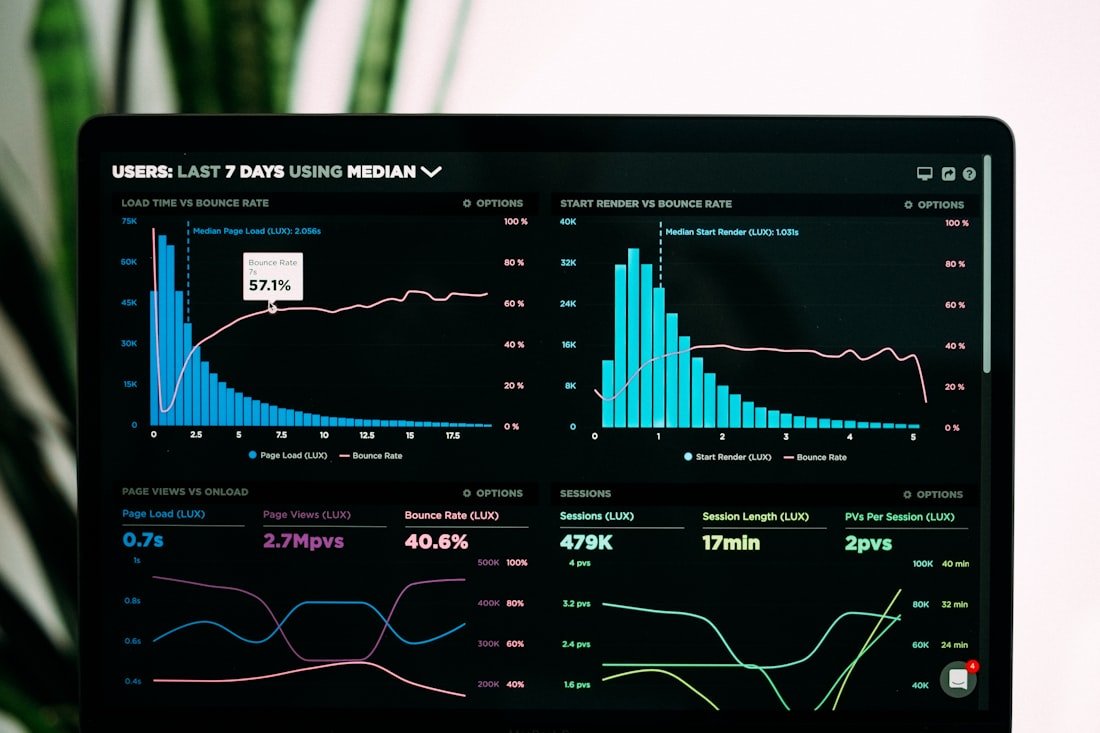
Analytics fluency is the clearest dividing line in Mexico's hiring market — roles that require reading and acting on data pay materially better than roles that only produce content.
What Digital Marketers Actually Earn
Salary is where expectations most often need adjusting. Typical ranges break down roughly as follows:
- Junior / entry level: approximately $23,000–$30,000 annually in USD-equivalent terms
- Mid-level specialist: roughly $26,000–$38,000, depending on specialisation
- Manager level: around $50,000
- Senior / strategist: approximately $46,000–$69,000
Two caveats are essential. First, these figures vary substantially by source and by whether the employer is a local company, a multinational, or a foreign client hiring remotely — the gap between those three can exceed the gap between junior and senior within a single category. Second, relative to Mexican cost of living, mid and senior salaries represent solidly professional incomes, even though they sit well below equivalent US figures.
The practical takeaway: the ceiling for a digital marketer working exclusively for domestic Mexican employers is real and reachable within a few years. The higher ceilings come from serving foreign clients.
The Skills Gap That Creates the Opportunity
The most consistent theme across hiring data is that demand is not evenly distributed across skills. Employers are looking for a fairly specific cluster:
- Analytics and measurement — reading data, attributing results, and adjusting spend accordingly
- Paid media — particularly Google and Meta, given platform concentration
- Marketing automation and lifecycle/retention marketing
- Personalisation and segmentation
- AI-assisted workflows — increasingly listed, still rarely found
- Video-first content production, matching where audience attention actually sits
What is oversupplied, by contrast, is generalist social media management — the skill most commonly taught in short courses and therefore the one with the most competition and the weakest pay. The gap between "can run a social account" and "can prove which spend produced revenue" is where most of the salary difference lives.
Bilingual capability is a genuine multiplier. Spanish-English fluency opens both multinational in-house roles and direct foreign client work, and the pay differential is large enough that it often matters more than an additional year of experience.
Nearshoring and Remote Work
One of the most significant recent shifts is not domestic at all. Mexico's time zone alignment with the United States, combined with bilingual talent availability, has made it a substantial nearshoring destination — and marketing functions are increasingly included alongside engineering and customer support.
For an individual practitioner, this changes the maths considerably. A senior specialist serving US clients remotely can access pay bands well outside the domestic range, while retaining Mexican cost of living. This is the single largest driver of upside in the field, and it is also the reason that English fluency and demonstrable, portfolio-quality results matter disproportionately.
It cuts both ways, though: competing for foreign clients means competing against practitioners worldwide, not just locally. The bar for proof of results is higher.
Sectors Where Demand Is Strongest
Not every industry is hiring at the same rate. The concentrations worth knowing:
- Retail and e-commerce — the largest and most consistent source of roles, driven directly by the online sales curve
- Fintech and financial services — Mexico's fintech sector is among the most active in Latin America, and customer acquisition costs there justify serious marketing budgets
- Tourism and hospitality — a major export earner with genuine international campaign requirements
- Real estate — heavily lead-generation driven, particularly in Mexico City and resort markets
- Education — private institutions competing intensively for enrolment
- B2B and manufacturing — the slowest to adopt, and therefore where the least competition sits
That last one is worth dwelling on. B2B and industrial companies in Mexico are noticeably behind on digital, which means lower competition and often more receptive clients for anyone building an agency or freelance practice rather than seeking employment.
The Challenges Nobody Mentions
An honest assessment of scope has to include the friction.
Budget concentration. A disproportionate share of digital spend flows through a limited number of large advertisers and established agencies. Small and mid-sized businesses often still spend little, which constrains the mid-market that would otherwise support a wide base of practitioners.
Payment and trust infrastructure. Cash remains meaningful in Mexican commerce, and card penetration is lower than in the US. This suppresses e-commerce conversion rates and, by extension, the measurable ROI that justifies larger marketing budgets.
Digital divide. That 83.5% internet penetration is a national average. Rural and lower-income adoption lags considerably, which limits the addressable market for many campaigns more than headline figures suggest.
Credential noise. The proliferation of short digital marketing courses has produced a large pool of nominally qualified candidates with little practical experience, which makes it harder for genuinely capable entrants to signal that quickly.
Price sensitivity. Domestic clients are frequently more price-sensitive than foreign ones, which compresses agency and freelance rates at the lower end of the market.
The Scope of Digital Marketing in Mexico Through 2030
Projecting forward from the available data, several things look reasonably firm. Ad spend continues compounding at double digits through at least 2029. E-commerce roughly triples by the mid-2030s. Video and short-form content extend their share of both spend and attention.
Less certain, and more consequential: how quickly AI-assisted tooling compresses demand for execution-level roles. The pattern already visible elsewhere is that routine production work — basic copy, basic creative, basic reporting — becomes cheaper and more automated, while strategic, analytical, and client-facing work becomes more valuable. Mexico is unlikely to be exempt from that.
The reasonable conclusion is that the scope is genuinely expanding, but shifting in composition. More opportunity at the strategic and analytical end, less at the pure-execution end, and an increasing share of the best-paid work coming from outside Mexico's borders.
How to Enter the Field Realistically
For anyone assessing this as a career, the sequence that actually works is fairly consistent:
- Specialize rather than generalise. Pick paid media, analytics, SEO, or lifecycle marketing and go deep. Generalists compete on price; specialists compete on results.
- Build demonstrable results, not certificates. One documented campaign with real numbers outweighs several course completions.
- Learn measurement properly. Analytics fluency is the most reliable salary differentiator in the data.
- Develop English to working fluency if foreign client work is the goal — which, given the pay differential, it usually should be.
- Target underserved sectors like B2B and industrial if building independently, rather than competing in saturated consumer niches.
For businesses rather than individuals, the equivalent conclusion is that Mexico's market rewards operators who understand its specific consumption patterns rather than importing playbooks wholesale. If you are evaluating who to work with, our breakdown of the best digital marketing agencies in Mexico covers what the established players actually specialize in, and our keyword research work is usually the right first step for understanding what Mexican audiences are actually searching for in their own language. If you would rather talk it through directly, get in touch.
Is digital marketing a good career in Mexico?
Yes, with caveats. Demand outpaces supply for skilled practitioners, job postings are growing around 15% annually, and mid-to-senior salaries are strong relative to local cost of living. The main limitations are geographic concentration in a few cities and pay ceilings that sit below US equivalents unless you serve foreign clients.
How much do digital marketers earn in Mexico?
Entry-level roles typically fall in the $23,000–$30,000 range annually in USD-equivalent terms, mid-level specialists around $26,000–$38,000, managers near $50,000, and senior strategists roughly $46,000–$69,000. Multinational employers and foreign clients pay materially more than domestic small businesses.
How big is Mexico's digital advertising market?
Roughly $13.1 billion in 2026, projected to reach about $18.3 billion by 2029 at an annual growth rate near 11.6%. That represents about 2.3% of the global digital advertising market and makes Mexico the second-largest digital ad market in Latin America.
Is digital marketing in demand in Mexico?
Yes. Job postings are growing at roughly 15% per year, faster than the overall economy, with demand concentrated in analytics, paid media, marketing automation, and video-first content roles rather than general social media management.
Which digital marketing skills are most in demand in Mexico?
Analytics and measurement, paid media on Google and Meta, marketing automation, personalisation, AI-assisted workflows, and video content production. Bilingual Spanish-English capability acts as a significant multiplier across all of them.
What is the future of digital marketing in Mexico?
Ad spend is projected to keep compounding at double digits through at least 2029 and e-commerce to roughly triple by the mid-2030s. The composition is shifting though — more value in strategic and analytical work, less in routine execution as AI tooling absorbs production tasks.
Where are most digital marketing jobs located in Mexico?
Mexico City has the largest concentration by a wide margin, followed by Monterrey and Guadalajara. Guadalajara's technology cluster in particular attracts performance marketing and growth roles. Outside these three metros, in-house roles thin out considerably.
Can I work remotely for foreign clients from Mexico?
Yes, and this is the single largest source of upside in the field. Time zone alignment with the United States plus bilingual talent has made Mexico a significant nearshoring destination, allowing practitioners to access higher pay bands while retaining local cost of living.
Which industries hire the most digital marketers in Mexico?
Retail and e-commerce lead by volume, followed by fintech, tourism and hospitality, real estate, and private education. B2B and manufacturing lag on adoption, which makes them lower-competition targets for freelancers and agencies.
Do I need a marketing degree to work in digital marketing in Mexico?
Generally no. Employers weight demonstrable campaign results and analytics capability more heavily than formal credentials. The proliferation of short courses has actually made certificates a weak differentiator — a documented portfolio matters considerably more.
What are the biggest obstacles to digital marketing growth in Mexico?
Budget concentration among large advertisers, lower card penetration and continued reliance on cash which suppresses e-commerce conversion, a rural and lower-income digital divide behind the national penetration average, and price sensitivity among domestic clients.
How is Mexico's digital market different from other Spanish-language markets?
It is more mobile-first, video-first, and social-first than many marketers expect, with YouTube reaching about 77% of the internet audience and TikTok growing fastest. Campaign approaches built around desktop search and long-form written content translate poorly compared with markets like Spain.