Search engine marketing in Seattle is a different game than it is in most mid-sized cities. With roughly 95,306 businesses and 3.6 million people across the metro area, Seattle businesses aren't just competing with the shop down the street for a Google Ads click — they're bidding in the same auction as national tech companies, established law firms, and well-funded agencies, all fighting for the same handful of top ad positions. Getting search engine marketing right here means understanding that competitive reality, not applying a generic small-business playbook.
This guide covers what search engine marketing in Seattle actually involves in 2026 — the real cost ranges by industry, the strategy components that separate a profitable campaign from a wasted budget, and how SEM fits alongside SEO rather than replacing it.
What Search Engine Marketing in Seattle Actually Means
Search engine marketing (SEM) is the umbrella term for gaining visibility on search engine results pages — it includes both paid search advertising (PPC, primarily through Google Ads) and organic search engine optimization (SEO). A lot of confusion in this space comes from people using "SEM" and "PPC" interchangeably, when PPC is really just one half of SEM's full toolkit.
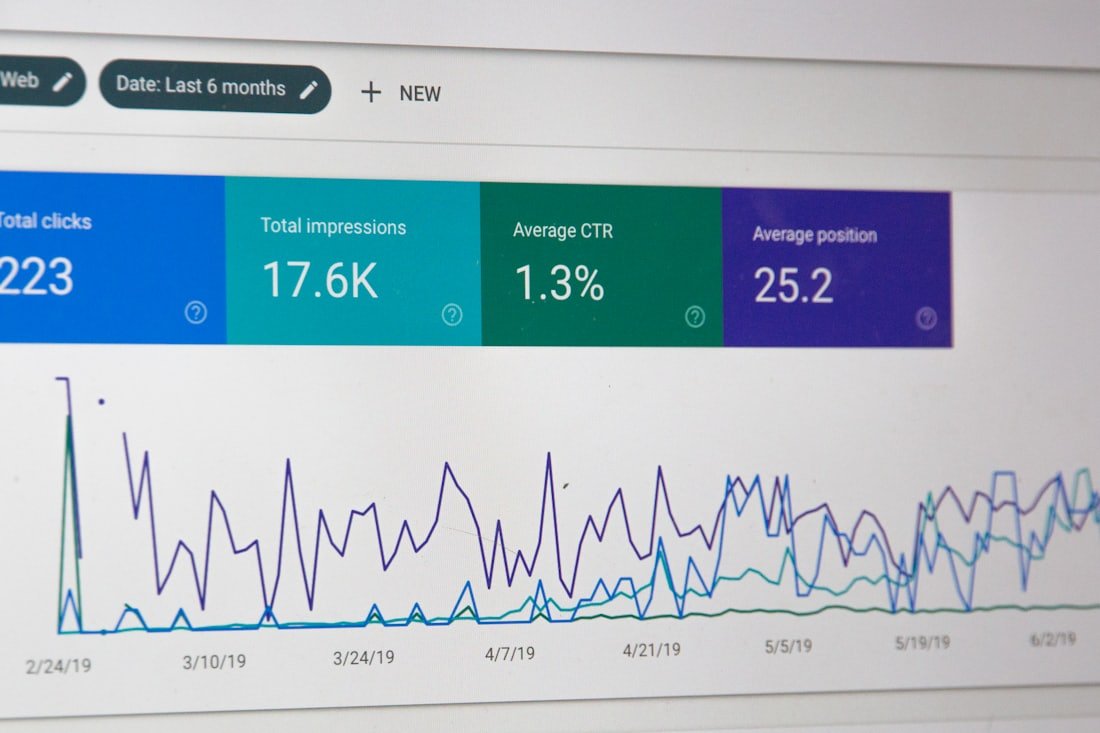
The performance difference between the two halves is well documented: organic search drives roughly 53% of all web traffic, while paid search drives about 27%. SEO also converts at a noticeably higher rate — around 2.4%, compared to 1.3% for PPC — but PPC has one advantage organic search can't match: speed. A new Seattle business can be showing up at the top of search results within a day of launching a campaign, while meaningful organic rankings typically take months to build.
It's worth being precise about this distinction because a lot of Seattle businesses budget for "SEM" thinking it means one thing when their agency delivers another. A campaign labeled as SEM should include a clear plan for both the paid and organic side, even if the immediate spend is concentrated on PPC. If a proposal only ever discusses ad spend and bidding strategy without mentioning how it connects to the site's organic content and rankings, that's usually a sign the "SEM" label is being used loosely to mean PPC alone.
Why Seattle Is a Uniquely Competitive SEM Market
The Seattle Metropolitan Chamber of Commerce represents more than 2,500 local companies and organizations, making it one of the largest and most diverse business associations in the region — a signal of just how dense and active the local business community actually is. That density shows up directly in the ad auction: tech companies, agencies, e-commerce brands, law firms, and contractors are all bidding on overlapping keywords, which drives cost-per-click rates well above the national average in several industries.
Legal services are the clearest example. Attorneys and legal services carry the highest average cost per click of any industry nationally, and in the Seattle and King County market specifically, personal injury keywords commonly run $200 to $400 or more per click, while family law and criminal defense keywords typically fall in the $50 to $150 range. Across most industries, Seattle businesses see click costs in the $15 to $40 range and higher, with typical monthly budgets landing between $500 and $5,000 for smaller campaigns and $5,000 to $10,000 or more for competitive industries like legal or home services.
The practical takeaway: a campaign built without real keyword research and tight targeting doesn't just underperform in a market like this — it burns budget fast, since every wasted click in a $200-per-click legal auction costs meaningfully more than the same mistake would in a smaller city.
Seattle's specific mix of industries adds another wrinkle: a search for a broad term can pull in unrelated bidders from adjacent categories, since agencies, SaaS companies, and consultants often chase overlapping business-services keywords regardless of their actual specialty. That means the auction for a term like "marketing consultant Seattle" isn't just competing against other marketing consultants — it's competing against generalist agencies, freelancer platforms, and even loosely related software tools all bidding on the same broad phrase. Tight, specific keyword targeting is less optional here than it would be in a smaller or less saturated market.
The Core Components of an Effective Seattle SEM Strategy
- Precise keyword research — targeting commercial-intent terms specific to how Seattle and King County searchers actually phrase what they need, not just broad national keywords with Seattle appended
- Tight campaign structure — organizing ad groups around specific services rather than one broad campaign, so each ad and landing page matches search intent closely
- Quality Score optimization — Google's own 1-10 rating of ad relevance, expected click-through rate, and landing page experience; a higher score can cut costs by up to 50% compared to a lower-scoring competitor bidding on the same keyword
- Dedicated landing pages — sending paid traffic to a page built around the exact service and location searched for, not a generic homepage
- Remarketing campaigns — re-engaging visitors who didn't convert on the first visit, which is typically far cheaper per click than fresh top-of-funnel bidding
Quality Score: The Most Underused Lever in Seattle SEM
Given how expensive clicks already are across most Seattle industries, Quality Score is one of the few levers that directly reduces cost rather than just improving performance. Google calculates it from three factors: expected click-through rate, ad relevance to the search term, and the experience of the landing page the ad points to. A campaign with a strong Quality Score can end up paying meaningfully less per click than a competitor with a weaker score bidding on the exact same keyword — which matters enormously in a market where legal and competitive-industry clicks can run into the hundreds of dollars.
In practice, this means writing ad copy that closely matches the specific keyword (not a generic version reused across dozens of ad groups), and making sure the landing page actually delivers on what the ad promised — the same service, the same location, a clear next step — rather than dropping a paid click onto a slow, generic homepage.
Page load speed is a quieter but still meaningful part of the landing page side of Quality Score. A slow-loading page doesn't just frustrate visitors who came in through an expensive click — Google's assessment of landing page experience factors in load performance and mobile usability, meaning a technically weak page can drag down Quality Score even when the ad copy and keyword match are otherwise well executed. For a Seattle campaign already paying a premium per click, a slow landing page is effectively paying twice: once for the click, and again through a worse Quality Score on every future auction.
SEM Costs in Seattle: What to Actually Expect
Realistic monthly SEM budgets in Seattle break down roughly like this: most small businesses spend between $1,500 and $5,000 per month on Google Ads, while businesses in highly competitive verticals like legal services or home services often need $5,000 to $10,000 or more to compete effectively for the terms that actually drive business. Within that spend, per-click costs vary enormously by industry — legal keywords alone can range from $50 for lower-competition practice areas up to $500 or more for high-value terms like personal injury.
The top three ad positions on a results page capture 46% of all clicks, which means a campaign that's consistently landing in positions four or five is spending real money for a small fraction of the available traffic. In a market as competitive as Seattle, that gap between "top three" and "everyone else" is often the difference between a campaign that pays for itself and one that quietly drains budget every month.
Budget allocation across the month matters as much as the total spend figure. A campaign that burns through its entire monthly budget in the first ten days, then goes dark for the rest of the month, is losing consistent visibility exactly when competitors without that constraint are still bidding. Pacing a budget evenly, or concentrating it deliberately around known high-intent periods (business hours for B2B services, evenings and weekends for many consumer services), tends to outperform a flat, unmanaged daily spend in a market where auction competition itself shifts throughout the day.
SEM vs. SEO: Why Seattle Businesses Usually Need Both
Because organic search drives roughly twice the traffic share of paid search and converts at a notably higher rate, it's tempting to ask whether SEM is even necessary if on-page SEO is already handled. In practice, the two work best together rather than as substitutes. SEO builds durable, compounding visibility that keeps paying off long after the work is done, but it takes months to show up in rankings. SEM — specifically PPC — fills that gap immediately, and it's also useful for testing which keywords and messaging actually convert before investing further in organic content built around the same terms.
For a new Seattle business or a new service line, running paid search alongside off-page SEO work is often the fastest way to get real market feedback: paid campaigns tell you within days which offers and keywords convert, and that data can then directly inform which pages and topics are worth the longer organic investment. We've seen the same paid-plus-organic pairing pay off in other competitive markets too — see our breakdown of search engine optimization in Moses Lake for how the same principle plays out in a smaller but similarly dense local market.
There's also a defensive reason to run both. A business that ranks well organically for its core keywords but skips paid search entirely is still ceding the top of the results page to a competitor's ad, since paid results appear above organic listings regardless of how strong the organic ranking is. Even a modest PPC budget aimed at a business's own branded and highest-value terms can prevent a competitor from effectively sitting on top of a search result the business has otherwise earned through months of SEO work.
How to Measure Whether Your SEM Campaign Is Actually Working
The headline metrics — impressions, clicks, average CTR — are useful for diagnosing problems, but they aren't the numbers that determine whether a campaign is profitable. Average CTR for paid search ads sits around 3.17% nationally, so a Seattle campaign running well below that is usually a sign of weak ad relevance or poor keyword targeting rather than a market problem. The metric that actually matters is cost per acquisition measured against the real value of a converted lead or sale — a $150 cost-per-click keyword can still be profitable if it reliably produces a client worth thousands of dollars, while a $15 keyword can be a loss if it never converts.
Tracking needs to go past the click and into what happens after — form submissions, phone calls, and, ideally, which of those actually became paying customers. Without that full picture, it's easy to keep funding a campaign that looks fine on the ad platform's dashboard but isn't actually generating profitable business.
Call tracking specifically deserves more attention than it typically gets from Seattle businesses running service-based campaigns. A phone call driven by a paid ad often carries more commercial intent than a form fill, but without a dedicated tracking number tied to the campaign, that call gets attributed to nothing — making a genuinely high-performing keyword look like dead weight in the ad platform's own reporting. Setting up call tracking before launching a campaign, not after months of unclear results, avoids drawing the wrong conclusions from incomplete data.
Choosing an SEM Partner in a Market This Competitive
Given how quickly wasted spend adds up in Seattle's ad auctions, the difference between a mediocre SEM setup and a well-run one is measured in real dollars every single month, not just in vague performance metrics. A capable partner should be able to explain, in specific terms, how they structure campaigns around Quality Score, how landing pages are matched to ad groups, and how remarketing fits into the overall budget — not just report clicks and impressions at the end of the month. It's also worth asking how a partner adjusts strategy when a keyword's cost per click rises sharply mid-month, since Seattle's auction pricing can shift quickly as competitors enter or increase their own bids — a static, set-and-forget campaign tends to lose efficiency fast in a market this active.
Ask specifically how a prospective partner handles the gap between ad platform metrics and actual business outcomes — a good answer will mention call tracking, conversion tracking setup, and how often campaigns get reviewed against real cost-per-acquisition numbers rather than just clicks and impressions. If you're weighing whether to run SEM in-house or bring in outside help, get in touch and we'll walk through what a realistic budget and strategy looks like for your specific industry and corner of the Seattle market.
What is search engine marketing?
Search engine marketing (SEM) is the umbrella term for gaining visibility on search results pages through both paid advertising (PPC, mainly Google Ads) and organic search engine optimization (SEO).
Is SEM the same thing as PPC?
No. PPC is one component of SEM — the paid advertising half. SEM also includes organic SEO, so "SEM" is broader than "PPC" even though the terms are often used interchangeably.
How much does search engine marketing cost in Seattle?
Most small businesses spend $1,500 to $5,000 per month on Google Ads in Seattle, while competitive industries like legal services or home services often need $5,000 to $10,000 or more. Per-click costs vary widely, from around $15-$40 in many industries up to $200-$500+ for high-value legal keywords.
Which Seattle industries benefit most from SEM?
Any industry with clear commercial search intent benefits, but legal services, home services, and healthcare tend to see the strongest returns given how directly a single converted click can translate into a high-value client.
How is SEM different from SEO?
SEO focuses purely on organic (unpaid) rankings and takes months to build but keeps paying off over time. SEM is the broader category that includes SEO plus paid search advertising, which can generate visibility immediately but stops the moment you stop paying.
How long does it take to see results from SEM?
Paid search campaigns can generate clicks and leads within days of launching. Meaningful optimization and cost efficiency typically take 4-8 weeks as Quality Score and targeting improve based on real performance data.
Do I need both SEO and SEM?
Most Seattle businesses benefit from both. SEM (particularly PPC) fills the gap while SEO rankings build, and paid campaign data can inform which keywords and offers are worth the longer-term organic investment.
What's a good click-through rate for a Seattle SEM campaign?
Average CTR for paid search ads nationally is around 3.17%. A Seattle campaign performing well below that typically signals weak ad relevance or imprecise keyword targeting rather than a market-specific problem.
What is Quality Score and why does it matter in Seattle?
Quality Score is Google's 1-10 rating of ad relevance, expected click-through rate, and landing page experience. A high Quality Score can reduce cost per click by up to 50% compared to a lower-scoring competitor — which matters enormously given how expensive Seattle's ad auctions already are.
Related Reading
- For organic search in a Seattle suburb, see our guide to Renton search engine optimization.
- For a Google Ads-focused example in another West Coast market, see our guide to Google Ads company in Roseville.


