Savannah search engine optimization is unusual because the city runs two almost unrelated economies, and a strategy built for one is close to useless for the other.
One is tourism and hospitality, where most of your customers are searching from another state before they arrive. The other is industry — the fourth-busiest seaport in the United States, and now Hyundai Motor Group's Metaplant America at Ellabell, which will employ more than 8,500 people on the megasite alone once fully operational, with suppliers following it in.
Metro unemployment sits around 2.9%. This is a tight, fast-changing market, and most local sites are still optimized for the version of it that existed in 2022.

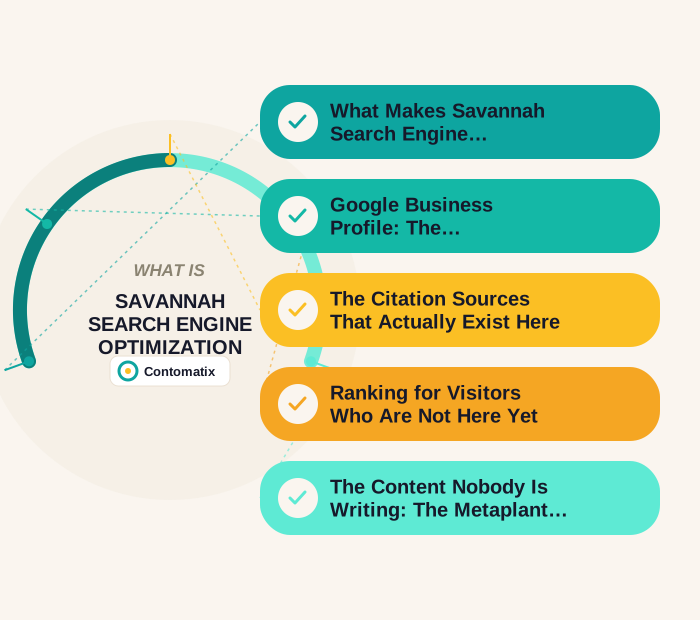
What Makes Savannah Search Engine Optimization Different
Half your customers are not here yet. For hotels, restaurants, tours and retail, the decisive search happens days or weeks before arrival, from a different state. "Near me" logic barely applies. What matters is ranking for planning-stage queries and being credible to someone who has never set foot in the city.
The other half never leaves the county. For dentists, HVAC firms, mechanics and accountants, this is an ordinary local market where proximity and reviews decide everything. The same city, two completely different playbooks.
The Hyundai effect is regional, not city-center. The Metaplant sits about 20 miles outside the historic district, in Bryan County. The demand it creates — housing, trades, food, vehicle service, industrial supply — lands in Pooler, Richmond Hill, Ellabell and Bloomingdale far more than downtown. Businesses optimizing for "Savannah" alone are aiming at the wrong map.
Seasonality is real. St. Patrick's Day, spring, and the shoulder seasons produce very different search volumes. Content aimed at spring visitors needs to be live in January, not March.
Google Business Profile: The Field-by-Field Setup
For local-facing businesses the map pack drives more calls than the website. The fields carry very different weight:
- Primary category — outweighs everything else combined. Pick the most specific match to your core service.
- Service areas — list Pooler, Garden City, Richmond Hill, Rincon and Tybee Island alongside the city if you genuinely serve them. This is where the growth is.
- Services with descriptions — each entry has its own text field, and most profiles leave them blank.
- Business description — 750 characters. Name the districts: Historic District, Victorian District, Starland, Midtown, Southside.
- Photos — for hospitality this is not optional. Visitors judge on images before they read anything.
- Special hours — set them for St. Patrick's Day and the festival calendar. Nothing generates one-star reviews faster than an unexpected closure during a peak weekend.
Google's guidelines for representing your business are the authority on what belongs in each field.
The Citation Sources That Actually Exist Here
- Savannah Area Chamber of Commerce — the most relevant general local citation, and the body most closely tied to the visitor economy.
- Visit Savannah — the destination marketing organization. For anything hospitality, food, tour or retail, this is worth more than a dozen general directories.
- Savannah Economic Development Authority (SEDA) — the relevant listing for industrial, logistics and B2B firms.
- Georgia Secretary of State registration — the legal entity name every other citation must match exactly.
- Chatham, Bryan or Effingham county records — use the county you are actually in. The Hyundai-driven growth spans all three.
Five accurate citations beat fifty automated ones.
Ranking for Visitors Who Are Not Here Yet
This is where most hospitality sites lose. Someone planning a trip searches "best time to visit Savannah", "where to stay near River Street", "is Tybee Island worth it" — research queries, not transactional ones.
The businesses that win those searches capture the visitor before the comparison stage. That means genuinely useful planning content: neighborhood guides, honest advice about parking and walkability, seasonal detail. Thin promotional pages do not rank for research queries, because they do not answer them.
The Content Nobody Is Writing: The Metaplant Corridor
Thousands of people are moving into the region for the plant and its supplier network, and very few local businesses have written anything aimed at them.
Useful pages: relocation content for people new to Bryan and Effingham counties, guides for trades and contractors working the site, and service pages that name Pooler, Richmond Hill and Ellabell explicitly. Those queries face very little competition right now, because the businesses best placed to answer them are still writing for the historic district.
The Port and Industrial B2B Layer
If you sell into logistics, freight, warehousing or automotive supply, local SEO is a small part of the job. Those buyers search on capability — capacity, certifications, transit times, compliance — and they are frequently not in Georgia at all.
That is a technical content program in industry vocabulary, running on the same domain as your local pages but doing an entirely different job.
Measuring Whether It's Working
- Profile calls and direction requests — the closest available proxy for revenue in local search.
- Search Console position, segmented — separate visitor-intent queries from local-intent ones. Averaging them together hides which side is working.
- Review velocity — steady beats bursty; bursts look manufactured and are sometimes filtered.
DIY vs. Hiring Help
A single-location business can handle the profile, the Chamber and Visit Savannah listings, name-address-phone consistency, and a review request built into how jobs close. That covers a real share of the benefit.
Paid help earns its place when you need sustained content — particularly the visitor-planning kind, which takes genuine writing effort. If you are shortlisting providers, our hand-verified list of Savannah SEO companies checked every website by hand, and our agency versus freelancer comparison covers which model fits which situation.
Is It Worth It for a Savannah Business?
Yes, and the timing is unusually good. A regional manufacturing boom is arriving alongside an established visitor economy, which means two distinct streams of customers with no local loyalties.
The businesses that decide which economy they serve — and write for it properly rather than producing generic pages for both — will take a disproportionate share of it.
A Practical First-90-Days Roadmap
For a business trying to decide where to start, sequencing matters more than doing everything at once. A reasonable order: in the first month, fix the Google Business Profile completely — category, service areas, business description naming the actual districts, and photos — and get the Chamber and Visit Savannah listings squared away with matching name-address-phone data. In the second month, build or fix the pages that answer the highest-intent questions your specific audience actually searches, whether that is visitor-planning content or transactional local pages. From the third month on, shift into a steady cadence: one or two pieces of genuinely useful content a month, tracked against the metrics that matter for your side of the business, rather than a burst of activity that stops once the initial list is done.
The mistake worth avoiding is treating months one through three as the whole project. The businesses that keep publishing and refreshing content on a schedule are the ones still visible a year later; the ones that do an initial push and stop tend to plateau and then quietly slide as competitors keep working.
Technical Foundations Worth Getting Right Before Content
Hospitality and tourism sites in particular tend to be photo-heavy, and image weight is one of the most common reasons a good-looking site loads slowly on mobile — which matters directly here, since a large share of visitor-planning searches happen on phones. Structured data matters too: LocalBusiness or Hotel/Restaurant schema, depending on the business type, with accurate hours and service details helps search engines represent the business correctly and can support richer results.
For businesses straddling county lines because of the Hyundai-driven growth, keeping name-address-phone data consistent across Chatham, Bryan, and Effingham county listings is a small detail that quietly affects the prominence signal Google uses to decide who to trust.
Common Technical Mistakes on Coastal Georgia Sites
- Duplicate or near-duplicate content between visitor-facing pages — several neighborhood or "things to do" pages that repeat the same paragraphs with minor changes dilute rather than reinforce each other.
- No schema markup at all, leaving search engines to guess at business type, hours, and service area rather than reading it directly.
- Uncompressed, oversized images on hospitality sites, which is the single most common cause of slow mobile load times in this industry.
- A contact or booking flow that is not mobile-first, even though the majority of visitor-planning traffic arrives on a phone.
What to Ask Before Hiring Help
Given the two-economy structure of this market, the most useful vetting question is which side a prospective provider actually understands. A few worth asking directly:
- Which side of the business are you actually built for — visitor-planning content or local transactional search? A provider strong in one is not automatically strong in the other, and a vague answer covering both usually means neither gets real depth.
- How would you handle the Metaplant corridor specifically if that growth is relevant to your business? A provider who has not considered Pooler, Richmond Hill, or Ellabell separately from downtown Savannah is working from an outdated picture of the market.
- What does your content actually look like for a seasonal business? Ask to see an example content calendar rather than a description of "seasonal strategy" in the abstract.
- Who owns the Google Business Profile, the Chamber listing, and the analytics access once the relationship ends? This should be unambiguous from the start.
A provider who answers these specifically, rather than falling back on general SEO language, is more likely to actually understand which of Savannah's two economies your business needs to win.
Realistic Timeline Expectations
Google Business Profile and citation fixes tend to show measurable movement within the first month or two. Visitor-planning content, because it competes for research-stage attention against established travel sites, typically takes longer to gain traction than transactional local content — often six months or more before it becomes a meaningful traffic source. Businesses new to this work should budget patience for the content side even while expecting faster wins from the profile and citation work.
Frequently Asked Questions
Should I optimize for tourists or locals?
Decide deliberately, because they need different content. Visitors search planning queries from out of state weeks ahead; residents search transactional local queries. Trying to serve both on one page usually serves neither.
Does the Hyundai Metaplant affect Savannah businesses?
Yes, though mostly outside the historic district. The site is about 20 miles away in Bryan County and will employ more than 8,500 people once fully operational, plus suppliers. The demand lands in Pooler, Richmond Hill, Ellabell and Bloomingdale.
How much does SEO cost in Savannah?
Local packages for a single-location business typically run a few hundred dollars a month. Hospitality businesses competing for visitor-planning searches need more content and usually sit in the low thousands.
What content works for out-of-state visitors?
Planning content — neighborhood guides, best time to visit, parking and walkability, seasonal advice. Research queries need genuine answers; promotional pages do not rank for them.
How long does SEO take to work here?
Google Business Profile fixes can show within weeks. Organic rankings usually take three to six months. For seasonal content, publish at least two months before the season you are targeting.
Should I list Tybee Island and Pooler as service areas?
If you genuinely serve them, yes. Businesses listing only the city name are invisible for a large share of searches in a metro where the growth is happening outside the core.
Is local SEO relevant for a port or logistics business?
Only partly. Those buyers search on capacity, certifications and transit times, often from outside Georgia. That needs capability-led technical pages rather than local optimization.
What should I fix first?
The Google Business Profile: correct primary category, service areas covering the surrounding communities, every service filled in, and special hours set for the festival calendar. Highest return for the least effort.
Related Reading
- For another Southeast market plan built around a seasonal economy, see our SEO marketing plan for Lakeland.
Contomatix works with businesses serving two audiences at once — visitor-intent content, local map pack work, and citations that stay consistent across county lines. Want a free audit of where your Savannah business stands right now?
Get a free audit →