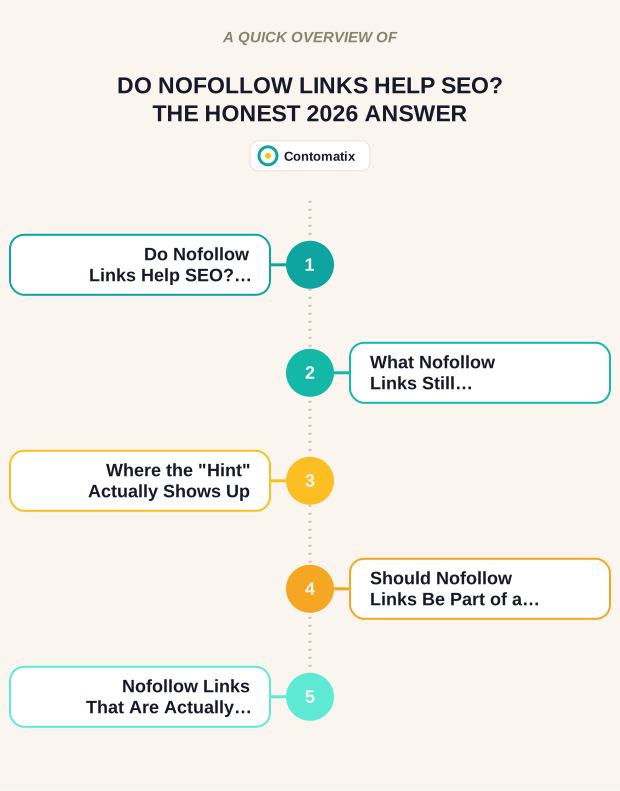
Do nofollow links help SEO? The short, honest answer: not for direct ranking power the way a dofollow link does, but dismissing them entirely is a mistake almost every link building guide still makes.
The confusion exists because the rules genuinely changed. Understanding what actually happened in 2019, and what it means for where you spend outreach time in 2026, matters more than picking a side in the yes/no debate.

Do Nofollow Links Help SEO? What Changed in 2019
Before September 2019, Google treated the rel="nofollow" attribute as a strict instruction: do not pass any ranking credit through this link, full stop. That year, Google reclassified nofollow as a hint rather than a directive, and introduced two related attributes — rel="sponsored" for paid links and rel="ugc" for user-generated content like blog comments and forum posts.
A hint means Google may, in some cases, choose to use the link as a ranking signal anyway, based on other context. It is not a promise that nofollow links now pass full value — it is an admission that the old absolute rule was too blunt an instrument for how the web actually links to things.
What Nofollow Links Still Reliably Do
Referral traffic. A nofollow link on a high-traffic site sends real visitors regardless of what it does for rankings. For a new business, that traffic can matter more than the SEO value of the link itself.
Brand visibility and recognition. Being mentioned and linked from a site your prospective customers already read builds familiarity, and familiarity influences whether someone clicks your listing later in an unrelated search.
A natural backlink profile. A link profile made up entirely of dofollow links from guest posts looks manufactured to anyone reviewing it — including, plausibly, Google's own systems. A mix of nofollow and dofollow links, arriving the way links arrive naturally on the open web, is what an organically earned profile actually looks like.
Indexing discovery. Google's crawlers can still follow nofollow links to discover new pages, even though the link itself may not pass ranking credit. A nofollow link from a well-crawled site can get a new page indexed faster than waiting for organic discovery.
Where the "Hint" Actually Shows Up
In practice, nofollow links contributing some ranking signal tend to show up in a specific pattern: links from genuinely authoritative, topically relevant sites, in editorial context rather than a comment section or a sitewide footer link. A nofollow mention in a New York Times article about your industry almost certainly carries more real-world weight than a dofollow link from an unmoderated blog comment, whatever the HTML attribute says.
This is the part most link building guides skip: the attribute is one input among many, not the whole story. Context and source authority still do most of the work.
Should Nofollow Links Be Part of a Link Building Strategy?
Yes, but not as the primary target. A link building campaign built entirely around chasing nofollow placements — social profiles, unmoderated forums, low-quality directories — produces very little of lasting value. One built around genuinely useful guest posting on relevant sites will naturally pick up a mix of both, because that is how real editorial linking works.
The practical rule: never refuse a placement solely because it is nofollow if the site itself is relevant and has real traffic. Do refuse a placement on an irrelevant, low-quality site regardless of which attribute it carries — the attribute was never the risk, the site quality was.
Nofollow Links That Are Actually Valuable
- Wikipedia citations — nofollow by default, but among the highest-authority, highest-traffic referral sources available, and a listed source there carries genuine credibility.
- Major news and industry publication mentions — most large publishers nofollow external links as policy, not as a judgment on the linked site.
- Reddit and industry forum threads — nofollow, but capable of sending meaningful, highly qualified referral traffic when the answer is genuinely useful.
- Social media profile links — nofollow everywhere, but they are where a portion of your prospects will verify you are real before clicking through.
How to Check Whether a Link Is Nofollow
Right-click the link and select "Inspect" in any browser, then look for rel="nofollow", rel="sponsored", or rel="ugc" in the anchor tag. Ahrefs, Semrush and most backlink checkers also flag this automatically in any backlink report, which is the faster route if you are auditing a full link profile rather than a single link.
Google's own documentation on qualifying outbound links is the primary source for exactly how each attribute is meant to be used.
The Mistake to Avoid
The most common error is filtering an entire outreach list down to "dofollow only" prospects before any research happens. That approach throws away Wikipedia, most major publishers, and most high-traffic forums — some of the best referral and credibility sources available — over an attribute that, per Google's own 2019 clarification, was never the strict block it used to be.
Evaluate the site first: relevance, real traffic, and editorial standards. Check the link attribute after, not before.
If you are building links across more than one language or market, the nofollow/dofollow question gets more complicated rather than less. Our guide to multilingual link building covers the additional evaluation criteria that come into play once hreflang, regional authority and translated anchor text enter the picture.
How to Audit an Existing Link Profile for Nofollow Balance
Most sites have never actually looked at the nofollow-to-dofollow ratio in their own backlink profile, which makes it a useful first step before planning any new outreach:
- Export the full backlink list from a backlink tool rather than relying on a summary dashboard number, since aggregate stats can hide which specific domains carry which attribute.
- Group links by source type — editorial mentions, guest posts, directories, forums, social profiles — rather than only by attribute, since the combination of source type and attribute tells a fuller story than either alone.
- Look for an unnaturally high dofollow percentage concentrated in guest posts and directory submissions specifically. That pattern, more than the ratio itself, is what tends to draw scrutiny, because it suggests the links were acquired for their attribute rather than earned through genuine editorial relevance.
- Check whether major, high-traffic mentions are being logged at all — a site that only tracks dofollow links in its reporting can end up with a badly skewed picture of its actual footprint and visibility, since some of the most valuable mentions carry no ranking credit at all.
Why Some Sites Nofollow Everything by Default
It's worth understanding this from the publisher's side, since it explains a lot of what shows up in a backlink audit. Large publishers, forums, and user-generated-content platforms frequently nofollow every outbound link as a blanket policy, regardless of the destination's quality — it's a spam-prevention measure applied site-wide rather than a judgment on any individual link. That means a nofollow link from a major outlet says nothing negative about the linked site; it's simply how that publisher's platform is configured for every external link it carries. Recognizing this distinction is what keeps a site owner from mistakenly avoiding some of the best possible placements out of a misunderstanding of what the attribute actually signals.
Building Outreach Pitches That Don't Lead With the Attribute
A pitch to an editor or webmaster that opens by negotiating link attribute terms reads as exactly what it is — an SEO request rather than a genuine content contribution — and tends to get rejected or ignored more often than a pitch focused on the value of the content itself. The more durable approach is pitching based on relevance and quality first: why this specific piece is useful to that specific audience. If the placement includes a link, whatever attribute the publisher applies by default is the right one to accept. Treating the attribute as a negotiating point signals the wrong priorities to exactly the editorial contacts worth building a long-term relationship with.
How Different Backlink Tools Report Nofollow Data
Not every backlink tool categorizes attributes identically, which matters if you're comparing reports across platforms or handing an audit off to someone else. Most modern tools now separate nofollow, sponsored, and UGC into distinct columns rather than lumping them all under one generic "nofollow" flag, reflecting Google's 2019 changes. Older exports or a tool that hasn't updated its schema may still show a single binary dofollow/nofollow split, which can understate how much of a nofollow link count is actually UGC comment spam versus genuine sponsored disclosure versus a large publisher's blanket outbound-link policy. When comparing two audits, check that both are using the same categorization before drawing conclusions from a shift in the ratio — an apparent change might just reflect a tool update rather than any real change in the link profile itself.
A Simple Framework for Evaluating Any Link Opportunity
Rather than starting with the attribute, a more useful evaluation order is: relevance first, traffic and authority second, attribute last. Ask whether the site's audience genuinely overlaps with your own customers or readers, whether the site has real, verifiable traffic rather than just a high metric score from a single tool, and only then check what attribute the link will carry. A relevant, well-trafficked site that nofollows by default is almost always a better use of outreach time than an irrelevant site offering a guaranteed dofollow link, because the referral value, the credibility value, and even the long-run indirect ranking value from a genuinely relevant nofollow placement tend to outperform a dofollow link that does nothing for brand recognition or qualified traffic.
Frequently Asked Questions
Do nofollow links help SEO rankings directly?
Not as directly as dofollow links, but Google has treated nofollow as a "hint" rather than a strict block since September 2019, meaning it can factor the link in depending on context.
Should I avoid nofollow link opportunities entirely?
No. A relevant, high-traffic nofollow link is usually worth more than an irrelevant dofollow link. Site quality and relevance matter more than the attribute alone.
What's the difference between nofollow, sponsored, and UGC links?
Sponsored is for paid placements, UGC is for user-generated content like comments and forum posts, and nofollow is the general-purpose version. All three are treated as hints, not directives, since 2019.
Do nofollow links still send referral traffic?
Yes. The nofollow attribute only affects how search engines treat the link for ranking purposes — it has no effect on whether a human visitor clicks it.
Is a Wikipedia link worth pursuing even though it's nofollow?
Generally yes. Wikipedia's authority and traffic make it valuable for credibility and referral purposes even without direct ranking credit.
How do I check if a backlink is nofollow?
Inspect the link's HTML for a rel attribute, or use a backlink tool like Ahrefs or Semrush, which flags nofollow, sponsored and UGC links automatically in any backlink report.
Does a natural link profile need nofollow links?
Yes. A profile made up entirely of dofollow guest post links looks manufactured. A natural mix of nofollow and dofollow links is what organic link acquisition actually looks like.
Can nofollow links help pages get indexed?
Yes. Search engine crawlers can still follow nofollow links to discover new pages, even though the link may not pass ranking credit in the way a dofollow link does.
Contomatix builds link profiles from genuinely relevant, high-traffic sites — not a chase for one attribute over another. Want a second opinion on your current backlink profile?
Get a free audit →

