Last updated: August 2026
A roofing company two towns over is pulling thirty calls a month from Google while your phone stays quiet — and in most cases the difference is not their website design, their reviews, or even their prices. It is their backlink profile. Link building for roofers is the least understood part of roofing SEO, and that is exactly why it works: most of your competitors are not doing it at all.
This guide walks through nine tactics that actually fit a roofing business — no theory borrowed from tech blogs, no spam shortcuts that get sites penalised. Just the links that move local rankings and turn searches into booked jobs.
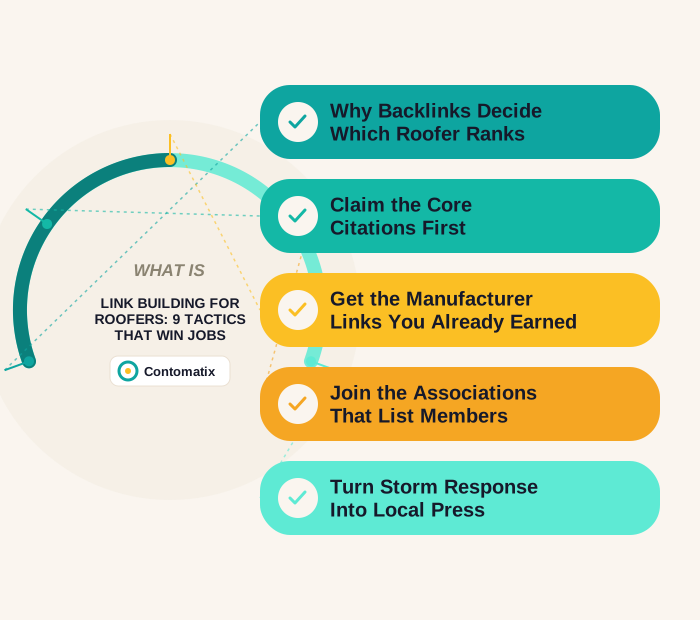
Why Backlinks Decide Which Roofer Ranks
When a homeowner searches “roof repair near me,” Google has to choose between dozens of local companies with similar services and similar websites. Backlinks are one of its strongest tiebreakers — every credible website that links to yours acts as a vote that your business is real, established, and trusted.
For roofers this matters twice over. Links influence your organic rankings for terms like “roof replacement [your city],” and the authority they build also feeds the signals behind the local map pack, where the highest-intent customers click. A roofing site with even 20–30 genuine local links routinely outranks competitors with none — because in most local roofing markets, almost nobody is building links deliberately.
That is the opportunity. Here are the nine tactics, ordered roughly by effort.
1. Claim the Core Citations First
Citations are business listings — and while not every one passes link authority, they are the foundation Google uses to verify you exist. Start with Google Business Profile, then Bing Places, Apple Maps, Yelp, BBB, Angi, Houzz, HomeAdvisor, and Thumbtack.
Two rules make or break this step. First, your NAP — name, address, phone — must be identical everywhere, down to “St” versus “Street.” Inconsistent listings confuse Google and dilute the benefit. Second, complete every profile fully: photos of real jobs, service descriptions, service areas. A half-empty listing is a wasted listing.
2. Get the Manufacturer Links You Already Earned
This is the single most overlooked link source in roofing. If you are certified by a shingle manufacturer — GAF Master Elite, Owens Corning Preferred Contractor, CertainTeed SELECT ShingleMaster — you are entitled to a listing in their “find a contractor” directory. These are high-authority manufacturer domains linking to local roofing sites, and Google treats them as strong industry-relevant endorsements.
Check every certification, supplier, and distributor relationship you have and ask each one: “Do you have a dealer or contractor locator I should be listed in?” Most roofers qualify for two or three of these links and have claimed none.
3. Join the Associations That List Members
The National Roofing Contractors Association, your state roofing association, and your local chamber of commerce all publish member directories with links. These cost membership fees you may already be paying — the link is free. Association links carry exactly the kind of trust signal Google wants to see from a legitimate local trade business, and the chamber link doubles as a local relevance signal for your city.
While you are at it, check adjacent trade groups: home builders associations, remodeling councils, and BNI-style networking chapters often maintain member pages too. Each one is a small, verifiable vote that your company is a real, established local business — and together they form a base layer of authority that spam-heavy competitors cannot copy.
4. Turn Storm Response Into Local Press
Local news sites are the strongest links most roofers can realistically earn. After major weather events, local reporters need expert sources: what homeowners should check, how to spot storm-chaser scams, when to call insurance. Email the newsroom a short, useful comment within a day of the event and you will be surprised how often it becomes a quote — with a link.
Outside storm season, community stories work the same way: donating a roof to a veteran or a family in need, sponsoring a school fundraiser, training apprentices. One genuine community story a year can earn more authority than fifty directory listings.
5. Sponsor Things Your Customers Actually See
Local sponsorships — youth sports teams, charity runs, county fairs, trade school programs — almost always come with a link from the organisation's sponsors page. These are real local links Google can verify against a real local business, and unlike most tactics on this list, they also put your name in front of homeowners directly. Budget a few hundred dollars a season and collect both the goodwill and the backlink.
6. Answer Expert Queries on Featured.com
Journalists writing about home improvement constantly need contractor quotes. Platforms like Featured.com (which absorbed the old HARO service) match those requests with experts. Answer two or three roofing-related queries a week — cost of a roof replacement, insurance claims, seasonal maintenance — and over a few months you will land quotes in national and regional publications, many with links to your site.
The trick is speed and specificity: answer within hours, give a concrete number or example from a real job, and keep it under 150 words.
7. Guest Post on Home-Improvement Blogs (Selectively)
A handful of genuine guest posts on real home-improvement and real-estate blogs are worth having: a piece on “what a roof inspection actually covers” for a home-buying blog, or “preparing your roof for winter” for a homeowner site. The word that matters is real — the blog should have an actual audience, actual editorial standards, and content beyond guest posts. If a site publishes anything for $30, its links are worthless at best. Write two or three excellent pieces a year rather than twenty cheap ones.
8. Build One Linkable Asset for Your Market
Give local bloggers, agents, and news sites a reason to link to you. The assets that work for roofing are practical and local: a roof replacement cost breakdown for your metro area with real price ranges, a hail-damage photo guide showing what claims adjusters look for, or a post-storm inspection checklist homeowners can download. One genuinely useful local resource earns links passively for years — and positions you as the authority reporters call next time.
9. Reclaim Links From Broken Pages and Mentions
Two quick wins to run quarterly. First, search your company name in Google: anywhere you are mentioned without a link — a supplier newsletter, a local blog, a news story — is one polite email away from a backlink. Second, if you have ever changed domains or deleted old pages, links pointing at those dead URLs are being wasted; redirect the old URLs to the matching live pages and the authority flows back.
What to Avoid: The Shortcuts That Backfire
Roofing is a prime target for link sellers, and most of what they sell will hurt you. Avoid Fiverr link packages, private blog networks, comment spam, and “100 backlinks for $50” offers — these leave a footprint Google identifies and discounts, and in bad cases they trigger penalties that take months to recover from. Google's own guidance on link schemes is published in Google Search Central, and it is blunt: paid links that pass ranking credit violate their policies.
The test for any link opportunity is simple: would this link make sense if Google did not exist? A manufacturer directory, a chamber page, a news quote — yes. A casino blog linking to a roofer — no.
How Many Links Does a Roofing Site Need?
Less than you think. Most local roofing markets are decided by the difference between zero deliberate links and thirty good ones. A realistic benchmark: pull up the top three ranking roofers in your city in a backlink tool and count their referring domains. In most markets outside major metros, the leaders have 40–150 referring domains — a gap you can close in six to twelve months with the tactics above.
Quality beats volume at every step. One link from your local newspaper outweighs fifty directory submissions.
What It Costs and How Long It Takes
Doing this yourself costs mostly time: citations and manufacturer links are a one-week project, and press, sponsorships, and expert quotes are an hour or two a week ongoing. Hiring a specialist agency for roofing link building typically runs $500–$2,000 per month depending on market competitiveness — and is worth considering when jobs are worth thousands and page-one competitors are entrenched.
Expect early citation-driven movement within four to eight weeks, and meaningful ranking gains from authority links over three to six months. Link building compounds: the authority you build this year keeps ranking you next year, which is the opposite of paid ads that stop the moment the budget does.
Anchor Text and Pacing: Two Details That Protect You
Two technical habits keep a growing link profile looking natural, because it is natural.
Anchor text is the clickable wording of a link. A healthy roofing profile is dominated by brand anchors (“Smith Roofing”), bare URLs, and generic phrases (“this roofing company”), with exact-match anchors like “roof replacement dallas” kept rare. When every link says your money keyword, it reads as manipulation — real people simply do not link that way. You control anchor text directly in guest posts and directory bios, so spend that control on brand anchors.
Pacing matters just as much. Ten links appearing in a week after two years of none is a pattern Google has seen from every link buyer. Spread the work: citations this month, manufacturer directories the next, a sponsorship the month after. Steady beats sudden, and conveniently, steady is also easier to sustain alongside actual roofing work.
Link Building for Roofers: Your First 90 Days
If you are starting from zero, here is the sequence that gets the most authority for the least effort:
Weeks 1–2: Fix your NAP everywhere it appears, complete Google Business Profile fully, and claim the core citations from tactic one.
Weeks 3–4: Email every manufacturer, supplier, and association you have a relationship with about their contractor directories. This is usually the highest-authority win of the whole plan.
Weeks 5–8: Set up a Featured.com profile and answer two queries a week. Pick one local sponsorship for the coming season.
Weeks 9–12: Publish one linkable asset — a local cost guide or storm checklist — and email it to five local blogs, agents, or news contacts who cover housing in your area.
By day 90 you will typically have 15–25 new referring domains, all of them the kind that age well. From there, maintenance is a few hours a month.
Track What Matters
Measure three things monthly: referring domains (is the number growing?), rankings for your money keywords (“roof replacement [city]”, “roofing contractor [city]”), and — most importantly — calls and form fills from organic search. Rankings are the means; booked jobs are the result. If links are growing but calls are not, the problem is usually your Google Business Profile or your website's conversion path, not the link building. For deeper strategy on how outreach-based campaigns scale across markets, see our guide to multilingual link building.
Related reading: our guide to roofing SEO covers service pages, storm-season demand and local proof for roofers.
Frequently Asked Questions
How do roofers get backlinks?
The most reliable sources are manufacturer certification directories (GAF, Owens Corning, CertainTeed), industry and chamber memberships, local citations, local press quotes after storm events, community sponsorships, expert-quote platforms like Featured.com, and a small number of genuine guest posts on home-improvement blogs.
Do backlinks really help roofing SEO?
Yes. Backlinks are among Google's strongest trust signals, influencing both organic rankings and the authority behind local map pack results. Because most local roofers build no links deliberately, even 20–30 quality links often create a decisive ranking advantage.
How many backlinks does a roofing website need?
Check the top three ranking roofers in your market and count their referring domains — in most non-metro markets that is 40–150. Closing that gap with quality links typically takes six to twelve months. Quality matters far more than quantity.
What are the best directories for roofing companies?
Start with Google Business Profile, Bing Places, Apple Maps, Yelp, BBB, Angi, Houzz, HomeAdvisor, and Thumbtack, then add your chamber of commerce, state roofing association, and NRCA member directory. Keep your name, address, and phone identical across all of them.
How much does link building cost for a roofing company?
Doing it yourself costs mainly time. Specialist agencies typically charge $500–$2,000 per month depending on market competitiveness. Be wary of anyone dramatically cheaper — bulk link packages are usually spam that can harm your rankings.
Are paid backlinks safe for roofers?
Links bought purely to pass ranking credit violate Google's spam policies and risk penalties. Safe spending looks different: association memberships, sponsorships, and professionally executed outreach — where money buys the work and the relationship, not the link itself.
How long does link building take to work for a roofing site?
Citation-driven improvements often appear within four to eight weeks. Authority links from press, manufacturers, and guest posts typically move competitive rankings over three to six months, with gains compounding after that.
Can I do roofing link building myself?
Yes — citations, manufacturer directories, associations, and sponsorships are entirely DIY-friendly. Press outreach and content-driven links take more skill and consistency, which is where many roofers bring in a specialist while keeping the local relationships themselves.
What anchor text should roofing backlinks use?
Mostly your brand name, your bare URL, and natural phrases. Keep exact-match keyword anchors like “roof repair [city]” to a small minority of links — profiles dominated by money-keyword anchors are a classic manipulation signal Google discounts or penalises.
Do social media links count as backlinks?
Social profiles and posts are typically nofollow, so they pass little direct ranking authority. They still matter for brand verification and visibility — complete profiles on Facebook, Instagram, and LinkedIn support the trust picture Google builds around your business.
Disclaimer: This article is for informational purposes only. Pricing ranges are indicative and vary by market. Certification and directory requirements are set by the respective organisations and may change.
Contomatix builds white-hat links for contractors and local businesses through manual outreach — manufacturer directories, local press, and genuine industry placements, never spam. Want to know what your roofing site's link profile is missing?
Get a free backlink review →