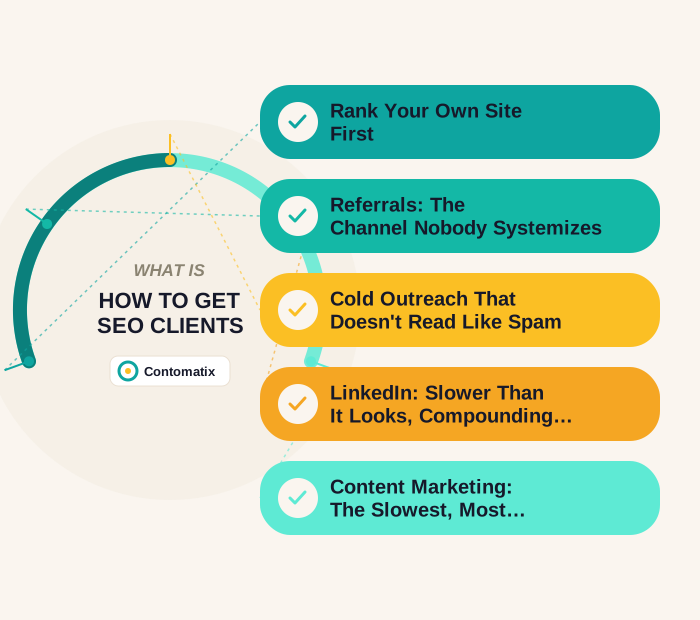
Learning how to get SEO clients is a different problem depending on where you are starting from. A freelancer with zero case studies needs a completely different first move than an agency with five clients trying to get to fifteen. Most advice on this topic ignores that distinction and gives everyone the same generic list.
This is the order we would actually work through, starting with the channel that produces a first client fastest and ending with the one that compounds over years.

How to Get SEO Clients: Start With the Free Audit, Not the Pitch
The single fastest way to get an SEO client is not a pitch — it is a free audit sent unprompted to a business you have already researched. Pick ten local or niche businesses whose website has an obvious, fixable problem: a missing title tag, a broken Google Business Profile category, a page that has been stuck on position eleven for months.
Send them three specific findings and one clear next step, not a generic "I noticed your SEO could be better" message. Specificity is what separates an audit that gets read from one that gets deleted. Most freelancers skip this because it takes real research per prospect — which is exactly why it converts better than templated outreach.
Rank Your Own Site First
Before asking anyone to trust your SEO work, your own website needs to be proof of it. If a prospect searches for the service you offer and your site is nowhere, the conversation is over before it starts.
This does not mean waiting a year before taking clients. It means picking a genuinely winnable long-tail term in your own niche, ranking for it, and pointing to it directly: "here is a term I ranked for in four months, starting from zero." One real example beats a portfolio of vague claims.
Referrals: The Channel Nobody Systemizes
Referrals convert better than any other channel because trust is transferred from someone the prospect already believes. The mistake most people make is treating referrals as something that happens to you rather than something you build a process around.
After finishing work for a client, ask directly: "Do you know two other business owners who'd want the same results?" Most clients are willing to introduce you and simply never get asked. A referral program does not need to be complicated — a discount on the next month's invoice for a successful introduction is usually enough.
Cold Outreach That Doesn't Read Like Spam
Cold email still works, but only when it looks nothing like the templates flooding every inbox. The formula that holds up: reference something specific about their business, name one real observation about their search visibility, and ask a single low-commitment question rather than pitching a retainer in the first message.
Volume without personalization is the most common failure mode here. Twenty genuinely researched emails will outperform two hundred templated ones, and they take roughly the same total time once you account for the wasted replies the templated batch generates.
The same principle applies to phone-based outreach. Our breakdown of B2B telemarketing covers why a short, well-researched call still opens doors that a cold email cannot, particularly with prospects who rarely check inboxes for unsolicited pitches.
LinkedIn: Slower Than It Looks, Compounding Once It Works
Posting genuinely useful SEO breakdowns — a real before-and-after, a specific mistake you fixed, a screenshot of an actual ranking change — builds a level of trust that a cold pitch cannot replicate. It is slow at first and most posts get little engagement for months.
The leverage shows up later: prospects who have watched your posts for months arrive at the first call already convinced you know what you are doing, which shortens the entire sales conversation.
Content Marketing: The Slowest, Most Durable Channel
Writing genuinely useful guides on your own site — the kind that answer a real question rather than padding a word count — brings in inbound leads who have already self-qualified by the time they reach your contact form. This is the same content strategy we use for our own city and industry guides, and it is the reason inbound leads tend to close faster than outbound ones: the prospect already trusts the source.
The trade-off is time. Content built this way rarely produces a client in the first month, but a guide published today can still be generating leads two years from now, which no outreach campaign can claim.
Directories and Marketplaces: Useful, Not Sufficient
Listings on Clutch, UpCity, and niche-specific directories bring in leads who are already comparison-shopping, which means they convert at a lower rate but require almost no ongoing effort once set up. Treat this as a supplementary channel rather than a primary strategy — a directory listing alone rarely fills a pipeline.
Pricing Confidently Once You Have a Lead
Getting the lead is only half the problem. Underpricing out of fear of losing the deal is the most common mistake new SEO providers make, and it creates a client relationship that is unprofitable from day one. Price based on the value of the outcome you are promising, not a race to the bottom against providers who compete purely on cost.
If you are unsure what the market actually charges, our breakdown of agency versus freelancer pricing covers real ranges across engagement types.
What to Avoid Entirely
Buying email lists and blasting them produces almost no qualified leads and burns your sending domain's reputation. Guaranteeing rankings to close a deal creates a client relationship built on a promise you cannot keep. And working for free "to build a portfolio" attracts clients who will never value the work enough to pay for it later — a paid case study, even a discounted one, is worth more than an unpaid one.
How to Get SEO Clients: Which Channel to Start With
If you need a client this month: targeted free audits and referrals from any existing network. If you are building for the next two years: content and a visible track record on your own site. Most sustainable SEO businesses eventually run all of these at once, but almost nobody starts that way — pick one, get it working, then layer in the next.
Google's own SEO starter guide is worth sending to a prospect who has never worked with an SEO provider before — it sets realistic expectations before the first call, which makes the eventual pitch easier.
Building a Simple Sales Process Once Leads Start Arriving
Getting a lead and closing one are different skills, and most new providers only prepare for the first. A basic, repeatable process prevents good leads from going cold simply because the follow-up was improvised.
- A short discovery call before any proposal — ask about their current results, what they have already tried, and what a good outcome would actually look like to them, rather than pitching immediately.
- A written proposal within 48 hours of that call, while the conversation is still fresh for the prospect. A week's delay reads as disorganization, regardless of how good the eventual work would be.
- A scope that names specific deliverables — pages, technical fixes, reporting cadence — rather than a vague monthly retainer with no defined output. Prospects who have been burned before will notice the difference immediately.
- A single, clear next step at the end of every conversation, whether that is a signed agreement, a follow-up date, or an honest "this isn't a fit."
Qualifying a Prospect Before You Pitch
Not every lead is worth pursuing, and chasing the wrong ones wastes time that should go toward better-fit prospects. A few signals are worth checking early rather than discovering three months into a difficult engagement:
- Do they already have realistic expectations about timeline, or are they expecting page-one rankings within weeks? That conversation is worth having now, before a contract, not after they are already frustrated.
- Do they control their own website and accounts, or is a previous provider still holding the login? Untangling that before starting saves weeks of delay later.
- Is their budget aligned with the work they are asking for? A prospect wanting extensive content and technical work at a price that only covers a few hours a month is a mismatch worth naming directly, not one to paper over to close the deal.
- Do they have a functioning way to convert the traffic you would send them? A broken contact form or an unanswered phone line makes even strong SEO work look like it failed.
Retention: Keeping the Clients You Already Have
New client acquisition gets most of the attention in guides like this one, but a provider that loses clients as fast as it wins them never actually grows. A few habits keep existing relationships stable:
- A consistent reporting rhythm, even in months where the news is not exciting — silence reads as neglect far more often than a modest update does.
- Proactively flagging problems before the client notices them, whether that is a ranking drop, a technical issue, or an algorithm update likely to affect their industry.
- Revisiting the original goals periodically, since a business's priorities shift over a year-long engagement, and a plan that never adapts starts to feel disconnected from what the client actually needs now.
- Asking for the referral at the right moment — after a genuine win, not buried in an unrelated monthly report where it gets overlooked.
If it helps, we also wrote about a freelance invoice template: what to include on a freelance invoice and a free layout to copy.
If it helps, we also wrote about white label SEO: how agencies can resell SEO work without hiring in-house.
Frequently Asked Questions
What's the fastest way to get my first SEO client?
A targeted free audit sent to a specific business with three real, specific findings converts far better than generic outreach, and it can produce a first client within weeks rather than months.
Should I offer free work to get case studies?
Generally no. Free work tends to attract clients who never value the results enough to pay later. A discounted first month is a better trade — it still creates a paying relationship.
Does cold email still work for getting SEO clients?
Yes, but only when personalized. Twenty researched emails referencing something specific about the business will outperform hundreds of templated ones sent at scale.
How important are referrals compared to other channels?
Referrals typically convert at the highest rate of any channel because trust transfers from an existing relationship. Most providers underuse this simply because they never explicitly ask for the introduction.
Should I rank my own website before taking clients?
You do not need to wait a year, but having at least one real, verifiable ranking result on your own site makes every other channel — outreach, referrals, content — convert better.
Are SEO directories worth listing on?
They bring in comparison-shopping leads at a lower conversion rate but require little ongoing effort. Useful as a supplementary channel, not a primary one.
How long does content marketing take to bring in clients?
Usually not in the first month, but a genuinely useful guide can keep generating leads for years, which makes it the most durable channel over a long enough time horizon.
Should I guarantee rankings to close a deal?
No. Nobody controls Google's algorithm, and a ranking guarantee sets up a relationship that starts with a promise the provider cannot control.
Related Reading
- Once you land the client, pricing the build matters too, as shown in our guide to web design pricing in Raleigh.
Contomatix builds the kind of content and case studies that bring inbound SEO leads in on their own — the same approach behind every guide on this site. Want a second opinion on your client-acquisition strategy?
Get a free audit →