Last updated: August 2026
There are over 202,000 dentists in the United States, and most of them have never intentionally built a single backlink. Link building for dentists is the quiet advantage in that gap — the practices doing it consistently tend to sit above the ones relying on a nice website and word of mouth alone, because Google still uses backlinks as one of its clearest signals of which sites to trust.
This guide covers what actually counts as a link versus a citation, nine tactics a real practice can run without risking a penalty, honest pricing, and the mistakes that get dental sites in trouble.
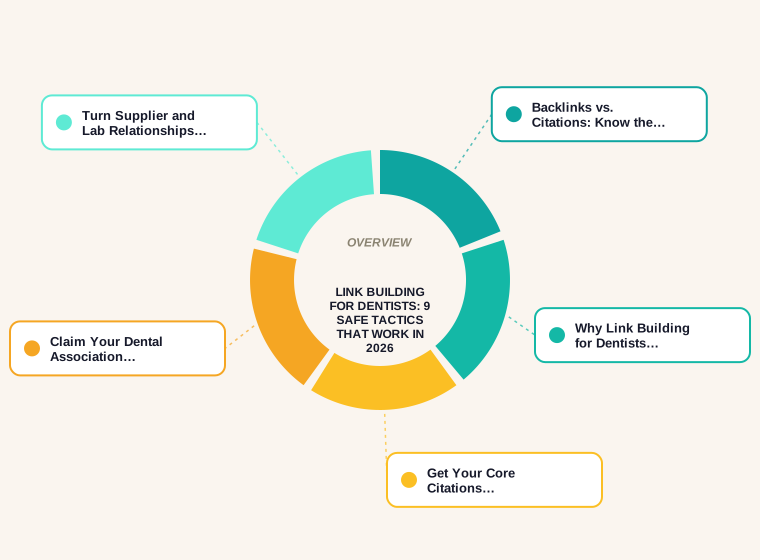
Backlinks vs. Citations: Know the Difference First
These two terms get used interchangeably, and that confusion wastes marketing budgets. A backlink is a hyperlink from another site that passes authority and lifts your organic, blue-link rankings. A citation is any online mention of your practice's name, address, and phone number (NAP) — with or without a link — and it works mainly to confirm your identity and location for Google's local-pack algorithm.
A high-authority directory listing that includes your URL delivers both at once, which is exactly why directories are usually the first move. Newer practices should prioritise citations to establish local trust; established practices with clean NAP data get more out of pursuing editorial backlinks.
Why Link Building for Dentists Actually Moves Rankings
Backlinko's analysis of roughly 11.8 million Google search results found that the #1 ranking page averages 3.8 times more backlinks than pages sitting in positions two through ten. For a dentist competing against five or six other practices in the same zip code with similarly well-built websites, that referring-domain gap is often the real tiebreaker.
Local intent makes this sharper still. Roughly 46% of all Google searches carry local intent, and Google's own local-pack algorithm weighs review signals, citation consistency, and Google Business Profile completeness heavily alongside backlinks. A practice with a thin, inconsistent web presence is invisible to exactly the searches most likely to become a booked appointment.
1. Get Your Core Citations Consistent First
Before chasing backlinks, fix the foundation. Claim and fully complete Google Business Profile, Apple Maps, Bing Places, and Yelp, then layer in dental-specific platforms — Healthgrades, Zocdoc, WebMD, and Vitals. BrightLocal's local search ranking factors research found that practices with consistent NAP data across major citation sources are 40% more likely to appear in local pack results than those with mismatched listings.
“Consistent” means exact: the same abbreviation of Street versus St., the same suite number formatting, the same phone number format, everywhere. Run a citation audit at least twice a year and correct mismatches as soon as you find them.
2. Claim Your Dental Association Directory Listings
The ADA's Find-a-Dentist tool, your state dental society directory, and county society member pages are links most dentists are entitled to and never claim. These are trusted .org sources that function as a citation and an editorial-quality backlink at the same time — exactly the kind of relevant, topically-aligned link Google's health-content signals reward.
If you speak at continuing education events or sit on a committee, ask whether speaker bios and committee pages link back to your practice site. These are easy, high-trust wins that most competitors skip entirely.
3. Turn Supplier and Lab Relationships Into Links
If you use a specific dental lab, equipment brand, or materials supplier regularly, ask whether they run a customer spotlight, preferred-provider list, or testimonials page. Suppliers want case studies from practices that use their products well, and a short testimonial in exchange for a link is a five-minute email most vendors say yes to. This tactic is close to invisible to competitors because it never shows up in generic “link building ideas” lists — it depends on relationships you already have.
4. Build Local Sponsorship Links
Sponsoring a youth sports team, a school dental-health day, or a local charity 5K typically earns a link from the organiser's sponsors page, alongside genuine local goodwill. When you confirm a sponsorship, always ask directly for the URL and your business name and link to appear — it is rarely offered automatically, but it is rarely refused when asked.
These links carry real weight because they are unmistakably local and unmistakably real; no directory-spam vendor can fabricate a link from your town's actual youth soccer league.
5. Partner With Non-Competing Local Health Businesses
Orthodontists, pediatricians, physical therapists, and wellness clinics that serve an overlapping but non-competing patient base are natural referral and link partners. Offer a short guest post on oral health for their blog, or propose a simple cross-mention: they link to your practice's resource page, you link to theirs. Because the topics are genuinely relevant to both audiences, this is exactly the kind of contextual, editorial link Google's guidelines describe as valuable rather than manipulative.
6. Publish One Genuinely Useful Resource
Content earns links passively when it solves a real problem better than what already exists. For a dental practice, that means something concrete: a plain-language guide to what a root canal actually involves, an infographic on proper flossing technique, or a short video answering “what to expect during your first visit.” Educational content built around real patient questions is what local health blogs, parenting sites, and community pages actually want to reference.
Build one strong resource before spreading effort across ten mediocre ones — a single well-promoted guide outperforms a content calendar nobody links to.
7. Respond to Journalist Queries for Expert Quotes
Featured.com (the service that absorbed HARO) and Qwoted connect journalists with expert sources, and dental topics — insurance changes, seasonal oral health tips, cosmetic dentistry trends — come up regularly. Answering two or three relevant queries a week with a specific, concrete answer under roughly 150 words is what gets used; vague or generic responses get skipped. A single quote in a regional health article can be worth more authority than a month of directory submissions.
8. Vet Every Guest Post Opportunity Before You Write
A small number of guest posts on genuine dental industry blogs, health publications, or local lifestyle outlets are worth pursuing — the operative word is genuine. Any site that will publish anything for a flat fee, has no real editorial standard, and exists mainly to sell links is a liability, not an asset. Ask what the site's actual audience looks like and whether they reject any pitches before agreeing to write.
Which Tactics Trigger a Google Penalty
A specific, nameable set of tactics get flagged as manipulative regardless of how they are marketed. Google's own spam policies single out link schemes explicitly: private blog networks built solely to pass authority, bulk link packages ("500 backlinks for $50"), paid placements without a rel="sponsored" tag, and mass submissions to irrelevant directories. Any vendor promising a guaranteed number of links at a flat, unusually low price is very likely running one of these.
The consequence is either a silent algorithmic devaluation of the links, or in more serious cases a manual "unnatural links" action that requires formal remediation in Search Console before rankings recover. If you inherited a toxic link profile from a previous SEO vendor, the fix is to request removal from site owners first and disavow only the domains that cannot be removed — over-disavowing healthy links can do more damage than the toxic ones did.
Anchor Text: The Detail That Keeps a Link Profile Safe
Anchor text is the clickable wording of a link, and it is one of the clearest signals Google uses to spot manipulation. A healthy dental link profile is dominated by brand anchors ("Smile Dental Group"), bare URLs, and natural phrases ("this dental practice"), with exact-match anchors like "dentist in [city]" kept rare. When a large share of links use the exact keyword a practice wants to rank for, it reads as engineered rather than earned — because real websites and real patients simply do not link that way on their own.
You control anchor text directly in guest post bios, directory listings, and sponsorship pages, so use that control deliberately: default to your practice name unless a specific phrase genuinely fits the sentence.
Which Tactic Should a New Practice Start With?
Sequence matters more than most link-building advice admits. A brand-new practice with an incomplete Google Business Profile gets little value chasing editorial backlinks — Google has not yet verified the basics it needs to trust a new site. The realistic order is: complete every core citation first, claim the association and ADA directory listings second (they double as citations and backlinks), then move into sponsorships, supplier links, and digital PR once the foundation is solid.
An established practice with years of consistent NAP data skips most of that groundwork and can go straight to editorial outreach, guest posts, and expert-quote platforms, where the authority gain per link is highest. If you are unsure which stage your practice is at, a quick citation audit against the shortlist above will tell you within an hour.
What Dental Link Building Actually Costs
Quality local and community placements — sponsorships, association directories, editorial mentions — typically run $100–$400 per link when done through a paid service, while broader market or niche-relevant placements can run $100–$1,500 or more depending on site authority. Full-service agency retainers for ongoing outreach and digital PR generally range from $3,000 to $15,000+ per month. A sustainable, white-hat pace for most practices is five to ten new referring domains a month — not a single bulk campaign.
Doing it yourself costs mainly time: citations, association listings, and supplier outreach are a realistic first-month project even for a busy practice owner. Editorial outreach and digital PR take more sustained effort, which is where many practices bring in outside help while keeping the local relationships in-house.
How Long Before You See Results
Citation and directory fixes tend to show local-pack movement within four to eight weeks, since Google can verify NAP data relatively quickly. Editorial and authority links take longer to compound — expect meaningful ranking movement over three to six months, with the gains holding and building further after that. Link building is not a one-off campaign; it is an ongoing signal that Google reassesses continuously, and the practices that keep a steady, modest pace outperform the ones that do a single push and stop.
Tracking Results Without Getting Lost in Vanity Metrics
Three numbers matter monthly: referring domains gained, rankings for your money keywords ("dentist in [city]", "[procedure] near me"), and — the one that actually pays the bills — new patient calls and form submissions traced back to organic search. Google Search Console's Performance report shows impressions and clicks by page; low impressions on a service page you have invested in usually points to a technical or indexing problem rather than a content one.
If referring domains are climbing but calls are not, the bottleneck is rarely the links themselves — it is usually the Google Business Profile setup or the website's booking flow. Fix that connection before assuming the link strategy has failed. The same local-authority principles apply well beyond dentistry — our guide to link building for roofers walks through the identical logic for a different trade, if you are curious how the tactics translate.
Frequently Asked Questions
How do dentists get backlinks?
The most reliable sources are dental association directories (ADA Find-a-Dentist, state societies), supplier and lab partner pages, local sponsorships, non-competing local health business partnerships, expert-quote platforms like Featured.com, and a small number of genuine guest posts on dental or health publications.
What is the difference between a backlink and a citation for a dental practice?
A backlink is a hyperlink that passes ranking authority and lifts organic search results. A citation is any online mention of your name, address, and phone number, with or without a link, and it mainly supports local-pack and map visibility. A high-authority directory listing with your URL provides both at once.
How many backlinks does a dental website need?
There is no fixed number. Referring-domain diversity and relevance matter more than raw count — dozens of relevant local and industry links typically outperform hundreds of low-quality directory submissions. Check what the top-ranking practices in your specific market have before setting a target.
How much does link building cost for a dental practice?
Individual quality placements typically cost $100–$400, with broader or niche-relevant placements running higher. Agency retainers for ongoing programs generally range from $3,000 to $15,000+ per month. Be wary of any vendor quoting a single flat price without knowing your market — that usually signals bulk, low-quality links.
Are paid backlinks safe for a dental website?
Paid links that pass ranking authority without a rel="sponsored" tag violate Google's spam policies and risk a manual penalty. Safe spending looks different: sponsorships, association memberships, and professional outreach, where money buys the relationship and the work, not the link itself.
What are the best directories for dentists?
Start with Google Business Profile, Apple Maps, Bing Places, and Yelp, then add Healthgrades, Zocdoc, WebMD, and Vitals. Layer in the ADA's Find-a-Dentist directory and your state or county dental society. Keep your name, address, and phone identical across every listing.
How long does dental link building take to show results?
Citation and directory fixes often show local-pack movement within four to eight weeks. Editorial and authority backlinks take longer to compound, typically producing meaningful ranking gains over three to six months, with results building further after that.
Can I remove toxic backlinks a previous SEO company built?
Yes. Contact the site owners and request removal first, documenting every attempt. For links that cannot be removed, submit a disavow file in Google Search Console listing only the genuinely spammy domains — disavowing healthy links by mistake can hurt rankings more than leaving toxic ones in place.
Does a dental practice need a blog to earn backlinks?
Not strictly, but it helps. A blog gives you a home for the linkable resources — guides, infographics, explainer videos — that local sites and journalists actually want to reference. Without one, most of your link opportunities are limited to citations, sponsorships, and directory listings.
Disclaimer: This article is for informational purposes only. Pricing figures are indicative and vary by market. Directory and association requirements are set by the respective organisations and may change.
Contomatix builds white-hat links for healthcare and local service practices through manual outreach — association directories, local press, and genuine industry placements, never spam. Want to know what your practice's link profile is missing?
Get a free backlink review →

