Last updated: August 2026
An HVAC business lives and dies by two brutal spikes a year — the first heat wave and the first cold snap — and by the time either hits, it is too late to start building the online authority that decides who gets found first. Link building for HVAC companies is the off-season work that pays off exactly when demand peaks, because Google uses backlinks as one of its clearest signals of which local sites to trust before the calls start flooding in.
This guide covers the tactics unique to heating and cooling contractors — several of which are not available to most other trades — along with what a quality link actually costs and the mistakes that get HVAC sites penalized.
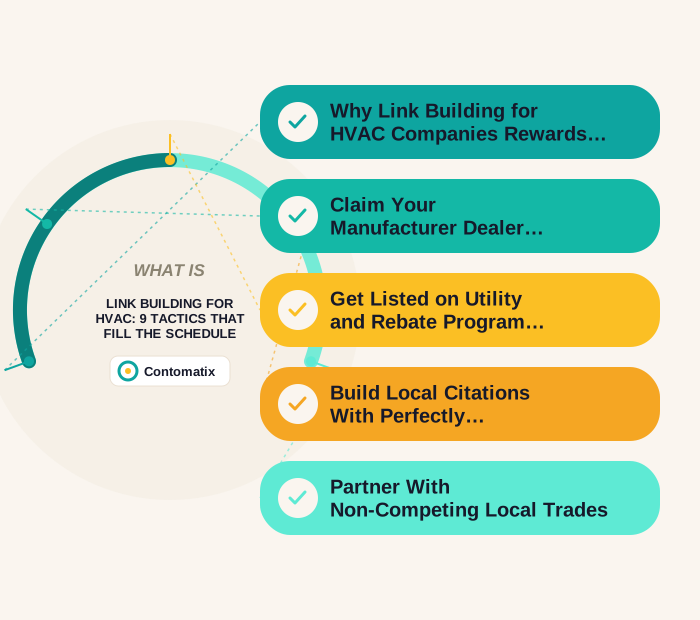
Why Link Building for HVAC Companies Rewards Patience
Backlinks influence rankings because they signal a website's authority to search engines — sometimes called Domain Rating or Domain Authority depending on which tool measures it. Not every link helps: black-hat tactics can actively penalize or de-index a heating and cooling site, while genuine, relevant links compound over time. Three factors decide whether a specific backlink is worth having: the authority of the linking site, how relevant that site is to HVAC or home services, and whether the anchor text looks natural rather than manipulated. A link from a trusted local newspaper moves the needle; a link from an unrelated low-quality blog does close to nothing.
1. Claim Your Manufacturer Dealer Locator Listings
This is the single highest-value tactic most HVAC companies never claim. If you install equipment from Carrier, Trane, Lennox, Rheem, Goodman, or any major manufacturer, you are almost certainly eligible for a listing in their "find a dealer" or "find a contractor" locator. These are high-authority manufacturer domains linking directly to certified local installers, and Google treats them as strong, industry-relevant endorsements — a category of link most other local trades simply do not have access to.
Check every brand you install or service and confirm your certification status is current. It is common for HVAC companies to hold two or three eligible certifications and have claimed none of the directory listings that come with them.
2. Get Listed on Utility and Rebate Program Directories
This tactic is close to unique to HVAC and a handful of adjacent trades. Local utility companies and energy-efficiency programs maintain directories of certified or participating contractors for rebate-eligible installations — heat pumps, high-efficiency furnaces, smart thermostats. Getting listed as a certified contractor with your regional utility, or through a program like ENERGY STAR's certified partner network, earns a link from a genuinely high-authority, government-adjacent source that most competitors overlook entirely.
3. Build Local Citations With Perfectly Consistent NAP
Claim and fully complete Google Business Profile first, then Bing Places and Apple Maps. From there, work through the core local directories — Yelp, Angi, HomeAdvisor, Thumbtack, and the Better Business Bureau. Keep your business name, address, and phone number identical across every single listing; inconsistent NAP data confuses Google's local-pack algorithm and quietly suppresses map visibility even when every other signal is strong.
4. Partner With Non-Competing Local Trades
Plumbers, electricians, and insulation contractors serve an overlapping customer base without competing directly for HVAC work, which makes them natural link and referral partners. A simple cross-mention arrangement — you link to their service page from a relevant blog post, they do the same for you — produces exactly the kind of contextual, genuinely relevant link Google's guidelines describe as valuable rather than manipulative. These partnerships also generate real referral business alongside the backlink.
5. Sponsor Local Events and Community Organizations
Sponsoring a youth sports team, a charity drive, or a community festival typically earns a link from the organizer's sponsors page, along with genuine local visibility. Always ask directly for the URL and business name when confirming a sponsorship — it is rarely automatic but rarely refused when requested. These links carry particular weight for HVAC because they are unmistakably tied to a real, physical presence in the service area Google is trying to verify.
6. Create Data-Driven Content Worth Citing
The fastest way to earn links passively is to rank for the questions people actually search before hiring, then let other sites reference your answer. A page that directly and thoroughly answers "how much does a new AC unit cost" or "how often should HVAC filters be replaced" becomes something bloggers, local journalists, and comparison sites want to cite as a source. Original local data works even better — average service call response times, the most common repair calls in your area by season, or a breakdown of regional energy costs give local publications a concrete reason to link back.
7. Pitch Seasonal Tips to Local Press
Local newspapers and neighborhood blogs regularly need practical, timely content, and HVAC contractors have an obvious supply of it: winterizing tips before the first cold snap, AC efficiency advice before the first heat wave, or what to check before a holiday travel shutdown. Pitching a short, specific, useful tip to a local reporter or blog editor a few weeks before the seasonal shift routinely earns a link with far less effort than cold outreach to unrelated sites.
8. Pursue Guest Posts and Niche Edits on Home Blogs
A small number of genuine guest posts on home-improvement blogs, real estate sites, or property management publications add real editorial authority when the content is specific and useful — a guide to combi versus tankless water heaters, or what a home inspector actually checks in an HVAC system. Niche edits, where an existing relevant article adds a link to your resource instead of new content being written, can be faster and often carry strong authority because the host page already has its own established backlinks. Apply a quality floor to both: a domain rating of roughly 20 or higher and genuine monthly traffic, not just a willingness to publish anything for a fee.
9. Build Brand Recognition Before You Need the Link
Sites link more readily to businesses they already recognize, because it removes the credibility risk of sending their readers somewhere unfamiliar. Sharing your content consistently on social media, keeping business information current everywhere it appears, and being visibly active in your service area over months — not just during a single outreach push — makes every subsequent ask for a link an easier yes. Brand recognition is not a link-building tactic on its own, but it is the multiplier that makes every other tactic on this list work better.
Sequencing: What to Do First If You Are Starting From Zero
A brand-new HVAC business with no citations gets little value chasing manufacturer directory links before Google has any basic trust signals to work with. The realistic order starts with the foundation: complete Google Business Profile and the core citation platforms first, since Google needs to verify your identity and location before anything else pays off fully. Move to manufacturer and utility directory listings second — they double as citations and authority backlinks and typically require only an email confirming your certification. Sponsorships, trade partnerships, and press pitches come third, once the basics are solid, and content-led guest posting last, since it depends on having an established, credible site other publishers are comfortable linking to.
An HVAC company with years of consistent local presence can skip most of the early sequence and move straight into editorial outreach and content-led link building, where the authority gain per link is highest.
What to Avoid: Tactics That Trigger a Penalty
The HVAC SEO space attracts a steady supply of vendors selling bulk backlink packages, private blog network placements, and automated directory blasts — and the guides warning against these tactics are sometimes published by the very companies selling them elsewhere on their own site. Google's spam policies explicitly flag private blog networks, paid links without a rel="sponsored" tag, and irrelevant mass directory submissions as link schemes. Before hiring any link-building service, ask directly what sites they place links on, what minimum authority and traffic thresholds they apply, and whether you can see real examples — vague answers are the clearest warning sign.
What Quality HVAC Backlinks Cost
A single high-quality guest post or niche edit from a relevant, authoritative site typically runs $130–$250 depending on the site's authority and how competitive the niche is. Full-service agency programs covering outreach, content, and digital PR for an HVAC business generally run $1,500–$5,000+ per month. If a vendor offers a large batch of links for a price well below a single quality placement, assume those links will not help and may actively harm your rankings.
The manufacturer, utility, and citation work in this guide costs mainly time and is realistic to complete within a focused week or two. Guest posting, niche edits, and press outreach take more sustained effort, which is where many HVAC businesses bring in outside help while keeping local partnerships and sponsorships in-house.
How Long Before Link Building Moves HVAC Rankings
Citation and directory fixes tend to show local-pack movement within four to eight weeks, since Google verifies NAP data relatively quickly. Editorial links from manufacturers, utilities, and press take longer to compound — expect meaningful ranking movement over three to six months, with results building further after that. Link building for HVAC is not a one-off seasonal push; it is ongoing authority that keeps paying off through every future heat wave and cold snap, which is exactly why starting in the off-season is the advantage competitors who wait do not have. For the same underlying logic applied to a different local trade, see our guide to link building for plumbers.
Frequently Asked Questions
How do HVAC companies get backlinks?
The highest-value sources are manufacturer dealer locator directories (Carrier, Trane, Lennox), utility and energy-rebate program listings, local citations, non-competing trade partnerships, local sponsorships, seasonal press pitches, and a small number of genuine guest posts on home-improvement sites.
What makes manufacturer directory links valuable for HVAC SEO?
Manufacturer dealer locators are high-authority, industry-specific domains linking directly to certified installers, which is a category of link most other local trades cannot access. Google treats them as strong, relevant endorsements, and most eligible HVAC companies never claim the certifications they already qualify for.
How many backlinks does an HVAC website need?
There is no fixed number. Relevance and referring-domain diversity matter more than raw count — check what the top-ranking HVAC companies in your specific market have before setting a target, and prioritize a handful of genuinely relevant links over dozens of low-quality directory submissions.
How much does HVAC link building cost?
A single quality guest post or niche edit typically costs $130–$250. Full-service agency programs generally run $1,500–$5,000+ per month. Be cautious of bulk link packages priced well below a single quality placement — they usually signal spam that can harm rankings.
Are paid backlinks safe for an HVAC website?
Paid links that pass ranking authority without a rel="sponsored" tag violate Google's spam policies and risk a penalty. Safe spending looks different: sponsorships, association memberships, and professional outreach, where money buys the work and the relationship, not the link itself.
What are the best directories for HVAC contractors?
Start with Google Business Profile, Bing Places, Apple Maps, Yelp, Angi, HomeAdvisor, Thumbtack, and the Better Business Bureau, then add every manufacturer dealer locator you qualify for and your regional utility's certified contractor directory. Keep your NAP identical everywhere.
How long does HVAC link building take to show results?
Citation and directory fixes often show local-pack movement within four to eight weeks. Manufacturer, utility, and editorial links take longer to compound, typically producing meaningful ranking gains over three to six months, with results building further after that.
Why does the off-season matter for HVAC link building?
Link authority takes months to compound, and HVAC demand is sharply seasonal. Building citations, manufacturer listings, and editorial links during slower months means the authority is already in place before the first heat wave or cold snap drives peak search volume.
Can I do HVAC link building myself?
Yes — citations, manufacturer directories, utility listings, and sponsorships are entirely DIY-friendly and cost mainly time. Press outreach and guest posting take more sustained relationship-building, which is where many HVAC businesses bring in a specialist while keeping local partnerships in-house.
Disclaimer: This article is for informational purposes only. Pricing figures are indicative and vary by market. Manufacturer, utility, and directory requirements are set by the respective organizations and may change.
Contomatix builds white-hat links for HVAC and home service businesses through manual outreach — manufacturer directories, local press, and genuine industry placements, never spam. Want to know what your HVAC site's link profile is missing?
Get a free backlink review →

