Search "digital marketing agency Leeds" and dozens of options appear within seconds — directory listings, agency websites, comparison articles. For a Leeds business owner trying to actually grow, that wall of choice is closer to a problem than a solution: almost everyone claims results, everyone has a portfolio, and almost none of it tells you who will actually move the needle for your specific business.
This guide skips the "top 10 agencies" format entirely. Instead, it covers what Leeds digital marketing actually involves, what's changed heading into 2026, and — more usefully — exactly what to check before signing with anyone, whether that's an agency, a freelancer, or an in-house hire.
Leeds has one of the largest regional economies outside London, spanning financial services, legal, manufacturing, healthcare, and a fast-growing tech and creative sector. That diversity means there's no single "Leeds strategy" — a law firm in the city centre and a manufacturer on the outskirts need genuinely different approaches, even though both technically compete for "Leeds" as a market.
The Leeds Business Landscape, and Why It Changes the Strategy
The financial and legal district around the city centre competes on trust and authority — case studies, credentials, and a website that reads as established rather than scrappy. Retail and hospitality businesses across areas like Headingley, Chapel Allerton, and the city centre compete almost entirely on local search and reviews, where being the closest good option usually beats being the objectively best one further away. Manufacturing and industrial businesses on the outskirts often compete nationally or even internationally, meaning local SEO barely matters compared to targeted B2B content and trade-specific backlinks. And the growing creative and tech scene around the South Bank and Round Foundry area tends to compete on visible portfolio work and thought leadership rather than local search at all.
Skipping this step — treating "Leeds business" as one homogenous strategy — is the single most common reason a digital marketing plan underperforms even when every individual tactic is executed competently.

What Does "Leeds Digital Marketing" Actually Mean?
It's a broader label than it first sounds — not one single service, but a set of interconnected activities that only really work when they pull in the same direction: findable, credible, and easy to act on, for whoever is searching, wherever they happen to be searching from.
At its core, it's SEO, content, paid advertising, and reputation management applied to how Leeds-based businesses actually get found — a mix of local searches ("accountant Leeds city centre"), regional searches (Yorkshire-wide), and increasingly national or international ones for businesses that happen to be based in Leeds but sell far beyond it.
That last point trips up a lot of local businesses: not every Leeds company should be optimizing purely for "in Leeds" searches. A B2B software company headquartered in Leeds might have almost no reason to rank for local searches at all, while a physical retailer or clinic depends on local search for nearly all of its new business.
Why Leeds Businesses Can't Sit This Out in 2026
"We do fine on word of mouth" was a defensible position a decade ago. It's a much riskier one now, because even a referral rarely converts to business without an online check first — someone recommends a name, and the very next step is almost always searching that name to confirm it before making contact.
Leeds' business scene has gotten more competitive every year, not less — new agencies, new consultancies, new digital-first competitors entering from Manchester, Sheffield, and remote-first companies with no physical presence in the city at all. A business that isn't visible online isn't losing to "the market" in the abstract; it's losing specific, winnable searches to a specific competitor who bothered to show up.
The businesses pulling ahead in Leeds right now generally share three things: a Google Business Profile that's actually maintained, a website built to convert rather than just exist, and enough real content and backlinks to be seen as a credible authority rather than just another listing.
Local SEO for Leeds Businesses
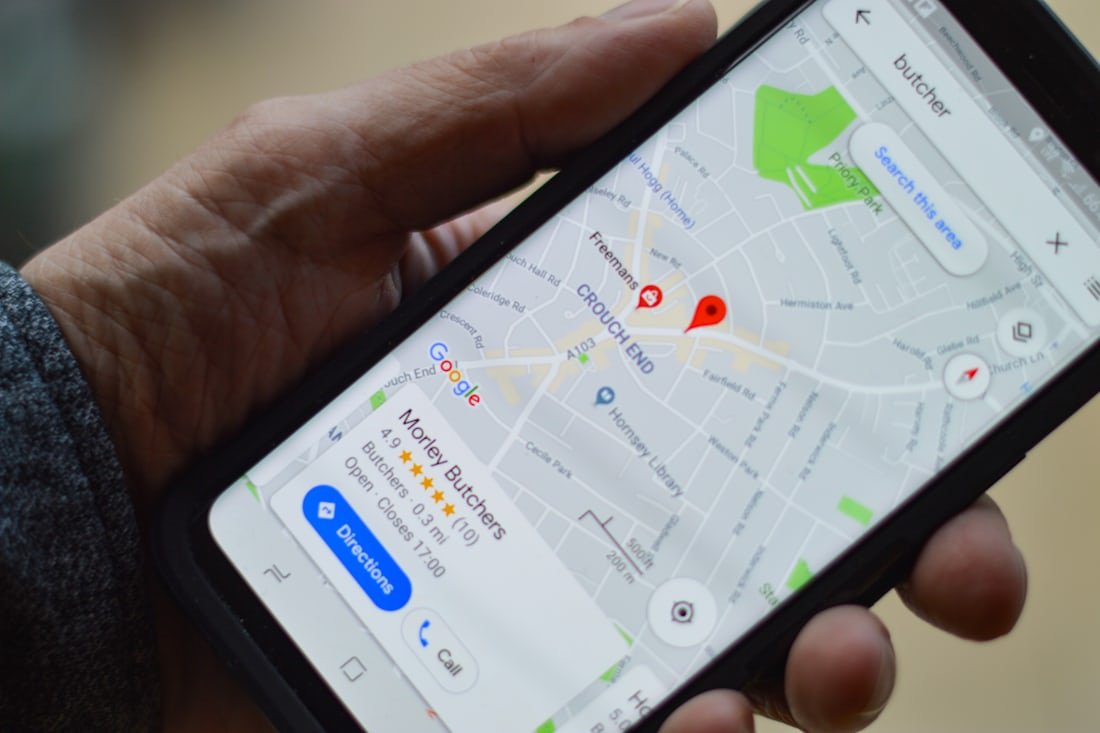
For any business with a physical location or defined service area in and around Leeds, the local map pack matters more than almost anything else on the page. Three things decide whether a business shows up in it:
- A fully optimized Google Business Profile — correct categories, accurate service area (Leeds city centre is not the same search as Headingley, Horsforth, or Wetherby), real photos, and regular updates.
- Consistent NAP data (name, address, phone) across UK directories — Yell, Thomson Local, industry-specific directories, and citation sites. Inconsistent listings quietly cap how far a Google Business Profile can rank.
- Area-specific landing pages for businesses serving multiple parts of Leeds and the wider West Yorkshire area — a cleaning company covering Leeds, Bradford, and Wakefield needs distinct pages for each, not one page trying to rank everywhere.
Solid keyword research for a Leeds business means understanding that "solicitor Leeds" and "solicitor near me" behave as different search patterns with different intent, even for the exact same searcher on different days.
Proximity is a genuinely underrated ranking factor in local search: a business based just outside a specific Leeds postcode can struggle to rank there no matter how strong its content is, purely because Google weighs physical distance heavily in local-pack results. Area-specific pages, consistent citations, and — where the business model allows it — a secondary local presence can offset this over time, but it rarely closes the gap completely on its own.
In-House, Agency, or Freelancer — What Actually Fits
None of the three is universally right. A larger Leeds business with steady marketing spend and a need for tight brand control often benefits from an in-house hire who understands the business deeply, even if their specialist skill set is narrower than an agency's. A smaller or mid-sized business usually gets more value from an agency, which brings a full team's worth of specialist skills — SEO, content, design, ads — without the overhead of hiring each separately. A freelancer can be the most cost-effective option for a narrowly scoped project, but rarely scales well once a business needs SEO, content, and ads running in parallel.
The deciding factor is usually less about cost and more about how much oversight the business owner realistically has time to provide — an agency needs the least day-to-day management, a freelancer needs the most.
Trade-based businesses tend to sit furthest toward the agency end of that spectrum, since the owner is usually on tools all day. Our separate guide to digital marketing for tradesmen covers what that looks like in practice for plumbers, electricians and builders specifically.
A Website Built to Convert Leeds Traffic
Getting found is half the job — the other half is what happens after the click. A good on-page SEO foundation means fast load times, clear service pages instead of one crowded page trying to cover everything, and a contact or quote process that doesn't ask for more information than a first-time visitor is willing to give.
A recurring issue with Leeds business websites specifically: many were built years ago by a local web designer focused entirely on appearance, with almost no thought given to search structure, page speed, or a clear path to contact. A visually attractive site that takes six seconds to load and buries its phone number in a footer is quietly losing business every single day it stays that way.

Content & Digital PR for Leeds Businesses
Content is where a smaller Leeds business can genuinely outmaneuver bigger, better-funded competitors — because most competitors, including plenty of well-established ones, still publish almost nothing useful. Answering real customer questions, publishing genuinely useful guides, and covering topics relevant to the Leeds and Yorkshire market directly builds the kind of authority a sales pitch never will.
This compounds with guest posting and link building through regional press (Yorkshire Evening Post, Leeds Live, Insider Media Yorkshire), industry directories, and business associations like the Leeds Chamber of Commerce — the kind of locally relevant backlinks that carry weight with both search engines and the people reading them.
Digital PR angles that work particularly well at a regional level: commentary on local business news, sponsoring or participating in Leeds-based events and award programmes, and original research or survey data specific to the Yorkshire market — the kind of coverage that's genuinely difficult for a national competitor with no local presence to replicate.
Paid Ads: Google, Meta, and LinkedIn for Leeds Businesses
Google Ads work well for high-intent, ready-to-buy searches — "emergency locksmith Leeds," "book a consultation Leeds." Meta ads tend to perform better for consumer-facing businesses building awareness across a specific area. LinkedIn ads are usually the strongest option for B2B companies targeting specific job titles at companies within the Leeds region or beyond.
The most common waste of ad budget among Leeds businesses is running ads without a landing page built for the specific service or offer being advertised — sending every click to a generic homepage instead of a page that answers the exact question the ad promised to answer.
Timing also matters more than most advertisers account for. A business with strong seasonal demand — home services in spring, retail around the festive period, hospitality during events and match days — that runs a flat, unchanging ad budget year-round is consistently overspending in slow periods and underspending exactly when demand (and competition for it) peaks.
Reviews and Reputation for Leeds Businesses
Before choosing almost any local business — a dentist, a solicitor, a tradesperson, a restaurant — people check reviews first. A steady stream of recent, specific Google reviews outperforms a large pile of old, generic ones, and responding to every review, positive or negative, is public proof of how a business actually handles its customers.
Review count and recency are also direct local-ranking factors, not just a trust signal for humans reading them. A business with fifteen reviews from three years ago will typically lose the map pack to a newer competitor with fifty recent ones, even with a lower average rating — which is part of why an ask-for-a-review step built into every completed job or transaction matters more than most businesses assume.
Measuring What Actually Matters
The most common measurement mistake among Leeds businesses running digital marketing is tracking website visits and social engagement instead of actual leads. A dedicated tracking phone number for organic search, another for paid ads, and clear form-submission tracking on the website turn "we got more traffic" into "we got eleven qualified enquiries from Google this month, and four turned into paying clients" — the only version of that sentence a business owner can actually act on.
A reasonable monthly report should cover, at minimum: leads and enquiries by source, current ranking for the five or so keywords that matter most to the business, and review count and rating trend. Anything far beyond that tends to exist to look thorough rather than to inform an actual decision.
How Much Should a Leeds Business Budget for Digital Marketing?
There's no single right number, but a useful anchor: most established local and regional businesses investing seriously in digital marketing allocate somewhere between 5–10% of revenue to it, split across SEO/content, website upkeep, and paid ads. Newer businesses often lean more heavily on paid ads early on, while SEO and content build up in the background and gradually take over more of the workload.
Budget should also scale with competitiveness, not just business size. A niche B2B manufacturer with three real competitors in the region needs far less ongoing spend to stay visible than a solicitor or dentist competing against dozens of other practices across the same few miles of the city.
Red Flags in an Agency Pitch
A few specific things are worth watching for during the sales process itself, before any contract is signed. Guaranteed rankings or a specific position on Google within a fixed timeframe is a promise no legitimate agency can actually make, since nobody controls Google's algorithm. A proposal that looks identical regardless of the business or industry suggests a templated package rather than an actual strategy. Pressure to sign a long contract before seeing any sample work or a clear first-90-days plan is a sign the agency is optimizing for the sale rather than the relationship. And an unwillingness to explain, in plain language, what will actually be done each month is reason enough to keep looking.
Common Mistakes Leeds Businesses Make Choosing an Agency
Most bad agency relationships trace back to one of a handful of avoidable mistakes made during the selection process itself, before any work has even started:
- Choosing based on a "best agencies in Leeds" listicle alone. Many of these are directory or affiliate content, not independent recommendations — always verify claims directly rather than trusting a ranking at face value.
- No clarity on who owns what. The Google Business Profile, website, and analytics should always remain owned by the business, not locked inside an agency account.
- Vague reporting. A report full of impressions and "engagement" with no mention of actual leads or revenue is a red flag, not a feature.
- One-size-fits-all strategy. An agency proposing the identical package regardless of whether the client is a solicitor, a manufacturer, or a retailer usually hasn't actually looked closely at the business.
- No trial period or exit clarity. Long lock-in contracts with no clear way to leave are a sign of an agency relying on contracts rather than results to keep clients.
Questions to Ask Before Hiring a Digital Marketing Agency in Leeds
- Can you show examples of measurable results for businesses similar in size or industry to mine?
- Will I retain full ownership of my Google Business Profile, website, and analytics accounts?
- What does reporting actually look like, and how often will I receive it?
- How do you handle a strategy shift if the first few months don't produce the expected results?
- What's the actual notice period if I want to end the engagement?
What "Good" Actually Looks Like Six Months In
It's worth having a concrete picture of what a working relationship should look like partway through, rather than judging purely on faith. By month six, a business should be able to point to specific keyword rankings that have visibly improved, a measurable increase in qualified enquiries with a clear sense of which channel they came from, a Google Business Profile with a growing base of recent reviews, and at least a handful of genuine backlinks or press mentions that didn't exist before. If none of those exist by that point, the relationship isn't underperforming quietly — it's not working, and that's worth addressing directly rather than waiting for it to improve on its own.
Signs It's Time to Switch Agencies (or Get Started)
- Reports focus on activity ("we posted X times") rather than outcomes (leads, calls, revenue).
- A competitor with a visibly weaker website and fewer reviews consistently outranks the business.
- Nobody can clearly explain what's being done this month and why.
- There's no visibility into how many people research the business online before making contact.
For more on this topic, see SEO agencies in Manchester, UK, which looks at a shortlist for businesses searching in Manchester, England.
If it helps, we also wrote about SEO experts in Leeds: how to shortlist SEO specialists in Leeds.
Is it worth hiring a Leeds-based agency specifically, or does location not matter?
Location matters less than genuine familiarity with the Leeds and Yorkshire market — regional search patterns, local press and directories, and the competitive landscape. That familiarity can come from a Leeds-based agency or a remote one with real regional experience; the label alone isn't the guarantee.
How long does local SEO take to show results in Leeds?
Google Business Profile fixes can move map-pack rankings within weeks. Building out full topical authority and competing for harder regional keywords typically takes a few months of consistent work.
Should a Leeds business focus on local SEO or national SEO?
It depends entirely on the business model. A business serving customers physically in or around Leeds should prioritize local SEO. A business based in Leeds but selling nationally or internationally often needs to deprioritize purely local search in favor of broader keyword targeting.
Are "best digital marketing agency in Leeds" lists trustworthy?
Treat them as a starting point for names, not a verdict. Many are directory or affiliate-style content rather than independently verified rankings — always check case studies, ask for references, and verify claims directly.
What's a reasonable monthly budget for a small Leeds business?
It varies by industry and competitiveness, but most small to mid-sized local businesses investing seriously start somewhere in the low-to-mid four figures per month across SEO, content, and a modest ad budget, scaling up as results compound.
Do backlinks from Yorkshire-specific press and directories actually help?
Yes — regionally relevant backlinks carry topical and geographic relevance that search engines weigh alongside raw authority, and they carry real credibility with local customers who recognize the publication or directory.
How do I know if my current agency is actually working?
Ask for a report tied to leads, calls, and revenue rather than impressions or "reach." If that report doesn't exist or can't be produced, that's the clearest sign something needs to change.
How is Leeds different from other UK regional cities for digital marketing?
The fundamentals are the same as Manchester, Sheffield, or Birmingham, but the specific competitive landscape, local press outlets, and search patterns are unique to Leeds — a strategy copied wholesale from another city's playbook usually underperforms one built around Leeds' actual business mix and search behavior.
Can a business based in Leeds work with an agency that isn't local?
Yes, and it's increasingly common — most digital marketing work (SEO, content, ads, reporting) happens remotely regardless of where the agency is physically based. What matters is genuine familiarity with the Leeds market, not a local office address.
Related Reading
- For a UK market outside the big cities, see our ranking of an SEO expert in Truro, Cornwall.
Contomatix works with Leeds and UK businesses on exactly this — local and national SEO, link building through regional and industry press, content that holds up to real scrutiny, and reporting built around actual leads. Want a free audit of where your business stands online right now?
Get a free audit →