Last updated: September 2026
Funeral home SEO has to work for two searchers who could not be in more different states of mind: someone searching within hours of a death, who needs a phone answered and a clear next step, and someone planning ahead calmly, months or years before they will need any of it. Very few local-service categories ask a single website to serve both an emergency and a considered purchase decision at once, and getting that balance right — the real substance of SEO for funeral homes — matters more here than almost anywhere else in local SEO.
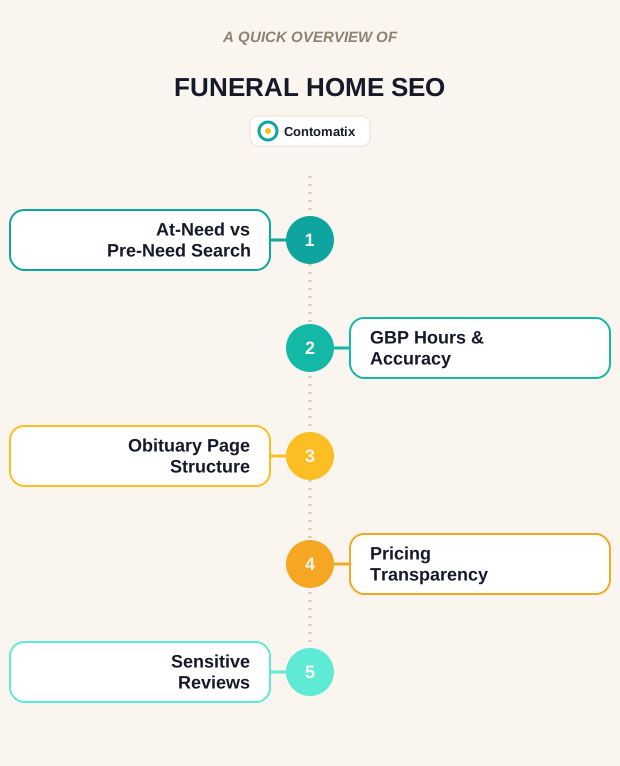
At-Need vs. Pre-Need: Two Searches, Two Different Websites
An at-need search — "funeral home near me," "cremation services today," "what to do when someone dies" — comes from someone who is often exhausted, sometimes in the middle of the night, and who needs the page to answer one question immediately: can this business help right now, and how do I reach a real person. A pre-need search — "funeral planning," "compare cremation vs burial cost," "prepaid funeral plans" — comes from someone with time to read, compare, and think, and that content can be more detailed and educational without losing anyone.
The practical implication is that a homepage trying to do both jobs usually does neither well. At-need pages need to lead with immediate contact information, hours of availability, and a short, calm explanation of what happens next. Pre-need pages can afford to explain options, walk through the general planning process, and answer the comparison questions a calmer reader actually has time for.
Google Business Profile Accuracy When Families Are Relying On It
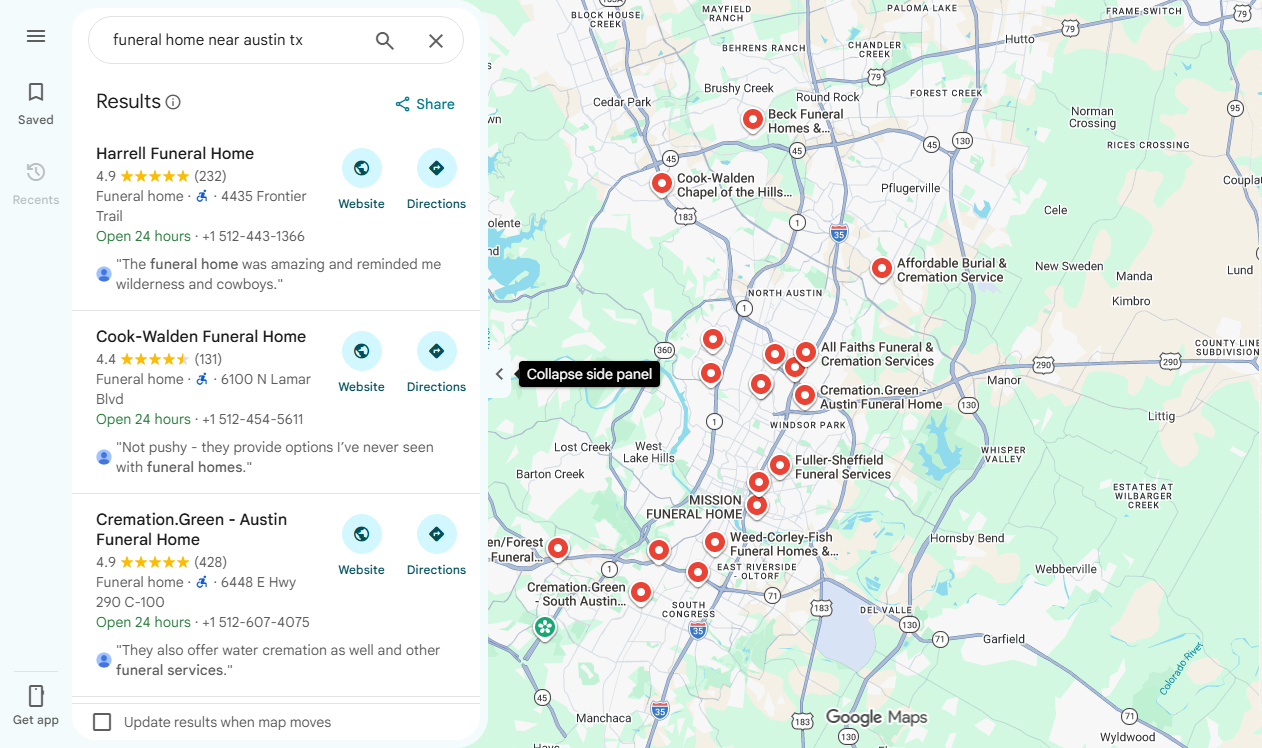
Hours are a genuinely tricky field for this category. Many funeral homes answer the phone at any hour for a death that just occurred, but the office itself keeps normal business hours for planning appointments and paperwork. A Google Business Profile that simply lists standard business hours, with no note that the phone line for immediate need is answered around the clock, can send a grieving family the wrong signal at exactly the wrong moment. The category selection matters too — funeral home, cremation provider, and mortuary are related but distinct in Google's system, and a business offering more than one of those services should make sure all of them are represented rather than picking whichever one was easiest to set up first.
Obituary Pages: Genuinely Useful, and a Real SEO Trade-Off
Obituary pages are one of the more distinctive parts of a funeral home's website, and they serve a real purpose beyond SEO — they are often the page a family checks repeatedly and shares with relatives, and they are frequently the only page on the entire site that anyone outside the immediate service window ever visits. That said, a large, fast-growing archive of short, near-identical obituary pages, if they are built from the same rigid template with little unique content beyond a name and a date, can quietly work against the rest of the site by diluting the average quality signal Google associates with the domain. The practical fix is not to avoid publishing obituaries — families expect and rely on them — but to give each one enough genuine structure to stand on its own: service details specific to that family, a photo, and space for a guestbook or shared memories, rather than a bare name-and-date placeholder repeated a few hundred times.
Pricing Transparency: Not Just Good SEO, a Real Requirement
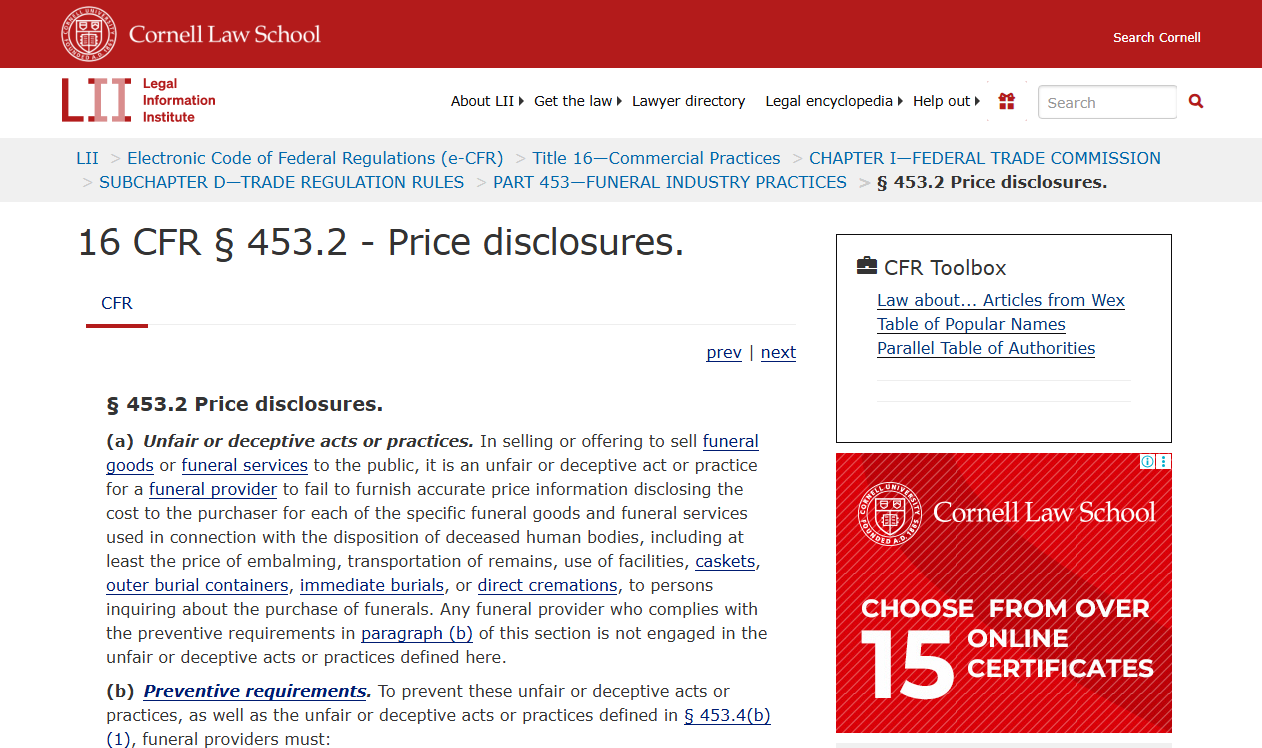
Funeral pricing searches ("funeral home prices near me," "cheapest cremation") are increasingly common, and in the United States, funeral homes are required under the FTC's Funeral Rule to provide an itemized general price list to anyone who asks for one in person. Publishing at least a clear overview of pricing structure and what a general price list includes on the website, rather than forcing every price-sensitive visitor to call and ask, both meets people where they are already searching and reduces friction for a family already under strain. This is worth confirming directly against current FTC guidance rather than assuming a competitor's approach is fully compliant, since the specifics of what must be disclosed and how are a regulatory matter, not a marketing choice.
Reviews, Handled With Real Sensitivity
Review requests need more care in this category than almost anywhere else. A generic "how was your experience" text sent the way a restaurant or plumber might send one reads as tone-deaf after a funeral service, and gating or over-automating the request can come across as exploiting a family's grief. The more sensitive, and more effective, approach tends to be a personal follow-up from staff a reasonable time after the service, worded around gratitude for the trust the family placed in the business rather than asking for a rating outright. The reviews that result — mentioning specific staff kindness, how a difficult logistical detail was handled, or a specific cultural or religious accommodation made — carry real weight with families making this decision for the first time, precisely because they read as genuine rather than solicited.
Serving Different Faiths and Traditions Well
One of the more distinctive, genuinely useful things a funeral home's content can do is address the specific timing and ritual needs of different faiths directly — several religious traditions call for burial within a day or two of death, others have specific washing, shroud, or viewing customs, and a family navigating that during an already difficult time benefits enormously from a page that plainly states whether and how the funeral home accommodates it. This is content a generic, faith-neutral funeral home page cannot answer, and it addresses exactly the kind of urgent, specific question an at-need searcher from that tradition is typing into Google.
Location and Chapel Pages for Multi-Location Operators
Operators running more than one funeral home or chapel under one brand should give each location its own Google Business Profile and its own page with its own address, phone number, and staff — the same principle that applies to any multi-location health or care-adjacent business. A shared, generic "our locations" page that lists three addresses in a table does not give any single chapel the specific, complete information a family comparing options nearby actually needs.
Content Beyond the Obituary: What Families Search For Next
Once the immediate arrangements are settled, families and pre-need planners search for a genuinely wide range of specific, practical questions a funeral home is well positioned to answer directly: the difference between direct cremation and a traditional service with cremation afterward, what a green or eco-conscious burial option actually involves where it is available, how veteran and military honors are arranged and what documentation the family needs to provide, and what a memorial service looks like when it is held without the body present. Answering each of these as its own clear, specific page — rather than folding all of it into one long "our services" page — captures a real and fairly wide range of pre-need and comparison searches, and it also gives at-need families, once the most urgent decisions are behind them, somewhere useful to keep reading.
What Funeral Home SEO Companies Get Wrong
A common mistake outside providers make with this category is treating it like any other local-service vertical and optimizing purely for volume — more obituary pages, more location pages, more generic content — without the sensitivity checks that actually matter here: hours that account for round-the-clock phone availability, review requests worded appropriately, and pricing pages that meet real disclosure expectations rather than vague, marketing-style pricing language. A provider that has not thought through those specifics is optimizing the wrong thing, however technically competent the rest of the work is.
DIY or Bring in Outside Help
A single-location funeral home can typically manage Google Business Profile accuracy, obituary publishing, and a thoughtful review-request process without outside help. Where it becomes harder to do well internally is the structural side — building out pricing-transparency pages that meet the disclosure standard this category calls for, and making sure a growing obituary archive is technically structured so it helps rather than dilutes the rest of the site, which usually falls under technical SEO and on-page SEO work. If a family-owned home is deciding whether outside help is worth the cost, the general trade-offs in our SEO agency vs. freelancer guide apply here as well, and it is worth asking any funeral home SEO company directly how it plans to handle pricing pages, obituary structure, and review requests before hiring — a generic, one-size-fits-local-business pitch is a reasonable warning sign for this category specifically.
What to Measure, Respectfully
Calls and form inquiries from Google Business Profile and organic search are the right metric to track, split by at-need versus pre-need where possible, since the two have very different conversion timelines — an at-need call usually converts within hours, while a pre-need inquiry can take months to become an arrangement. Tracking them together tends to hide whether either audience is actually being served well by the site.
What is the biggest SEO mistake funeral homes make?
Building one homepage that tries to serve both an urgent at-need visitor and a calm pre-need researcher, so neither gets what they actually need. Separating those two experiences tends to help both.
Should obituaries be removed to help SEO?
No — they serve families directly and are genuinely valuable. The fix is giving each one enough real structure and detail, not removing them.
Does a funeral home have to publish prices online?
Requirements around disclosure are set by the FTC's Funeral Rule and apply to price lists provided on request; check current FTC guidance directly for what applies to online publication versus in-person requests.
How should a funeral home ask for reviews without seeming insensitive?
A personal follow-up from staff, worded around gratitude rather than a rating request, sent a reasonable time after the service — not an automated text the same day as a typical service business would send.
Do Google Business Profile hours matter if the phone is answered 24/7?
Yes — if listed hours only reflect office hours, a family searching at 2 a.m. may assume no one will answer. Noting round-the-clock phone availability separately from office hours avoids that.
Should each chapel in a multi-location group have its own page?
Yes, each location should have its own Google Business Profile and its own page with location-specific details, rather than one shared locations page.
What content genuinely helps beyond the service pages?
Pages addressing specific faith and cultural traditions the home accommodates, and clear pre-need planning explanations, answer real, specific questions that a generic services page does not.
Sources: FTC Funeral Rule, Google's guidance on Business Profile categories.
Funeral home SEO asks a website to serve two very different visitors well at once, without ever feeling transactional. Contomatix offers a free audit if you would like a second opinion on how a funeral home's site currently handles that balance.
Get a free audit →