Last updated: September 2026
Kitchen remodeling SEO has to account for something most local-service SEO doesn't: nobody hires a remodeler the day they start looking. A homeowner researching a kitchen remodel is usually months into browsing ideas before they ever fill out a contact form, and the project's cost puts it in a different decision category than a same-day plumbing call. A site built like a plumber's site — one services page, one contact form — leaves most of that research window uncontested, even though the underlying tradesmen marketing fundamentals still apply.
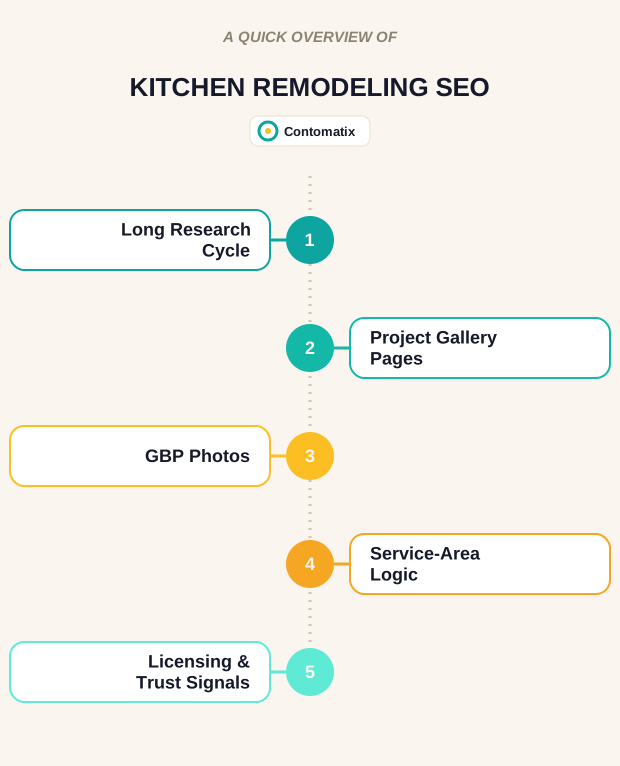
The Research Cycle Is Long — Build for Every Stage, Not Just the Quote
Most remodeling contractor sites are built for one moment: the visitor who's ready to request a quote. That's a mistake, because it's usually the smallest slice of the actual audience. Earlier in the process, homeowners are searching things like "small kitchen remodel ideas," "how long does a kitchen remodel take," "galley kitchen layout ideas," or "kitchen remodel budget breakdown" — none of which are ready-to-buy searches, but all of which are the exact moment a homeowner starts forming an opinion about who they trust.
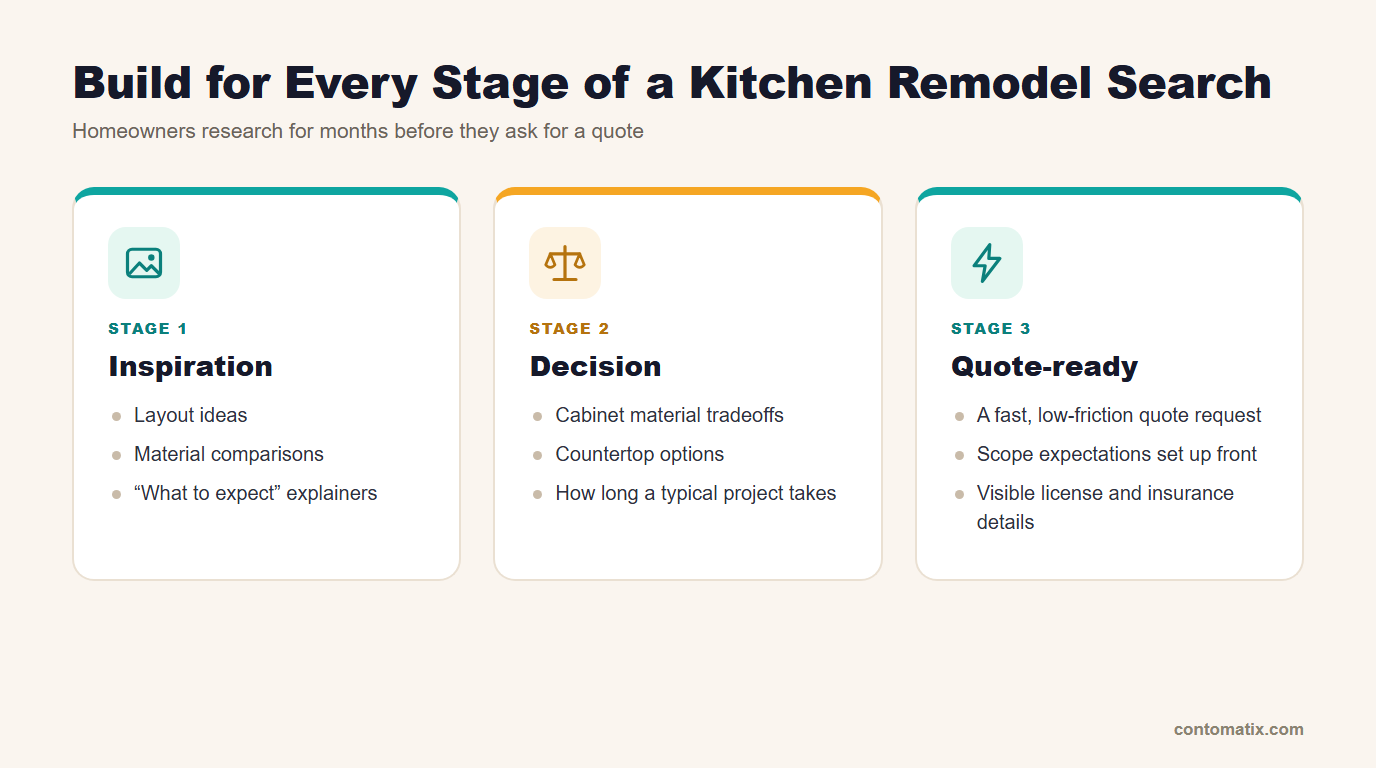
Mapping which searches belong to which stage is a keyword research problem before it's a content problem. A remodeler's content should mirror that cycle deliberately: inspiration and planning content (layout ideas, material comparisons, "what to expect" explainers) for the earliest stage, comparison and decision content (cabinet material tradeoffs, countertop options, how long a typical project actually takes) for the middle, and a genuinely fast, low-friction quote request for the moment someone's ready. Skipping straight to the quote form means competing only for the narrowest, most competitive keywords instead of building trust across the whole window a homeowner is actually shopping in.
Project Gallery Pages Are a Content Asset, Not Just Photos
A gallery page that's just a grid of thumbnails wastes what should be one of the strongest on-page SEO assets on the site. Each completed project deserves its own page: what the layout looked like before, what changed (a wall removed, an island added, a different traffic flow), the materials and finishes used, and roughly how long that type of project ran. That page then has a real chance to rank for the specific searches homeowners run when they're trying to picture their own project — "before and after galley kitchen remodel," "kitchen island addition ideas" — while a single undifferentiated gallery page competes for almost nothing.
The organizing principle matters more than the photography. Group projects by the decision a homeowner is actually trying to make (layout change, style, budget tier) rather than by date completed, since almost nobody searches "kitchen remodel March 2026."
Google Business Profile Photos Carry More Weight Than the Description
For a visual, high-consideration purchase like a kitchen remodel, the photo section of a Google Business Profile often does more persuading than any written copy. Google itself distinguishes categories fairly precisely here — Kitchen Remodeler is the right primary category for a business primarily chasing kitchen work, with General Contractor, Bathroom Remodeler, or Home Builder added as secondary categories if those services genuinely exist too. Picking "General Contractor" as primary when the business is really a kitchen specialist dilutes exactly the "near me" searches that matter most.
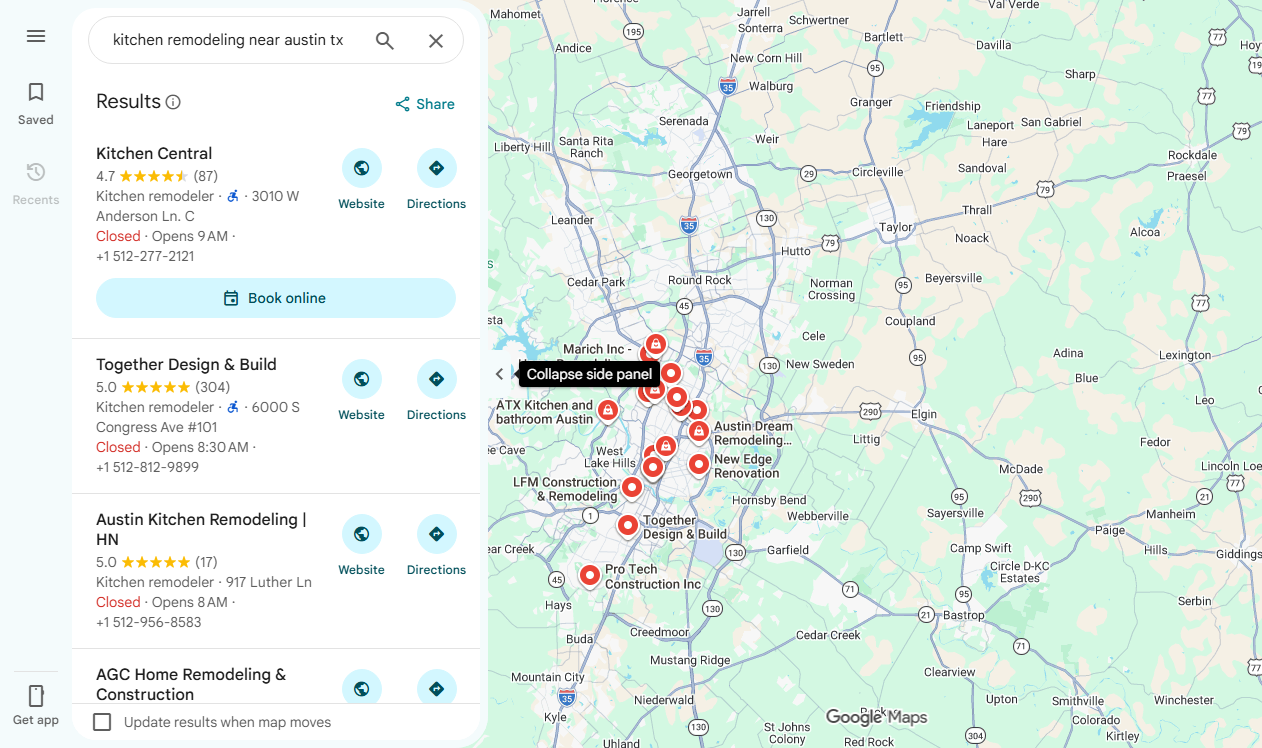
On photos specifically: real completed projects are more persuasive than stock or rendering imagery, and adding new project photos on an ongoing basis keeps the profile current instead of frozen at the day it was set up. A profile with twenty real kitchens photographed from a few consistent angles reads as more credible to a homeowner scrolling the map pack than one with three wide-angle stock-style shots.
Service-Area Logic for Remodelers Who Cover Multiple Towns
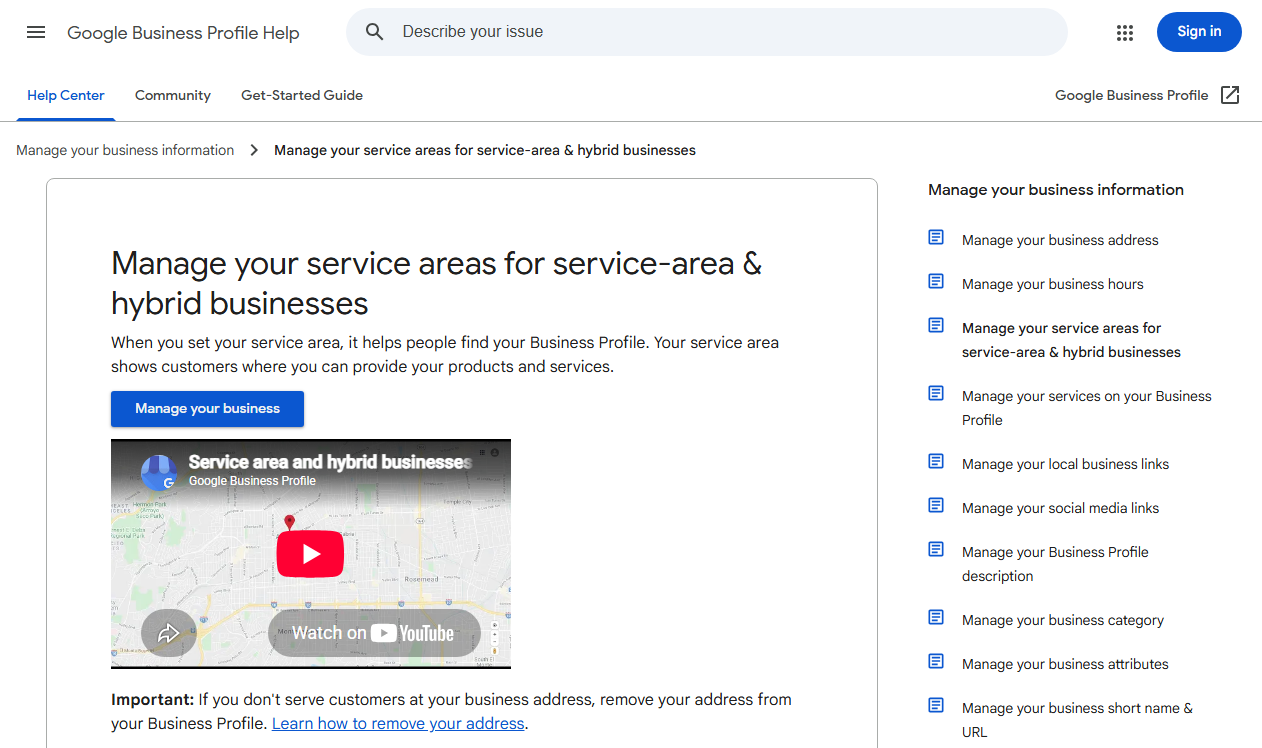
Most remodeling contractors aren't tied to a single storefront customers visit — they work across a metro area — which makes them a service-area business in Google's terms rather than a storefront business. Google's own guidance for service-area businesses is specific and worth following exactly: a profile can list up to about twenty individual service areas by city or postal code, it cannot be set as a radius around the business address, and the overall footprint shouldn't extend much beyond roughly two hours' driving time from where the business is actually based. Listing an entire state, or a service area with no realistic driving relationship to the business's real location, works against the profile rather than for it.
The same logic should carry through to the website: dedicated pages for the towns actually served, each with something specific to that area (recognizable neighborhoods, permitting quirks, typical home styles) rather than the same paragraph with the city name swapped — which is both a poor experience for the reader and something Google's own systems are increasingly good at recognizing as templated.
Lead Qualification Belongs on the Website, Not Just the Phone Call
Kitchen remodels span an enormous range of scope and investment, and a contractor who only qualifies leads once they're on the phone wastes a lot of estimating time on projects that were never going to be a fit. Pages that set realistic expectations up front — what a cosmetic refresh versus a full gut renovation typically involves, what tends to extend a timeline (structural changes, permitting, custom cabinetry lead times) — do real qualification work before the phone even rings, by helping the wrong-fit visitor self-select out and the right-fit visitor arrive already understanding roughly what they're getting into.
Remodeling Demand Moves in Seasons — Content Planning Should Too
Kitchen remodel interest isn't flat across the year the way some local services are. Planning and research activity tends to build through late winter and spring, as homeowners start projects they want finished before summer entertaining or before a fall move; a second, smaller wave often shows up ahead of the holidays, from homeowners wanting a finished kitchen before hosting. That doesn't mean publishing everything at once — it means the planning and inspiration content (layout ideas, budget-range guides) should already be live and indexed well before those research waves start, since content published the week demand peaks has no time to earn rankings before the window closes. A contractor who only starts writing content in spring is publishing into the same seasonal rush every competitor is chasing at the same time.
Scheduling matters on the operations side too: pages that set expectations about lead times for custom cabinetry, permitting timelines, and how far in advance a project needs to be booked to hit a target date do real work heading into the two seasonal peaks, when the gap between "when someone starts looking" and "when they need it done" is at its tightest.
Licensing, Insurance, and Bonding Are Trust Signals, Not Fine Print
A kitchen remodel usually means strangers working inside someone's home for weeks, often with real structural or electrical changes involved — which makes licensing and insurance status a genuine trust question, not a compliance afterthought to bury in a footer. Contractor licensing requirements vary significantly by state and sometimes by city, and some jurisdictions have no statewide licensing at all, leaving it to local permitting offices — so the specific claim made on-site needs to match whatever the applicable state or local board actually requires, not a generic "licensed and insured" line copied from a template. Displaying the actual license number, the general liability insurance carrier's name (not necessarily the policy details), and bonding status where applicable gives a skeptical homeowner something concrete to verify rather than just a stock reassurance.
Links From Local Suppliers and Trade Associations Are Underused
Remodeling contractors sit inside a real local supply chain — cabinet makers, tile and countertop suppliers, appliance dealers, lumber yards — and many of those relationships are a natural, legitimate source of backlinks that most contractors never ask for: a supplier's "who we work with" page, a local trade partner directory, or a joint project write-up. Trade associations are worth the same attention. Organizations like the National Association of the Remodeling Industry (NARI) and the National Kitchen & Bath Association (NKBA) run member directories and local chapter pages that are genuinely relevant, non-spammy places for a remodeler to be listed — the kind of link that would exist even if SEO weren't the reason for asking.
Putting Kitchen Remodeling SEO Together
Kitchen remodeling SEO comes down to matching a long, high-stakes research process rather than a quick local search: content for every stage of that research, project pages built to be found on their own, a Google Business Profile that reflects the specific category and honest service area, on-site qualification before the sales call, visible licensing and insurance detail, and backlinks earned from the real supply chain a remodeler already sits inside — link building that starts from relationships that already exist rather than from cold outreach.
What makes kitchen remodeling SEO different from other local trades?
The research cycle is much longer and the project cost is much higher than a typical local service call, so homeowners spend months browsing ideas and comparing contractors before requesting a quote — a site built only for the quote-ready visitor misses most of that window.
Should a remodeler use Kitchen Remodeler or General Contractor as their primary Google Business Profile category?
Kitchen Remodeler is the better primary category for a business primarily chasing kitchen projects, with General Contractor or Bathroom Remodeler added as secondary categories if those services are genuinely offered too.
How should a kitchen remodeler structure project gallery pages?
Each completed project should have its own page describing the layout change, materials and finishes, and approximate timeline, organized by the decisions homeowners are actually trying to make — rather than one undifferentiated photo grid.
How many service areas can a remodeling contractor list on Google Business Profile?
Google allows up to roughly twenty individual service areas by city or postal code, but it cannot be set as a radius, and the overall footprint shouldn't extend much beyond about two hours' driving time from the business's actual location.
What should a remodeler display to build trust around licensing?
The actual license number where the state or local jurisdiction requires one, the name of the general liability insurance carrier, and bonding status where applicable — matched to what the relevant licensing board actually requires, since requirements vary by state and sometimes have no statewide requirement at all.
Are trade association memberships useful for remodeler SEO?
Yes. Organizations like NARI and NKBA run member directories and local chapter pages that are relevant, legitimate sources of backlinks, alongside links from the suppliers and trade partners a remodeler already works with.
Is kitchen remodeling demand seasonal?
Interest tends to build through late winter and spring, with a smaller wave ahead of the holidays, so planning and inspiration content should already be live and indexed before those research waves start rather than published once demand has already peaked.
Sources: Google Business Profile Help, Manage your service areas for service-area and hybrid businesses · Google Business Profile Help, Manage your business category