Last updated: September 2026
Most "best SEO companies in your city" lists — including our own city guides — stop at the shortlist. They tell you who's worth calling, not what to do once you're on the phone with them. This is the part that actually determines whether the engagement works: the questions that separate a real operator from a reseller, whether hiring locally even matters for the technical work, and what a legitimate agency's first quarter should look like so you can tell early if something's off.
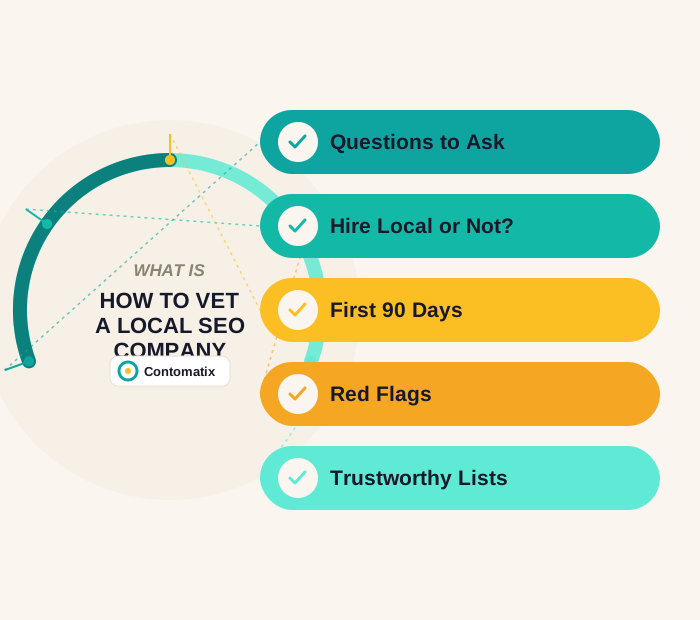
How to Vet a Local SEO Company: Questions to Ask Before You Sign
Who will actually work on my account day to day? The person pitching is often not the person delivering. Get the actual name and background of whoever will be in the account.
What's the contract length and notice period? Prefer 30 days for a first engagement. A contract that locks you in for a year before you've seen a single month of work is a red flag, not a discount.
Do I own my Google Business Profile, Analytics, and Search Console? The answer must be yes, in accounts you control. An agency that insists on hosting these under their own login is making it expensive for you to leave — regardless of what they say the reason is.
What would you tell me not to spend money on? An agency that never says this is selling rather than advising. Every real strategist has turned down billable work that wouldn't have moved the needle for a specific client.
Can I see a case study at my budget level? Enterprise results tell you nothing about what a $1,500/month retainer looks like. Ask for a comparable-size client, not their best logo.
And the one that ends the conversation immediately: anyone guaranteeing first-page rankings should be ruled out on the spot. Nobody controls Google's results, and the guarantee itself is the disqualifier — it tells you either they don't understand how search works, or they're comfortable promising something they can't deliver.
Should You Hire Local at All?
An honest question most local listicles avoid, because the answer is genuinely "it depends," not a marketing line.
Local matters when you need face-to-face contact, when your customers are exclusively local and market knowledge helps with things like seasonal patterns or neighborhood-level nuance, or when you simply prefer working with someone nearby. It matters much less than people assume for the technical work itself — crawl budget, site speed, and schema markup are identical regardless of your agency's zip code. A well-run remote team can execute a local SEO campaign for a city they've never set foot in, provided they do the market research properly.
Where "local" earns its premium is judgment calls that need context: knowing which neighborhoods a city guide should mention by name, or recognizing that a review pattern is normal for a specific local industry rather than a red flag. That's a research problem more than a geography problem, but a genuinely local team sometimes arrives at it faster.
What a Good First 90 Days Looks Like
Whichever agency you pick, the opening quarter should follow a recognizable shape. If it doesn't, that's an early warning rather than something to wait out.
Weeks 1–2: access handed over properly — Analytics, Search Console, and Google Business Profile granted from your own accounts — plus a technical audit and a written baseline of where you currently rank and how much traffic you get. You should receive that baseline in writing before any "improvement" is claimed later.
Weeks 3–6: the fixes that need no debate. Broken pages, missing or duplicated title tags, Google Business Profile categories and details, citation inconsistencies, obvious speed problems. None of this requires a strategy session — it's just correct, and a competent team clears it fast.
Weeks 7–12: content and links begin. This is the slow part, and the point where impatient clients often change agencies just before results start to arrive. Rankings from new content or a new link typically take several weeks to register at all, and longer to compound into real traffic.
What you should not see in the first 90 days: a report full of rankings with no traffic or enquiry numbers attached, or three straight months of "strategy" with nothing actually shipped. Both are stalling, dressed up as process.
Red Flags That Should End the Conversation
Some signals are worth treating as disqualifying rather than merely concerning, regardless of how good the rest of the pitch sounds.
A guaranteed ranking or a guaranteed timeline. Nobody controls Google's algorithm, and a specific promise — page one in 90 days, a specific position for a specific term — means either the person doesn't understand how search ranking actually works, or they're comfortable promising something they know they can't reliably deliver. Neither is a good sign about what else they might be willing to promise.
Reluctance to name past or current clients. A reasonable agency will show you something — a redacted report, a named client willing to take a reference call, a case study with real numbers. An agency that treats its entire client list as confidential, with no exceptions at all, is often hiding a thin track record rather than protecting genuine confidentiality.
Pressure to sign quickly. SEO is a slow-moving field by nature — a contract signed this week versus next week makes no practical difference to results. Artificial urgency ("this rate expires today") is a sales tactic borrowed from industries where speed actually matters, and it doesn't belong in this one.
A technical audit that reads like a template. If the "custom audit" you receive could have been generated for any website in any industry — generic recommendations with your domain name swapped in — that's a preview of what ongoing "strategy" will look like too.
How to Tell If a "Best SEO Companies" List Is Trustworthy
Many "top SEO company" lists — on our site and everyone else's — are worth a second look before you trust the ordering. A lot of them are directory pages where placement can be paid for, sponsored, or sold as a premium profile. That's a legitimate business model in itself, but it means the order reflects marketing spend rather than assessed quality, and treating a numbered list as a results-based ranking is a mistake no outsider can actually verify anyway — nobody outside an agency's own client roster can confirm another agency's outcomes.
Two practical safeguards work regardless of which list you're reading: check whether the page discloses how it compiled its entries, and click through to two or three of the listed sites yourself rather than trusting a summary. In smaller markets specifically, some published lists also pad their count with agencies that are actually based somewhere else entirely — worth confirming directly instead of taking the location label at face value.
None of this is meant to make hiring sound adversarial. Most agencies are straightforward about their work and happy to answer these questions directly — the point of asking is simply to find out which kind you're talking to before money changes hands.
Related Reading
- For hand-verified local shortlists, see our directory of the best SEO companies in the USA by city.
- Weighing an in-house hire or a solo contractor instead of an agency? See choosing between an agency and a freelancer.
- Specifically vetting technical SEO capability? See what to look for in a technical SEO agency.
How do I check if an SEO company is legitimate?
Load their website and look for real content and recent work — not just a template with a phone number swapped in. Ask who will handle your account day to day, what the contract terms are, and for a case study at your budget level. Walk away from anyone guaranteeing rankings.
Are "top SEO company" lists trustworthy?
Treat them as a starting shortlist, not a verdict. Many are directory sites where placement can be paid for, so the ordering reflects marketing spend rather than quality. Check how the list says it was compiled, and verify a few entries yourself.
Do I need an SEO agency, or can I do it myself?
Google Business Profile setup, review collection, and basic citation consistency are genuinely doable in-house and cover a lot of ground for a local business. Technical audits, content at scale, and link acquisition are where outside help usually pays for itself.
Should I hire a local SEO company or a national one?
Local helps for face-to-face contact and local market knowledge, particularly if all your customers are in the area. The technical work itself doesn't depend on location, so if you serve customers beyond your city, restricting the search to local agencies narrows your options without a technical benefit.
What's a reasonable contract length for a first engagement?
30 days, or as close to it as the agency will offer. SEO results take longer than a month to show, but the contract terms themselves — communication, reporting, whether they follow through on what was promised — become obvious well before then.