Local SEO for taxi companies is the practice of making a taxi or private hire business visible in Google Maps and local search results for the exact moment someone nearby is searching for a ride. For most taxi businesses, that visibility isn't a marketing nice-to-have — it's the difference between a phone that rings and one that doesn't, since the overwhelming majority of taxi bookings now start with a phone search rather than a phone book or a street hail.
The competitive reality has also changed considerably. A taxi company today isn't just competing with the firm across town — it's competing directly against Uber and Lyft inside the same search results, on the same map, for the same customer. Uber alone closed the year with $193 billion in gross bookings and its fifth consecutive year of 20%+ growth, and rideshare platforms combined now hold the overwhelming majority of app-based ride spending. This guide covers what local SEO for a taxi company actually involves in 2026, and how an independent operator competes for visibility against that scale.
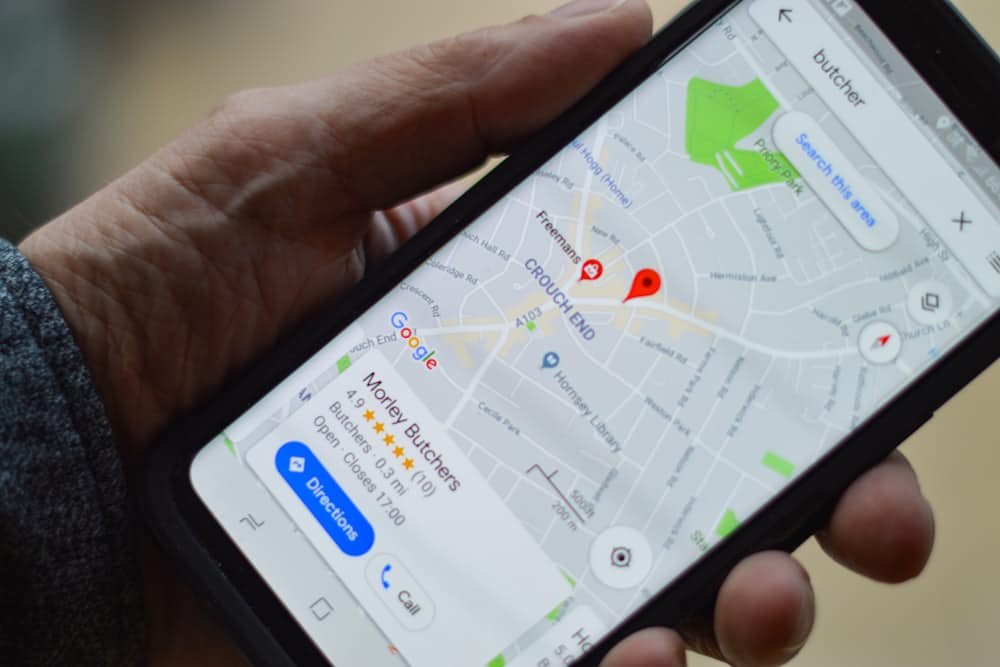
Why Local SEO for Taxi Companies Matters More Than for Most Businesses
Local search behavior is unusually well-suited to taxi bookings specifically. 76% of "near me" mobile searches lead to an in-person visit or contact within 24 hours, and local search-to-action conversion rates have climbed as high as 82% for mobile "near me" queries — figures that matter enormously for a business where the entire transaction can start and finish within an hour of the search itself. A taxi search has about as much immediate, high-intent urgency behind it as a local search category can have.
That urgency cuts both ways, though. Because most bookings start and end inside Google Maps for this category, a taxi company that doesn't appear in the map pack for "taxi near me" or "taxi in [city]" isn't losing a slow trickle of business — it's losing the booking to whichever competitor (independent firm or rideshare app) does show up, in real time, for that exact search.
It's worth being specific about what "losing the booking" actually means in this category compared to most other local services. A homeowner searching for a plumber might call two or three businesses and wait for a callback, treating the delay as a minor inconvenience. Someone searching for a taxi is almost always trying to solve an immediate, time-sensitive need — catching a flight, getting home safely, making an appointment — and will move to the next visible option within seconds rather than minutes if the first result doesn't respond. That compressed decision window is exactly why local SEO investment pays off faster, and more visibly, in this category than in slower-moving local service industries.
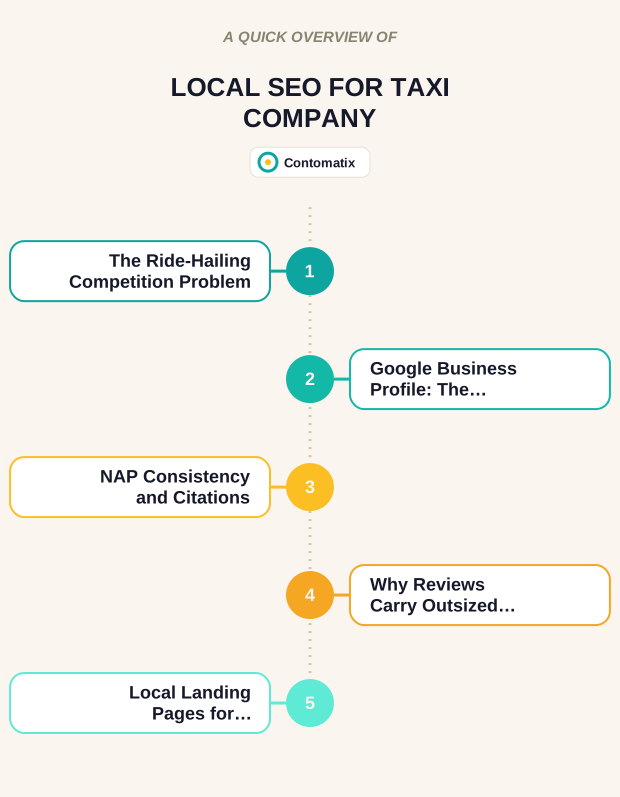
The Ride-Hailing Competition Problem
Independent taxi companies aren't just competing against each other anymore. Uber holds roughly three-quarters of observed US rideshare spending, with Lyft accounting for most of the rest, and the global ridesharing market is on track to reach over $185 billion. That scale means a local taxi firm's Google Business Profile and map pack presence has to work harder than it would in almost any other local service category, since the alternative a searcher sees isn't just "call a different cab company" — it's "open an app that's already installed on their phone."
This is exactly why local SEO matters more here, not less: a taxi company can't out-market Uber's brand budget, but it can absolutely out-rank a generic rideshare app listing for hyper-local, high-intent searches — "airport taxi in [city]," "24 hour taxi near [neighborhood]" — where genuine local presence, real phone numbers, and community reputation carry real ranking weight that a national app's generic listing doesn't automatically win.
There's also a segment of riders who deliberately prefer a local taxi company over a rideshare app — travelers unfamiliar with app-based pricing, older customers less comfortable with app-only booking, corporate accounts needing invoiced billing, or simply people who've had a bad rideshare experience and are actively searching for an alternative. That audience exists specifically because they're searching for "taxi" rather than opening an app they already have installed, which makes local search visibility for taxi-specific terms a genuinely different opportunity than trying to compete for generic "ride" or "transportation" searches where app-based platforms dominate by default.
Google Business Profile: The Foundation
Google's local ranking algorithm weighs three core factors — relevance, distance, and prominence — and given how strongly "near me" searches convert, a properly built and actively maintained Google Business Profile is where almost all of that signal gets built for a taxi business. That means the correct primary category (Taxi Service, not a generic "Transportation Service" catch-all), accurate service area settings that reflect where drivers actually operate, real phone numbers that match what's listed everywhere else online, and business hours that reflect genuine 24-hour or scheduled availability rather than defaulting to a generic template.
Photos matter more here than operators often expect. A profile with real photos of the actual vehicles, drivers, and branding reads as more trustworthy to a searcher choosing between several similar-looking taxi listings than a profile with a stock car image or no photos at all. Businesses that post weekly updates on their Google Business Profile see roughly a 30% increase in customer interactions — a low-effort, frequently skipped step that meaningfully outperforms a profile set up once and left untouched.
Service area settings deserve specific attention for taxi companies, since this is a category where "where do you actually operate" is genuinely more complex than a fixed storefront business. A taxi firm serving an entire metro area, several surrounding towns, and a specific airport corridor needs its service area configured to reflect all of that coverage accurately — an incorrectly narrow service area setting can quietly exclude the business from map pack results for searches originating just outside whatever radius was set up by default when the profile was first created.
The "Services" and "Attributes" sections of a Google Business Profile are also routinely left blank by taxi operators, despite being a direct opportunity to signal exactly what's offered — airport transfers, wheelchair-accessible vehicles, 24-hour dispatch, card payment acceptance — information that helps Google match the right searches to the right business, and helps a searcher quickly confirm a listing actually meets their specific need before calling.
NAP Consistency and Citations
NAP — Name, Address, Phone number — consistency across every directory, listing, and citation source is a foundational local ranking signal, and it's an especially common failure point for taxi companies specifically, since many operate from multiple locations, use different phone numbers for dispatch versus bookings, or have rebranded at some point without updating every existing listing. A single mismatched phone number sitting on an old directory listing can quietly undermine an otherwise well-optimized profile.
Local citations — mentions of the business on local directories, chamber of commerce sites, and industry-specific listings — reinforce that prominence signal, and for taxi companies specifically, industry directories (airport transportation listings, local business associations, tourism boards) tend to carry more topical relevance than generic national business directories.
Why Reviews Carry Outsized Weight for Taxi Bookings
Reviews matter across every local business category, but they matter with particular force for a service like a taxi ride, where the customer is trusting a stranger with their physical safety for the duration of the trip. Nine out of ten consumers won't visit or use a local business without reading reviews first, and 68% of consumers won't consider a business with an average rating below four stars — a meaningfully high bar in a category where safety and reliability are the entire value proposition.
A genuine, ongoing review pipeline — asking satisfied riders directly, responding to every review (positive and negative), and addressing complaints publicly and professionally — does more for a taxi company's local ranking and conversion rate than almost any other single local SEO activity, precisely because review volume and recency function as a direct prominence signal to Google on top of their obvious effect on customer trust.
Timing matters more for taxi reviews than for most local businesses, since the natural moment to ask — right as a rider exits the vehicle at their destination — is also the least convenient moment for them to actually leave one. A follow-up text or receipt email with a direct review link sent shortly after the ride, rather than relying on an in-person ask alone, tends to produce a meaningfully higher response rate, since it reaches the rider at a moment when they can actually act on the request rather than being asked to remember it later.
Responding to negative reviews specifically also carries more weight in this category than in many others, since a public, professional response to a complaint about a late pickup or a rude driver signals accountability to every future searcher reading that review thread — not just the original reviewer. A taxi company with a handful of visible, well-handled negative reviews often reads as more trustworthy to a careful searcher than one with only five-star reviews and no visible history of ever addressing a problem.
Local Landing Pages for Multi-Area Coverage
Taxi companies that serve multiple towns, neighborhoods, or an airport corridor benefit from dedicated local landing pages for each service area, rather than one generic homepage trying to rank for every location at once. A page built specifically around "[City] Airport Taxi Service," with real local details — actual response times, specific pickup zones, local landmarks — consistently outperforms a single generic page trying to serve every search variation with the same broad content.
This is where genuine keyword research earns its cost for a taxi business: understanding the specific phrasing real local searchers use — "airport taxi," "cab near me," "24 hour taxi service" — rather than guessing at generic city-plus-service combinations that may not match actual local search behavior at all. We've covered the same principle for other location-specific service businesses — see our guide on local SEO in Edmonds, WA for how it plays out in a smaller, single-city market rather than a multi-area taxi service footprint.
Mobile Experience and Click-to-Call
60% of mobile users contact a business directly from local search results, typically through click-to-call or a directions link, without ever visiting the business's actual website first. For a taxi company, that means the mobile experience of a Google Business Profile and any linked website matters as much as, if not more than, desktop design — a slow-loading site or a hard-to-find phone number costs real bookings in a category where the average searcher has already decided to book a ride and is choosing between the first few options that respond fastest.
64% of smartphone users who search for something locally contact a business within an hour of that search, which leaves very little margin for a taxi company's online presence to be anything less than immediately clear about how to actually get a ride booked.
How Long Local SEO Actually Takes for a Taxi Business
Realistic timelines matter here because taxi operators are often making marketing decisions under real-time pressure. Most operators see meaningful map pack movement within 60-90 days of a clean Google Business Profile optimization, a solid batch of matched citations, and a city-specific landing page going live. Highly competitive metro markets — major cities with dense taxi and rideshare competition — typically take 4-6 months to reach a consistent top-three map pack position for a primary "taxi near me" style query.
That timeline is worth setting honestly upfront, since a taxi operator expecting overnight map pack dominance is set up for disappointment regardless of how well the underlying work is executed — this is a compounding, prominence-driven process, not a paid ad that turns on instantly.
It's worth pairing that timeline expectation with a realistic view of what "results" should actually look like along the way. In the first 30 days, expect profile and citation cleanup to complete with minimal ranking movement yet. By 60-90 days, most operators start seeing measurable map pack position improvement for at least some of their target searches, alongside a growing review count. The 4-6 month mark, in competitive metros, is typically where consistent top-three positioning for the highest-value "taxi near me" style queries becomes realistic — not because the work suddenly accelerates, but because prominence signals (reviews, citations, engagement) compound rather than appearing all at once.
Working With a Local SEO Partner
Given how directly local ranking translates into phone calls for a taxi business, a capable local SEO partner should be able to speak specifically to Google Business Profile category selection, citation-building strategy, and review pipeline management — not just generic on-page changes. If you're evaluating your own taxi company's local visibility, get in touch and we can walk through what a realistic local SEO plan looks like for your specific service area and fleet size. Ask specifically how a prospective partner would handle service-area configuration, review pipeline setup, and multi-location citation building — the answers to those three questions tend to reveal more about actual taxi-industry experience than a generic pitch about "ranking higher on Google" ever will.
How do taxi companies rank on Google Maps?
Through a combination of Google Business Profile optimization (correct category, accurate service area, active photo and post updates), NAP-consistent citations across directories, a strong ongoing review pipeline, and local landing pages for each service area.
How long does local SEO take for a taxi company?
Most operators see meaningful map pack movement within 60-90 days after clean Google Business Profile optimization and citation building. Highly competitive metro markets typically take 4-6 months to reach a consistent top-three position.
Do reviews really matter for taxi company rankings?
Yes, significantly. Nine out of ten consumers won't use a local business without reading reviews first, and 68% won't consider a business rated below four stars — a high bar in a category built entirely around trust and safety.
Can local SEO help a taxi company compete with Uber and Lyft?
For hyper-local, high-intent searches like "airport taxi in [city]" or "24 hour taxi near [neighborhood]," yes — a well-optimized local listing with real reviews and community presence can outrank a generic rideshare app listing for those specific searches, even though it can't match a rideshare platform's overall brand budget.
What's the most common local SEO mistake taxi companies make?
Inconsistent NAP (Name, Address, Phone) data across directories and listings, often from operating multiple locations or rebranding without updating every existing citation — a quiet but significant drag on local ranking.
Does the mobile experience matter for taxi company SEO?
Yes. 60% of mobile users contact a business directly from local search results via click-to-call, and 64% do so within an hour of searching — a slow site or hard-to-find phone number costs real bookings in a category where speed of response matters.
Related Reading
- For a Florida market example, see our guide to SEO in Deerfield Beach, FL.
- For a regional SEO example in Massachusetts, see our guide to SEO in Springfield, MA.