Last updated: July 2026
How to do SEO for Airbnb listings comes down to one thing above everything else: getting guests to click your listing, then getting them to actually book once they land on it. Everything else — keywords, photos, pricing, response time — exists to move one of those two numbers.
That's a different starting point than most guides give you. Most treat Airbnb SEO like Google SEO with a different logo — stuff the title with keywords, update your calendar daily, hope the algorithm notices. Airbnb's own documentation says almost none of that matters the way hosts think it does.
This guide sticks to what's actually documented, plus what large-scale host data has confirmed, and separates it clearly from the folklore that's been circulating in host Facebook groups for years.
What SEO for Airbnb Listings Actually Means
Airbnb SEO is the process of optimizing your listing's content, photos, pricing, and host behavior so Airbnb's search algorithm ranks it higher for the guests most likely to book it. It isn't keyword optimization in the Google sense — Airbnb's system is a matching engine, not a crawler indexing text.
There's a technical reason the two are fundamentally different disciplines, not just similar ones with different rules: individual Airbnb listing pages carry noindex and nofollow directives, which means Google never indexes them and no amount of on-page keyword work will ever surface a specific listing in Google search results. Whatever "SEO" means for an Airbnb listing, it happens entirely inside Airbnb's own search, not Google's.
It also helps to think of Airbnb as a perishable-inventory marketplace rather than a content platform. A blog post that ranks poorly today can still rank well next year — the content doesn't expire. A night on your calendar that doesn't get booked is gone forever the moment it passes. That difference is why Airbnb's algorithm leans so heavily on conversion and pricing signals that update in near real time, rather than the slower, link-and-content-driven signals Google relies on.
The company has been unusually open about the framework, even if the exact formula stays private. In 2026, its algorithm runs as several stacked models: one checks whether your listing genuinely fits what the guest searched for, one scores listing quality, and one scores host performance. Each search re-ranks results based on who's searching, when, and what they've done on the platform before — it isn't one static ranking that applies to everyone.
That personalization piece trips up a lot of hosts who compare notes in Facebook groups. Two hosts searching the same dates and city can see genuinely different result orders, because Airbnb factors in each searcher's own browsing and booking history, not just the listing itself. A screenshot showing "I'm ranked #3 for this search" from one host's phone tells you almost nothing about how your own listing will rank for a different guest — which is part of why so much host-shared advice ends up being coincidence mistaken for cause and effect.
Click-Through Rate on the Search Card
Before a guest reads a single word of your listing, they see a card: one photo, a price, a title, a rating. That card has to earn the click in under a second.
If guests see your card and skip it, Airbnb reads that as a mismatch — your listing showed up for a search it doesn't actually fit — and demotes you for similar searches going forward. A weak cover photo or a price that looks off relative to nearby listings can tank click-through rate before anything else about your listing even gets evaluated.
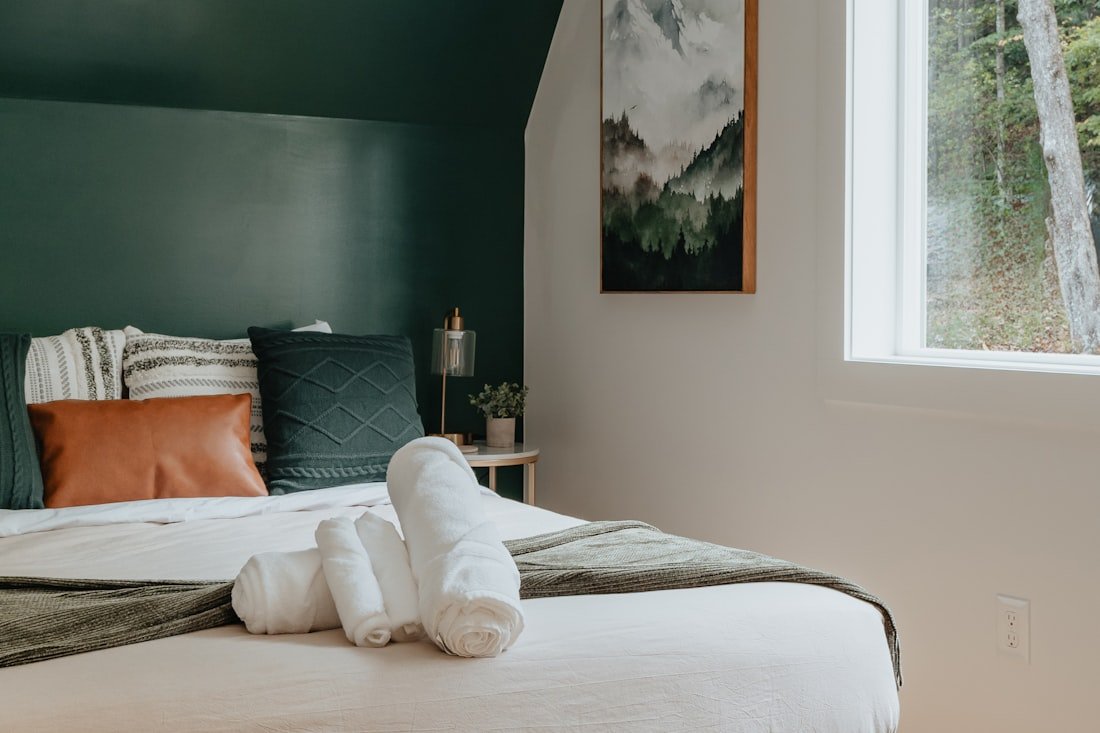
A cover photo like this one does the job a card has to do in under a second: clean light, an uncluttered composition, and a clear sense of what the space actually looks like — no wide-angle distortion, no clutter to explain away.
Conversion Rate After the Click
Getting the click is only step one. Once a guest opens your listing, Airbnb tracks whether they scroll, open the photo gallery, read reviews, and — critically — whether they book or leave.
Multiple large-scale host studies from 2026 point to the same conclusion: conversion rate is the single most influential ranking factor once click-through gets a guest in the door. A listing that gets clicked a lot but rarely booked will actually rank worse over time than one with fewer clicks and a higher booking rate. Airbnb is optimizing for bookings, not traffic.
This is also why chasing raw impressions is the wrong goal. A listing that shows up for every loosely related search in a wide radius might look good on a traffic dashboard, but if most of those views bounce without booking, the algorithm reads that as a mismatch and starts showing the listing less, not more. The healthier target is a smaller, better-matched set of searches where your listing consistently converts — narrow and accurate beats broad and mismatched almost every time.
Total Price, Not Just Nightly Rate
Airbnb evaluates price competitiveness against your comp set — and total price, including cleaning fees and service charges, matters more than the nightly rate alone. A listing with a low nightly rate but a large cleaning fee can rank worse than a competitor with a higher nightly rate and no hidden costs, because guests compare totals, and Airbnb's system increasingly does too.
Price it against what similar listings in your immediate area actually charge for the full stay, not just the number in the search results.
Minimum stay requirements interact with this more than most hosts realize. A high minimum-night requirement filters your listing out of shorter searches entirely, regardless of how well everything else is optimized — you simply never enter the results for a two-night search if your minimum is five nights. Reviewing whether your minimum stay is filtering out searches you'd actually want to win is a five-minute check that a lot of optimization checklists skip entirely.
A Completely Filled-Out Listing
Host testing consistently shows the same pattern: identical listings with every field completed outrank ones with gaps. Amenities, house rules, neighborhood description, every photo category — Airbnb treats a complete listing as a quality signal, and it costs nothing but time to fix.
If your listing has an empty "what this place offers" section or skipped the neighborhood description, that's free ranking left on the table.
Photo categories specifically get overlooked more than any other field. Airbnb's listing editor separates photos into categories like bedroom, bathroom, kitchen, and exterior — and a listing missing photos in an expected category reads as incomplete even if the overall photo count looks fine. Guests also use those categories to jump straight to the room that matters most to their decision, so a gap there is both a quality signal problem and a lost chance to answer the exact question a guest came to your listing to ask.
Content Freshness
Recently updated listings perform measurably better in search than stale ones. This doesn't mean cosmetic daily tweaks — it means genuinely updating your description, swapping in current photos, and refreshing amenities as your space actually changes. A description that hasn't been touched since you first listed the property is a weak signal, especially next to a competitor who updates seasonally.
Review Content, Not Just Star Rating
Airbnb's system reads what guests actually write, not just the number of stars they leave. Specific mentions of cleanliness, communication, and accuracy feed into how your listing gets matched to future searches. A 5-star review that says "great stay" does less for you than a 4.9-star review that specifically praises how clean the kitchen was and how fast you replied to messages.
Encourage detailed reviews. Respond to every review, positive or negative — host responses are visible and factor into how guests judge your listing before they even open it.
A useful habit here is prompting guests toward specifics without scripting their words for them. A generic "please leave a review" message tends to produce generic reviews back. Asking something like "let us know how the check-in process worked for you, or if anything about the space stood out" nudges guests toward the kind of detailed, category-specific language that actually feeds the matching system, without asking them to write anything they don't genuinely mean.
Instant Book
Listings with Instant Book enabled consistently rank higher — some data points to a meaningful visibility lift over listings that require approval. It removes a step of friction between a guest deciding to book and actually booking, and Airbnb's whole system is built around rewarding exactly that.
Response Time and Cancellation Rate
These feed into your Superhost eligibility, but more importantly, they feed the algorithm directly regardless of whether you hold Superhost status. Fast response times and a low cancellation rate are individually weighted ranking inputs — not just badge requirements.
Superhost Status Itself Isn't the Boost Hosts Think It Is
Airbnb has stated plainly that the Superhost badge is not a direct ranking boost. What actually matters are the underlying metrics that earn Superhost — cancellation rate, responsiveness, rating, review count — which are already weighted into the algorithm on their own. The badge helps indirectly, because guests see it and click more, and that improved click-through feeds back into ranking. But chasing the badge itself, separate from the metrics behind it, misses the point.
Keyword-Stuffed Titles Don't Work the Way Hosts Assume
Title keywords carry far less weight than most hosts assume. Airbnb's matching system works more like a guest-intent model than a text search — cramming "Downtown Luxury Modern Cozy Family Beachfront" into a title doesn't move the needle the way a strong cover photo and accurate pricing do. Write titles for humans deciding whether to click, not for a keyword scanner.
Daily Calendar Updates Are Superstition, Not Strategy
Touching your calendar every day out of superstition does nothing on its own. What matters is actual availability accuracy and how far out your calendar is genuinely open — not the ritual of opening the host dashboard daily to "signal activity" to an algorithm that isn't tracking that.
Random Photo Rotation Doesn't Help Either
Changing one photo a week without a reason doesn't help. What helps is testing your actual cover photo against what converts — swapping it because a specific image is underperforming, not because a week has passed.
What Optimizing Inside Airbnb Can't Do For You
Everything covered so far happens entirely inside Airbnb's own search — because, as covered above, that's the only search a listing page can actually rank in. But that leaves real demand on the table: plenty of travelers start their search on Google, not Airbnb, searching things like "cabin rental near [town]" or "[city] pet-friendly Airbnb." A listing itself can never capture that traffic, since noindex and nofollow block it from Google entirely.
The hosts who capture that other demand typically do it with assets Airbnb doesn't control: a simple standalone website for the property, a Google Business Profile for the rental, and genuinely locally-relevant content about the area that a search engine can actually index. None of that touches your Airbnb ranking directly, but it builds a second, independent channel of demand that isn't subject to Airbnb's algorithm at all — which matters given how much of this guide comes down to signals you don't fully control. If that's a gap worth closing for a specific property or portfolio, it's the kind of off-page SEO and local content work that sits outside Airbnb's walls entirely, rather than another lever inside the listing itself.
What Changed in 2026 Worth Knowing
Airbnb overhauled its cancellation framework effective October 1, 2025, permanently retiring the old Strict policy — hosts previously on Strict were automatically migrated to Firm — and made a universal 24-hour free-cancellation window standard across every policy tier for bookings made at least 7 days before check-in, according to Airbnb's own Help Center documentation. Because booking friction directly affects conversion rate, and conversion rate feeds ranking, this change moved visibility for a lot of listings even though it reads like fine print.
Separately, on April 20, 2026, Airbnb updated its Terms of Service to formally disclose, for the first time in a legal document, how its recommendation system actually works — confirming the search ranking pulls from several hundred signals per query and personalizes results per guest rather than applying one static order to everyone.
New listing boosts — the temporary visibility bump every new listing gets — have also been trimmed compared to prior years, and that boost window now runs roughly two to four weeks rather than longer. How a listing performs during that short window increasingly sets its ranking trajectory for months afterward, which means the first month matters more than it used to.
Guest Favorites, the badge requiring a 4.9-plus average rating across at least five reviews in the trailing two years, now carries more weight in how listings surface than Superhost status alone, according to Airbnb's own resource page on Guest Favorites — a meaningful shift for hosts who've been optimizing around the older badge. The badge itself is recalculated daily from a rolling window of recent reviews and cancellation data, so it can move both up and down faster than most hosts expect.
A Practical First-Week Checklist
Do these in order — each one compounds on the last:
- Audit your cover photo against your comp set. Look at the top five listings in your area for a comparable search. Is your first photo competitive on light, composition, and what it promises?
- Price against total cost, not nightly rate. Check what guests actually pay after fees for similar listings, and adjust your total accordingly.
- Fill every empty field. Amenities, house rules, neighborhood guide — leave nothing blank.
- Turn on Instant Book if you haven't. Removing that friction step is one of the highest-leverage, lowest-effort changes available.
- Rewrite your description for accuracy and freshness, not keyword density. Update anything that's changed since you first listed.
- Set a response-time habit. Fast, consistent replies feed both conversion and the algorithm directly.
- Ask past guests for detailed reviews, and respond to every review you receive.
Most of this compounds over time rather than producing an overnight jump — the point isn't to chase this week's search position, it's to fix the signals that keep compounding in your favor month over month. If your listing content and technical setup need a broader on-page SEO pass beyond just the checklist above, that's worth treating as its own project rather than squeezing it into a single afternoon — get in touch if you want a second set of eyes on where your listing is actually losing bookings.
How do I improve my Airbnb SEO ranking?
Focus on click-through rate and conversion rate first — a strong cover photo, competitive total pricing, and a completely filled-out listing move both. Everything else supports those two metrics.
Does keyword stuffing help Airbnb listings rank higher?
No. Airbnb's matching system works on guest intent, not text-matching. A clear, human-written title outperforms one crammed with search terms.
Does Superhost status boost my ranking directly?
Not directly. Airbnb has said the badge itself isn't a ranking factor — but the underlying metrics that earn Superhost status (response rate, cancellation rate, reviews) are weighted into the algorithm regardless of the badge.
Should I update my calendar every day to rank higher?
No. Calendar accuracy and how far out you're bookable matter — the ritual of touching it daily for its own sake doesn't.
Does Instant Book actually improve visibility?
Yes. Listings with Instant Book enabled consistently rank higher, because it removes friction between a guest's decision and an actual booking.
How long does a new listing's algorithm boost last?
Roughly two to four weeks in 2026 — shorter than in prior years — which makes early performance more important to get right from day one.
Do reviews need to be 5-star to help my ranking?
Not necessarily. Airbnb's system reads review content, not just star count — specific, detailed reviews mentioning cleanliness, communication, and accuracy carry real weight even at 4.9 stars.
Does pricing lower than competitors guarantee a higher ranking?
Lower total price correlates with higher rankings, but it's total price including fees, not just nightly rate, and it's evaluated against your specific comp set — not a blanket rule to always price the lowest.
How often should I update my listing description?
Whenever something genuinely changes, and at minimum seasonally. Content freshness is a confirmed signal, but the update needs to be real, not cosmetic.
What's the single biggest ranking factor in 2026?
Conversion rate — whether guests who view your listing actually book it — consistently comes up as the most influential factor once a listing gets clicked.
Do wishlist saves affect ranking?
They're understood to signal demand even without an immediate booking, which the algorithm factors in — though it's a smaller input than click-through and conversion rate.
Is Airbnb SEO different from Google SEO?
Substantially. Airbnb's algorithm is a guest-matching and conversion-prediction system, not a text-indexing search engine — which is why tactics borrowed directly from Google SEO, like keyword density and backlinks, don't translate well.