Last updated: September 2026
Hire a nursing homes SEO company or handle it in-house, the first thing to understand is who is actually doing the searching. It is almost never the resident. Most searches for a nursing home are done by an adult child researching options for a parent, or a hospital discharge planner working against a bed-availability clock, and both of them search very differently from someone shopping for a plumber or a restaurant.
Who Is Really Searching, and Why That Changes Everything
An adult child researching care for a parent is usually doing so under emotional strain, often while juggling a full-time job, and frequently starting the search only after a hospitalization or a fall forces the decision. A discharge planner, by contrast, is searching on behalf of the hospital, needs an answer within hours rather than days, and cares less about marketing copy than about concrete facts: does this facility have an open bed, does it accept the patient's insurance or Medicaid pending status, and does it offer the specific level of care the discharge requires (skilled nursing rehab, long-term custodial care, memory care).
That split matters for content strategy, and it is a big part of why good SEO for nursing homes looks different from SEO for a typical local business. A site that only speaks to the unhurried adult-child researcher, with soft photography and general reassurance copy, will lose the discharge-planner search entirely if it does not also state plainly, above the fold on the relevant page, what levels of care are offered and whether the facility is currently accepting new admissions.
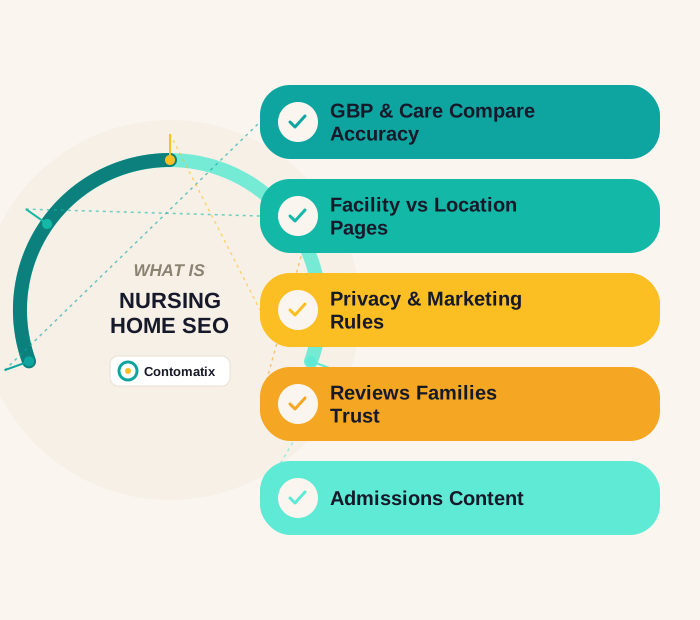
What a Nursing Homes SEO Company Should Fix First: Google Business Profile
For most facilities, the Google Business Profile listing is seen before the website is. Getting the category right matters more here than in almost any other local vertical, because Google draws a real distinction between a nursing home (Medicare-certified skilled nursing), an assisted living facility, and a retirement community, and using the wrong one puts the listing in front of the wrong searchers entirely. A facility offering more than one level of care under one roof needs to decide, the same way multi-specialty medical practices do, whether that is one listing with several services attached or genuinely separate listings for separate, physically distinct units — and getting that wrong is a common way facilities end up with a suspended or merged listing.
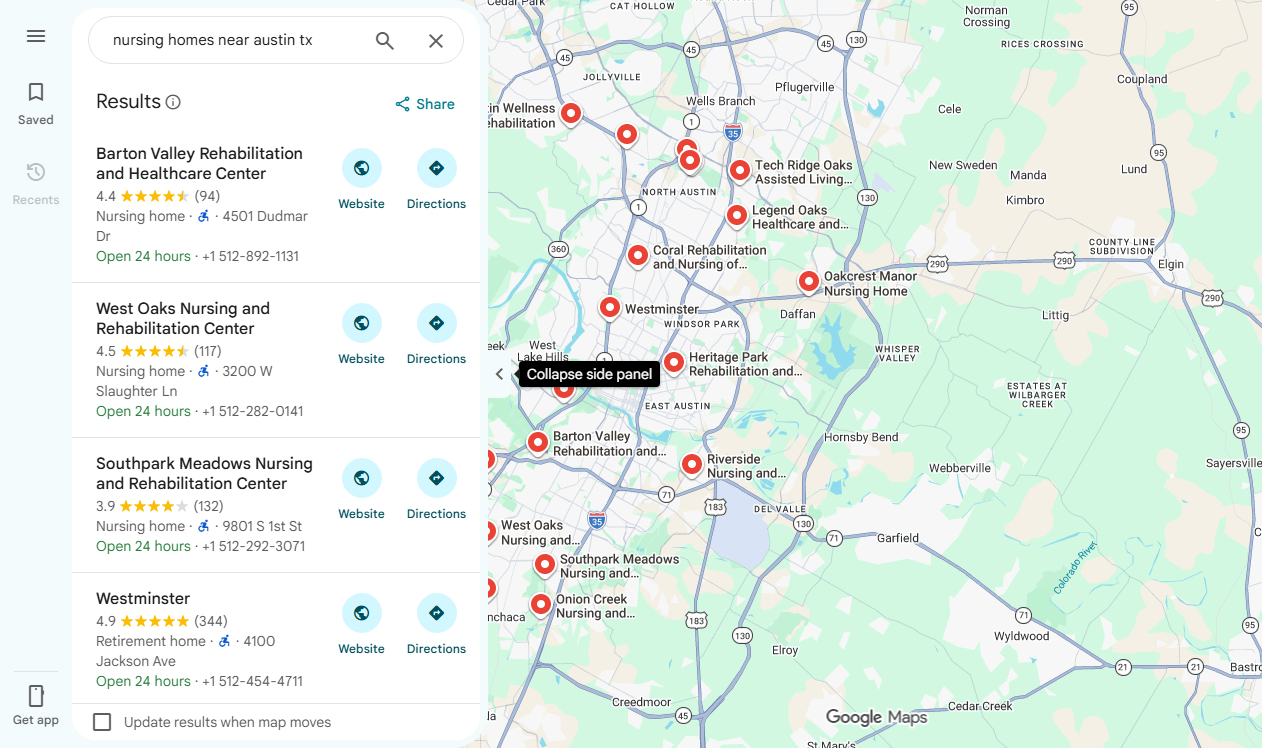
Photos matter more here than most categories too. Families evaluating a nursing home are, consciously or not, looking for signs of how residents actually live day to day — common areas, dining rooms, outdoor space, activity boards — not just a lobby shot. A profile with real, current photos and a complete list of the specific services offered (rehabilitation therapy, memory care wing, hospice partnership, short-term respite stays) does more to earn a click than a well-optimized website ever will on its own.
Facility Pages vs. Location Pages: Not the Same Thing
Operators running more than one facility often default to the pattern used by other local-service businesses: one page per city or location, each lightly reworded. That pattern does not fit nursing home operators well, because the thing a family is comparing is not really "which city" but "which specific building, with which specific staff, license status, and available beds." A facility page needs to stand almost entirely on its own: its own address and phone number tied to its own Google Business Profile, its own licensing and Medicare/Medicaid certification status, its own levels of care, and ideally photos and staff information specific to that building rather than shared corporate stock imagery.
A thin location page that exists mainly to catch a city name in the URL, without any of that facility-specific substance, is exactly the kind of near-duplicate page pattern that tends to cannibalize rankings across an operator's own portfolio rather than helping any single facility win its local pack.
Matching What Families Can Verify Elsewhere
Families researching a nursing home today are not relying on the facility's own marketing alone. Medicare's own Care Compare tool lets anyone look up a Medicare-certified nursing home's inspection history, staffing levels, and quality ratings directly, and it is one of the first things a careful adult child or discharge planner checks alongside a Google search. This creates a genuinely different SEO consideration than in most industries: a facility's own website content should be consistent with, not contradicted by, what a visitor can independently verify on Care Compare. A site that oversells amenities while ignoring recent survey findings a family can look up in two minutes erodes trust in a way that shows up as bounced visits and abandoned inquiries rather than a Google penalty, but the practical effect on conversions is the same.
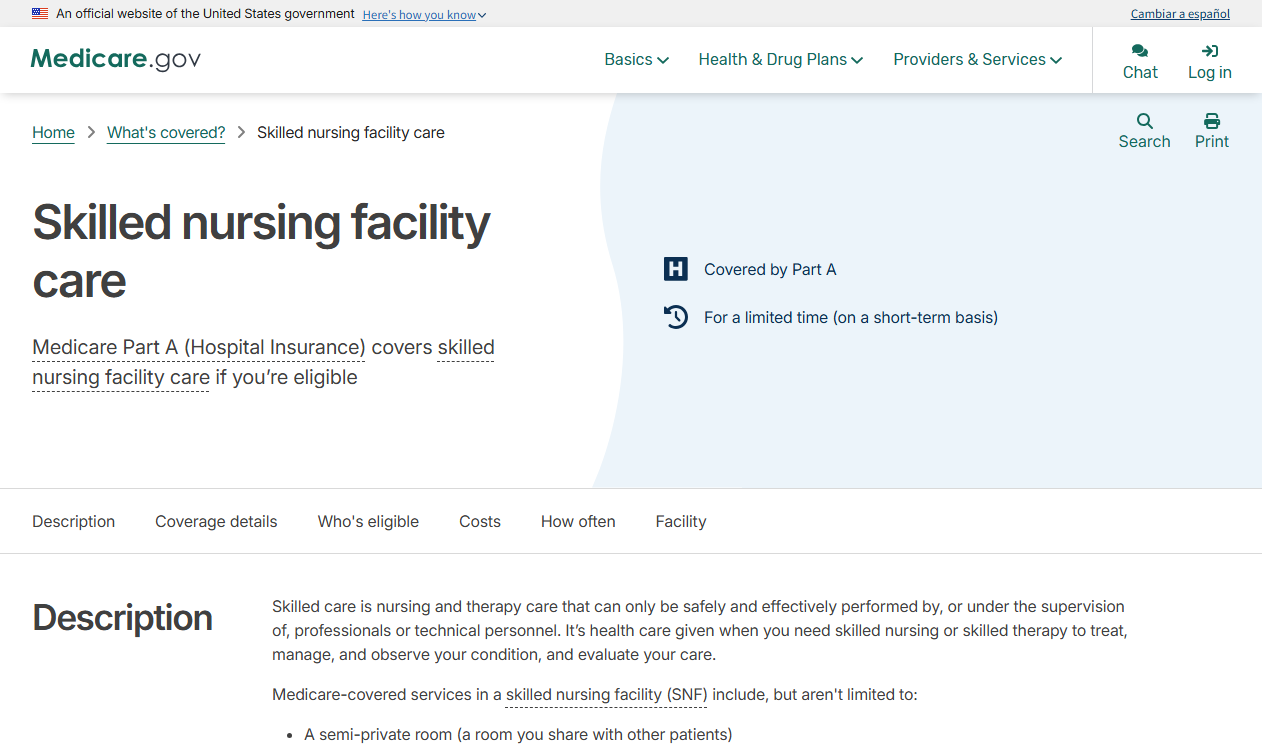
The useful response is not to hide from that information but to build content around it honestly — pages that explain what levels of care actually mean in practice, what a recent survey citation was and what has changed since, and what questions families should ask on a tour. That kind of transparent, specific content also tends to be exactly what performs well in a YMYL (health-adjacent) category where Google's own quality guidance rewards demonstrated expertise and honesty over polished but vague marketing language.
Privacy and Marketing Rules Specific to Senior Care
Because nursing homes handle protected health information, marketing content needs more care than a typical local business. Testimonials or case examples that describe a specific resident's medical condition, treatment, or recovery — even with a first name changed — can cross into protected health information if identifying details remain, and any photo or video of a resident used in marketing generally needs documented consent, not just a verbal okay from a family member in the hallway. Advertising rules for senior-care facilities also vary meaningfully by state, and some states restrict specific claims a facility can make (about cure rates, safety records, or comparisons to other facilities). None of this should be treated as legal guidance here — a facility's own compliance officer or licensing board is the right place to confirm what is and is not permitted in a given state, and any content team working on this vertical should build a simple sign-off step into the process rather than publishing family testimonials or resident photos without one.
Content That Answers the Admissions Question Directly
Beyond the homepage, the pages that tend to actually convert are narrow and specific: a dedicated page on the admissions process and what documents are needed, a page addressing Medicaid spend-down and how the facility handles the transition from private pay, a page on short-term rehabilitation stays for someone recovering from surgery who is not looking for permanent placement, and a page on memory care that speaks directly to the different, often more urgent, emotional state of a family dealing with a dementia diagnosis. Each of these is a genuinely different search intent from a generic "nursing home near me" query, and each deserves its own page rather than a single paragraph buried on a general services page.
Senior Living SEO for Multi-Facility Groups
Operators managing several facilities under one brand face a structural choice that single-location competitors do not: how much to centralize. A shared corporate blog covering general senior-care topics (how to talk to a parent about assisted living, what Medicare does and does not cover) can perform well and support every location at once, while facility-specific pages need to stay genuinely distinct rather than templated. Structured data matters more here too — marking up each facility as its own LocalBusiness entity, with its own address, phone number, and hours, helps Google (and families) tell the locations apart instead of treating a multi-facility group as one blurred entity.
DIY or Hire: What Actually Requires Outside Help
A single facility with an engaged administrator can reasonably keep the Google Business Profile current, respond to reviews, and make sure basic facility information is accurate without outside help. Where it gets harder to do in-house is the structural work — separating facility pages properly, building out admissions and Medicaid-specific content that meets the accuracy bar this category needs, and the technical setup for a multi-location group. If the facility is weighing whether that work is worth bringing in outside help for, the general trade-offs in our SEO agency vs. freelancer guide apply here too, with the caveat that healthcare-adjacent experience matters more in this category than in most. Getting the underlying site structure and keyword targeting right first, through technical SEO and a proper keyword research pass across levels of care, tends to matter more for this vertical than for most local-service categories, simply because the wrong page structure actively works against families trying to compare facilities.
Measuring Whether It Is Working
The metric that matters is inquiries that turn into completed tours and admissions, tracked separately by level of care, not overall website traffic. A facility ranking well for "nursing home near me" but sending every click to a generic homepage with no clear next step for a family under time pressure is not converting that visibility into filled beds. Simple, direct calls to action — a phone number answered by a real person, a short admissions inquiry form, clear same-day tour availability — tend to matter more in this category than in almost any other, because so many of the searches behind them are genuinely time-sensitive.
What does a nursing homes SEO company actually do differently from general local SEO?
The core local SEO mechanics are similar, but the content, privacy handling, and page structure need to reflect the health-adjacent, often urgent nature of the search — accurate levels of care, admissions information, and consistency with what families can verify on Medicare's own tools.
Should each nursing home location have its own website?
Not necessarily its own domain, but each facility needs its own genuinely distinct page with its own address, phone number, licensing status, and levels of care — not a lightly reworded copy of another location's page.
Does a bad Medicare Care Compare rating hurt SEO?
Not directly as a ranking factor, but it affects conversions, since families increasingly check it alongside a Google search. Content that is honest about what a rating reflects and what has changed tends to build more trust than content that ignores it.
Can a nursing home use resident testimonials in marketing?
Only with proper documented consent, and testimonials need to avoid disclosing identifiable health information. This varies by state and situation, so check with the facility's compliance officer or licensing board before publishing.
How important are Google reviews for nursing homes?
Very important, since choosing a facility is a high-trust decision made under stress. Recent, specific reviews mentioning staff responsiveness and day-to-day care quality carry more weight with families than a large but stale review count.
What is the highest-priority fix for most facility websites?
Making levels of care, admissions process, and current availability immediately clear on the page a discharge planner or family member lands on — many facility websites bury this information behind generic marketing copy.
Does senior living SEO differ from nursing home SEO?
Independent and assisted living searches tend to be less urgent and more comparison-driven than skilled nursing searches, so content can lean more into lifestyle and amenities, but the same accuracy and Google Business Profile category discipline still apply.
Sources: Medicare Care Compare, Google's guidance on choosing a Business Profile category.
Nursing home and senior living sites have a narrower margin for error than most local categories — the wrong category, a thin location page, or a testimonial that should not have run can each cost more than a missed ranking. Contomatix offers a free audit if you want a second opinion on where a facility's site currently stands.
Get a free audit →