Most SEO problems have an obvious cause: a missing meta tag, a slow page, a thin content section. A forensic SEO consultant gets called in for the other kind of problem — traffic dropped 40% over a weekend, nobody changed anything on the site, and the usual checklist doesn't explain it. That's a genuinely different skill set from routine SEO work, closer to investigation than optimization, and it's worth understanding when it's actually needed versus when a standard audit will do.
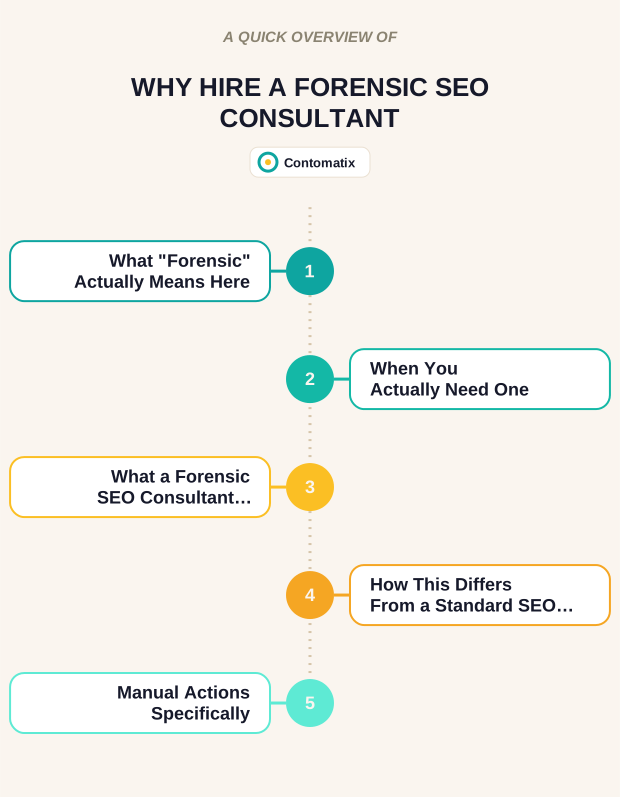
What "Forensic" Actually Means Here
A regular SEO audit checks a site against a known set of best practices and flags what's missing. Forensic SEO starts from the opposite direction: something measurable happened — a ranking collapse, a manual action, a sudden spike in 404s — and the job is to reconstruct exactly what caused it, using evidence rather than a generic checklist. That means correlating dates precisely: when did traffic actually drop, what changed on the site or in Google's algorithm in that exact window, and what does server-level data show that the site's own analytics might be hiding.
When You Actually Need One
A handful of situations genuinely call for forensic-level investigation rather than a standard audit. A sudden, unexplained traffic or ranking drop with no corresponding site change is the most common trigger. A manual action notice in Google Search Console — unnatural links, thin content, or a security issue — needs someone who can trace exactly which pages or links caused it, not just remove the notice and hope. Inheriting a site from a previous agency whose work can't be fully accounted for is another common case, especially if that agency's practices are unclear or its contract has ended acrimoniously. And outright negative SEO — a competitor building spammy links to your site to trigger a penalty — requires forensic link analysis to prove and disavow correctly.
What a Forensic SEO Consultant Actually Does
The work looks different from a typical audit in a few specific ways. Server log file analysis shows exactly how Googlebot is crawling the site — not what Analytics reports, but what actually happened at the server level, which frequently reveals crawl budget waste, blocked resources, or bot behavior that dashboard tools never surface. Historical comparison using tools like the Wayback Machine and archived Search Console data reconstructs what the site actually looked like before and after the change in question, rather than relying on memory or incomplete records.
Backlink profile forensics goes well beyond a standard link audit — it means dating when specific links were acquired, cross-referencing that timing against ranking changes, and distinguishing between links that were always there versus a sudden spike that correlates with a penalty. And algorithm update correlation means checking the exact dates of the traffic change against Google's documented core update rollout windows, rather than assuming coincidence.
How This Differs From a Standard SEO Audit
A standard audit is proactive and checklist-driven: are titles unique, is the site fast, is content thin anywhere. A forensic investigation is reactive and evidence-driven: something specific happened, and the job is proving what and why with data that would hold up to scrutiny, not just an educated guess. The output is different too — a forensic report reads more like an incident report, with a timeline, evidence, and a root-cause conclusion, rather than a prioritized list of general improvements.
Manual Actions Specifically
A Google Search Console manual action is one of the clearest cases where forensic work matters. The notice itself is often vague — "unnatural links to your site" doesn't say which links. Properly resolving one means identifying the actual problematic links or content, removing or disavowing what's genuinely toxic (not everything indiscriminately, which can do more harm than good), and submitting a reconsideration request with specific evidence of what was found and fixed. A reconsideration request that doesn't demonstrate real investigative work is far more likely to be rejected.
Negative SEO and Proving It
Negative SEO — a competitor deliberately building spammy or toxic backlinks to trigger a penalty against a rival — is real but frequently over-diagnosed; plenty of sites blame negative SEO for what's actually an internal problem or a normal algorithm update casualty. A forensic consultant's job here is to genuinely distinguish the two: dating the suspicious links, checking whether they follow patterns consistent with a coordinated attack versus organic spam that accumulates on any site over time, and only recommending a disavow file where the evidence actually supports it.
What to Look for When Hiring One
The clearest differentiator from a regular SEO freelancer or agency is direct experience with log file analysis and Search Console's raw data exports, not just dashboard-level reporting tools. Ask for an example of a past investigation — not the fix that followed, but the process of identifying the actual cause. Anyone who promises a diagnosis before looking at server logs and historical data is guessing, not investigating. A genuine forensic engagement usually starts with a defined, paid diagnostic phase before any fix work begins, precisely because the cause has to be established first.
What a Forensic SEO Report Should Include
A proper report documents a clear timeline of the traffic or ranking change, the specific evidence examined (log files, link data, content change history, algorithm update dates), the root cause identified with supporting evidence rather than assumption, and a specific remediation plan tied directly to that cause. If a report just restates generic SEO best practices without connecting them to the specific incident under investigation, it isn't actually forensic work.
What This Costs and How Long It Takes
Forensic SEO work is typically priced as a defined diagnostic engagement rather than an ongoing monthly retainer, since the scope is investigation rather than continuous optimization — often in the range of a few thousand dollars for a thorough investigation, depending on site size and how much historical data needs reconstructing. The investigation itself usually takes one to three weeks; the remediation that follows, especially for manual action recovery, can take significantly longer since Google's own review process adds its own timeline on top of the fix.
Is It Worth It?
For a genuine unexplained traffic crash, a manual action, or a suspicious link profile, hiring someone who actually investigates rather than guesses is usually far cheaper than months of trial-and-error fixes that don't address the real cause. For routine SEO maintenance and improvement, standard ongoing SEO work is the right tool — forensic investigation is specifically for the moments when something has clearly gone wrong and the cause isn't obvious from the usual checklist.
What is a forensic SEO consultant?
Someone who investigates why a specific thing went wrong — a traffic collapse, a manual action, a suspicious link profile — using evidence like server logs and historical data, rather than auditing a site against a generic best-practice checklist.
When do I need forensic SEO instead of a normal audit?
When something measurable has happened and the cause is not obvious: an unexplained ranking drop with no site changes, a Search Console manual action, an inherited site from an agency whose work you cannot account for, or suspected negative SEO.
What does a forensic SEO investigation actually involve?
Server log file analysis to see how Googlebot really crawls the site, historical reconstruction via archived pages and Search Console data, dating backlinks against ranking changes, and correlating the drop with documented Google update windows.
How much does forensic SEO cost?
It is usually priced as a defined diagnostic engagement rather than a monthly retainer, often a few thousand dollars depending on site size and how much historical data has to be reconstructed.
How long does it take?
The investigation itself typically takes one to three weeks. Remediation takes longer, especially for manual action recovery, since Google's own reconsideration review adds its own timeline on top of the fix.
Can a forensic consultant fix a manual action?
They can identify what actually caused it and build the evidence for a reconsideration request. A request that does not demonstrate real investigative work — showing what was found, removed or disavowed and why — is far more likely to be rejected.
Is negative SEO real, or usually a misdiagnosis?
Both. It genuinely happens, but it is frequently blamed for what is actually an internal problem or a normal algorithm update. Proper forensic work distinguishes coordinated attack patterns from the ordinary spam links any site accumulates.
How do I choose a forensic SEO consultant?
Look for direct experience with log file analysis and raw Search Console exports, not just dashboard reporting. Anyone who offers a diagnosis before looking at server logs and historical data is guessing rather than investigating.
Related Reading
- For a market-specific application of a clean SEO foundation, see our guide to search engine optimization in Grand Island.
Contomatix handles both ends of this — ongoing SEO strategy for the day-to-day, and forensic-style investigation when something's gone wrong and the cause isn't obvious. Want a second opinion on an unexplained traffic drop or a manual action notice?
Get a free audit →