Last updated: October 2026
Buying answer engine optimization services is harder than buying ordinary SEO, for a simple reason: the label is new, the deliverables are not standardized, and plenty of providers have simply renamed their existing package. Two agencies can both sell "AEO" and hand you completely different work. One audits your content and fixes real problems. The other sends a monthly PDF of screenshots and a promise that AI tools are "noticing" you.
This guide is for the person holding the proposal. It explains what the service should include, how it differs from the SEO you may already be paying for, what a sensible deliverables list looks like, how pricing models work, which promises no honest provider can make, and the questions that separate the useful from the decorative. If you first need the concept itself, our answer engine optimization guide covers what AEO is and how answer engines pick sources. Here we stay on the buying side.
What Answer Engine Optimization Services Actually Cover
An answer engine is any system that responds to a question with a written answer instead of a list of ten links: Google's AI Overviews and AI Mode, chat assistants that search the web, and the answer boxes inside other search products. Optimizing for them means making your pages easy to find, easy to understand and worth citing when one of those systems builds a response.
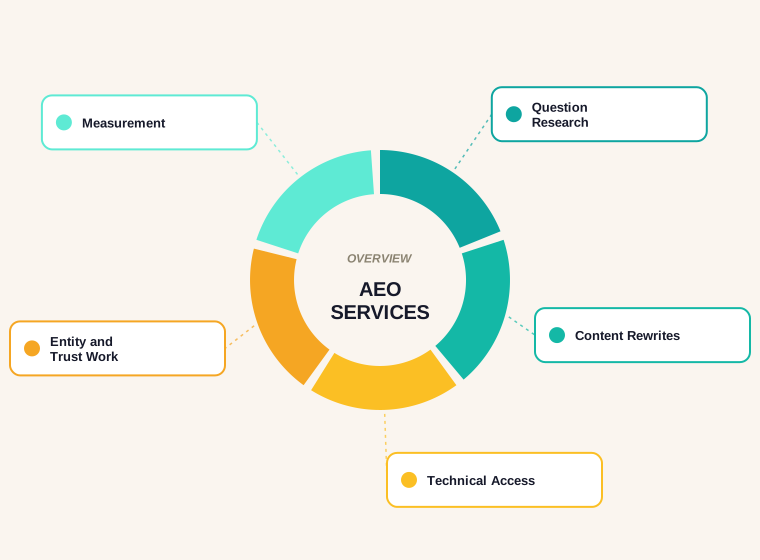
In practice, a competent service breaks down into five pieces of work:
- Question and prompt research. Finding the questions your buyers actually ask, including the long, conversational ones, and mapping which of them your site answers today.
- Content restructuring. Rewriting pages so each one answers a clear question near the top, then supports it with specifics. Not new pages for the sake of it.
- Technical access. Making sure crawlers can reach, render and index the pages you want used.
- Entity and trust work. Making it unambiguous who you are, what you do, and why you are a credible source: author pages, consistent business details, real references.
- Measurement. Tracking whether you are being cited or mentioned, and whether that turns into visits and enquiries.
If a proposal contains none of these, or buries them under vague phrases like "AI alignment," ask for the specific tasks behind each line.
How It Differs From the SEO You Already Buy
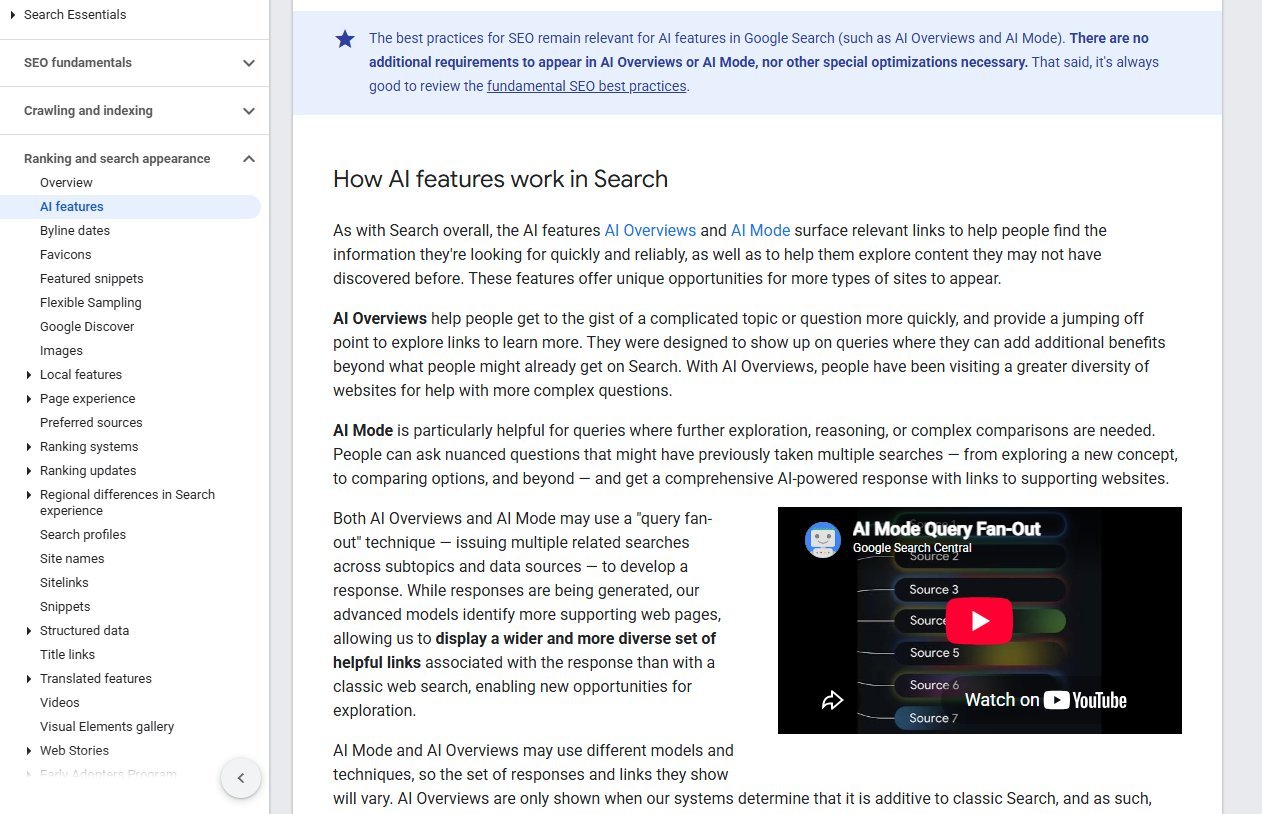
Here is the uncomfortable truth that should shape every conversation with a provider: Google says there is no separate checklist. Its documentation on AI features and your website states plainly that "there are no additional requirements to appear in AI Overviews or AI Mode, nor other special optimizations necessary." Pages need to be indexed and eligible to show with a snippet, and the usual good practice applies.
That does not make AEO a scam. It means the service is mostly SEO fundamentals applied with a different goal and a different lens, and the value lies in how well they are applied. The differences that are real:
- The unit of success changes. Classic SEO is judged by rankings and clicks. AEO adds being cited, quoted or recommended inside an answer, which may or may not produce a click.
- Questions replace keywords. The research starts from full questions and the subtopics around them, not a list of head terms.
- Content is judged in pieces. A system assembling an answer lifts a passage, so each section has to make sense on its own.
- Breadth matters more. Google notes that AI features may use a "query fan-out" technique, running several related searches across subtopics. A page that covers the neighboring questions has more ways to be picked up.
For the broader family of terms, see our explainer on generative engine optimization; the labels overlap heavily, and a provider who treats them as three different products is usually trying to sell you three invoices.
The Deliverables a Good Proposal Should List
Ask for deliverables in nouns, not adjectives. "Optimization" is not a deliverable. These are:
- A baseline audit. Which of your pages are indexed and snippet-eligible, which answer a clear question, and where the gaps are, with a prioritized list.
- A question map. The questions in your market grouped by topic and buying stage, matched to existing pages or flagged as missing.
- Page-level rewrite briefs or finished rewrites. Specific pages, specific changes, with the reasoning for each.
- Technical fixes. Crawl access, rendering, internal linking and structured data that matches visible content, listed as tickets you can verify.
- Entity and credibility work. Author bios, about and contact pages, and consistent profiles across the web.
- A tracking setup. A fixed set of questions checked on a schedule, a record of what was cited, and your own analytics tied to enquiries.
- A plain-language report. What changed, what happened, and what comes next. Not a wall of charts.
Compare this list against the proposal line by line. Every item you cannot find is either missing or hidden inside a price you cannot see into.
What Nobody Can Honestly Promise
Answer engines are not a single system with a known rulebook. They differ from each other, they change, and their responses vary from one run to the next. That has direct consequences for what a provider can say.
- A guaranteed citation or position. Google's own SEO starter guide says, "There are no secrets here that'll automatically rank your site first in Google." The same logic covers answer engines, only more so.
- Special markup that unlocks AI visibility. Google's documentation says you do not need new machine-readable files, AI text files or special markup to appear in its AI features, and that there is no special schema.org data to add. A provider selling a secret file or schema trick for Google's AI features is selling something Google has said it does not require.
- Fixed timelines. The same starter guide notes that changes can take a few hours or several months to show. Any promise of results in a set number of weeks is a sales line.
- Stable results. A citation you see today may not be there next week, which is why measurement needs repeated checks rather than a single screenshot.
What an honest provider can promise is process: the work they will do, the standards it meets, how they will measure it, and when they will report. That is a smaller promise and a far more useful one.
Red Flags in Pitches and Proposals
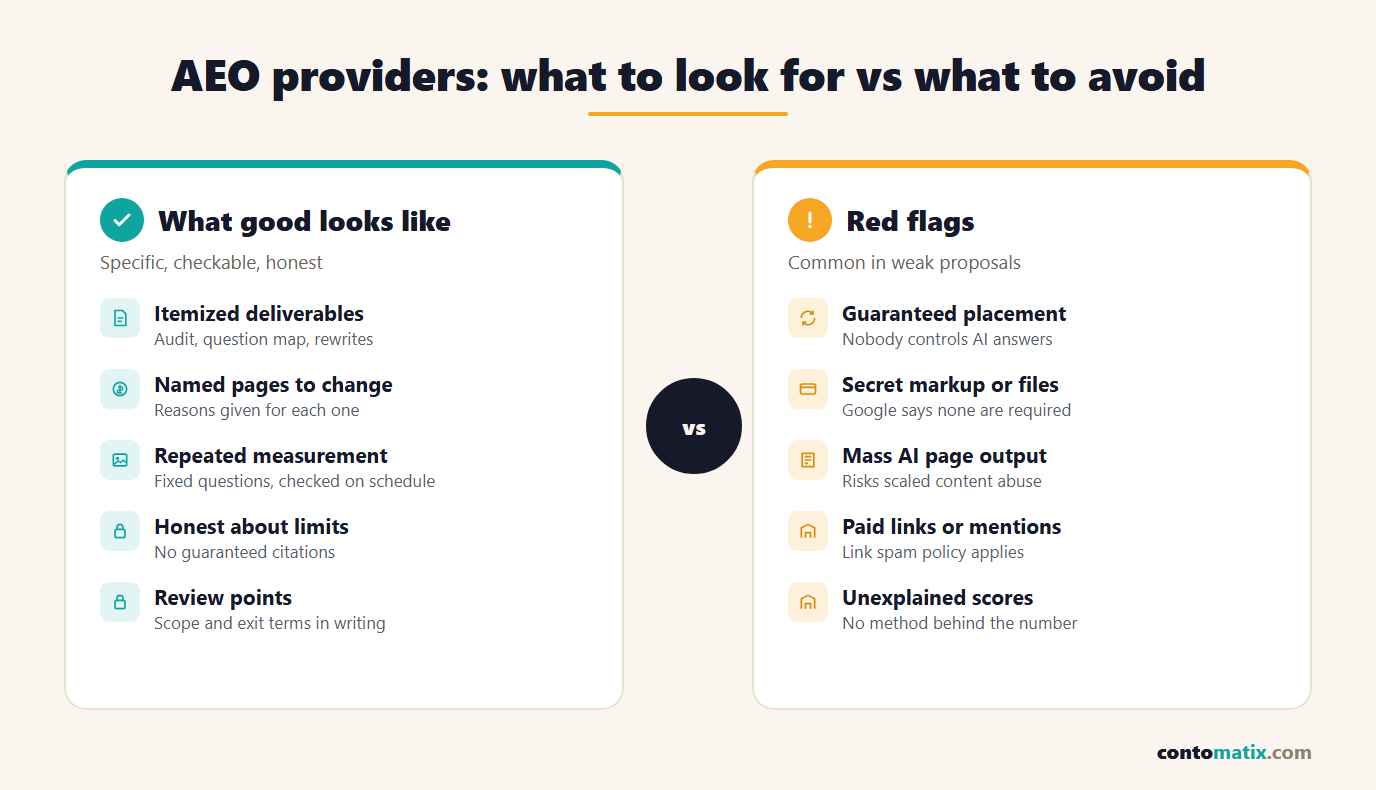
Most bad AEO pitches share a handful of tells. Treat each as a reason to ask harder questions rather than an automatic no.
- Guaranteed placement. See above. It cannot be delivered, so the contract is probably written to make it unfalsifiable.
- Proprietary scoring with no explanation. A "visibility score" is only as good as the method behind it. Ask what is measured, how often and on which questions.
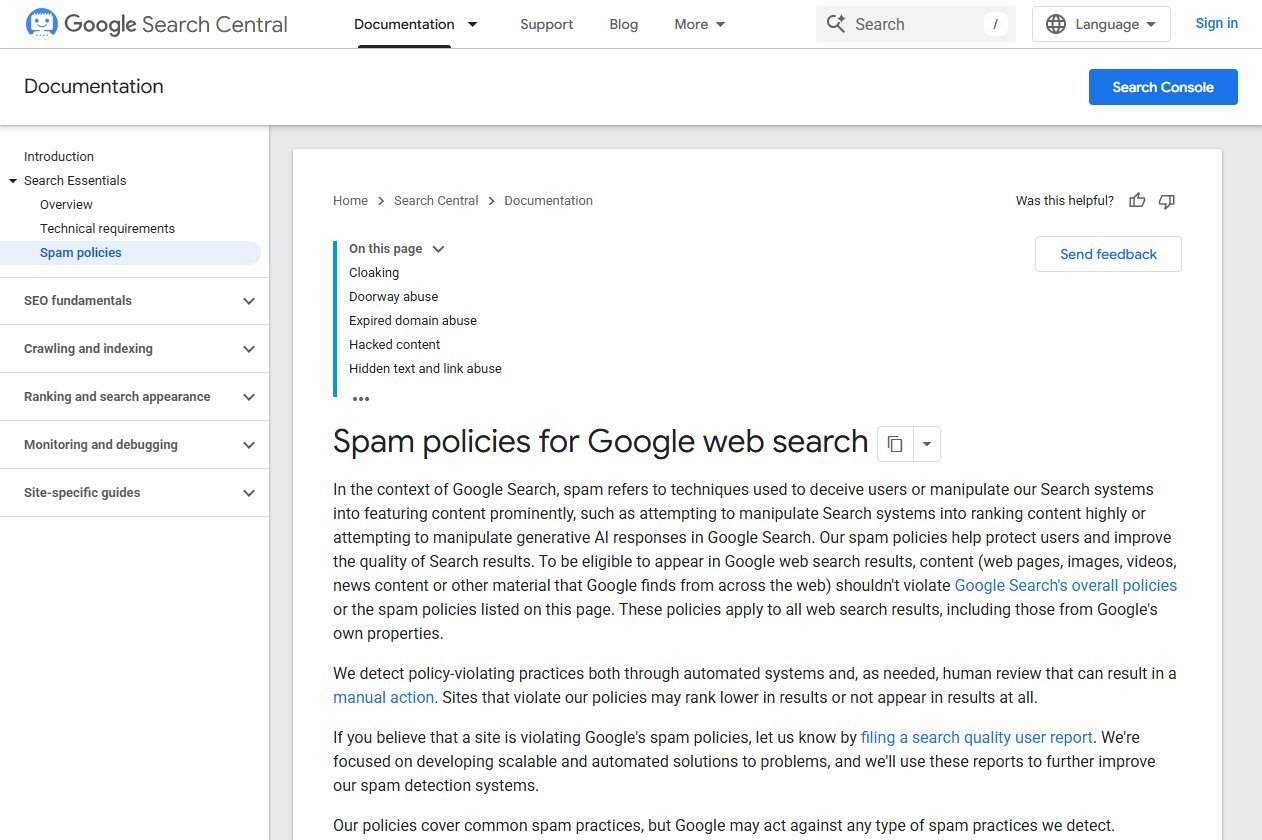
- Mass-produced content. Google's spam policies list "using generative AI tools or other similar tools to generate many pages without adding value for users" as scaled content abuse. A plan that centers on publishing hundreds of near-identical pages invites exactly that risk.
- Paid mentions and link schemes. The same policies prohibit buying or selling links for ranking purposes. Paying for placement on third-party sites in order to be "picked up" by AI tools is a gamble with your search visibility.
- Prompt manipulation. Google's spam policy defines spam as including attempts to manipulate generative AI responses in Google Search. Hidden text or tricks aimed at models can backfire.
- No access to the work. If you cannot see the pages changed, the tickets filed and the questions tracked, you cannot judge whether anything happened.
- A long lock-in with no exit. New fields change quickly. Twelve months of prepaid work with no review points is hard to justify.
The pattern behind most of these is the same: a shortcut offered to someone who is worried about falling behind. The fundamentals are slower and a good deal safer.
Pricing Models You Will See
There is no standard rate card, and quoting specific numbers here would only mislead, since prices vary with market, site size and scope. What you can reliably learn is the model, because each one shifts risk differently.
- Monthly retainer. A fixed fee for an agreed scope of ongoing work. It suits sites that need steady content and monitoring. Check that the scope is written down and that hours or output are defined.
- Project fee. A one-off price for an audit, a rewrite of a set of pages, or a technical cleanup. Good for a first engagement because the result is a finished thing you own.
- Hourly or day-rate consulting. Useful when you have an in-house team that needs direction and review rather than production.
- Performance-based fees. Common in sales pitches and rarely sensible here. Because nobody controls citations, a fee tied to them either pays for noise or pushes the provider toward the risky tactics above.
Whichever model is on the table, ask what happens at month three if nothing measurable has moved. A confident, specific answer about diagnosis and next steps is worth more than a discount.
Questions to Ask Before You Sign
- Which of my pages would you change first, and why?
- How do you tell whether a page is indexed and eligible to appear with a snippet?
- How do you measure citations, how often, and across which questions?
- What do you do when your own findings show AEO is not the bottleneck and basic SEO is?
- How do you avoid publishing thin or repetitive pages at scale?
- Who writes and who reviews the content, and how are facts checked?
- What will I be able to see and own at the end of each month?
- How do you connect all of this to enquiries or sales, not only to mentions?
Pay attention to how the answers are given. Specific, qualified answers that admit uncertainty are a better sign than polished certainty.
Measuring Whether It Is Working
Measurement is the weakest spot in this whole field, so it deserves its own agreement. Google states that traffic from AI features is included in overall search traffic in Search Console and appears under the Web search type, which means there is no dedicated AI-only number to hand you. Anyone presenting one for Google should explain where it comes from.
A workable approach combines three sources: Search Console for impressions, clicks and queries on the pages that were changed; your own analytics for referrals and conversions; and a fixed list of target questions checked by hand or by tool on a regular schedule, with the date and the result recorded. Expect variation. Treat movement across a month or more as signal, and a single good or bad result as noise.
Also agree what counts as success before work begins. For a local service business it might be more enquiries mentioning an answer or an assistant. For a software company it might be inclusion in comparison-style answers. Without that definition, any report can be spun.
Before You Hire, Fix These First
Paying for answer engine optimization services on top of a shaky site is a common and avoidable waste. Run through this checklist, ideally with your current SEO provider or in-house team, before you commission anything new:
- Confirm your important pages are indexed and are not blocked by robots.txt or a noindex tag.
- Check that key content is present as text on the page, not locked inside images or scripts.
- Make sure your pages are reachable through internal links, not orphaned.
- Give each priority page a clear question it answers, and put a direct answer near the top.
- Add or improve author details and an accurate about and contact page.
- Make sure any structured data matches what is visibly on the page.
- Keep business listings, such as your Business Profile, current and consistent.
- Pick five to ten target questions and record where you stand today as a baseline.
Several of these are straight from Google's own list of best practices for AI features. You may find you already have most of the value available for free, and the provider's job is smaller than the pitch suggests. That is a good outcome, not a bad one.
Quick Recap
- AEO services are mostly strong SEO fundamentals applied to questions, passages and citations, with a different measure of success.
- Google says there are no additional requirements or special optimizations for its AI features, and no special markup or files are needed.
- Demand deliverables as nouns: audit, question map, page rewrites, technical fixes, entity work, tracking, report.
- No one can honestly guarantee citations, positions, timelines or stable results.
- Be wary of mass content, paid links, prompt tricks, secret scores and performance-based fees.
- Choose a pricing model by how it shares risk, and agree on measurement and success before you start.
Where to Go From Here
If you are still deciding what to optimize for, the two guides linked above, on AEO fundamentals and generative engine optimization, will help you judge a proposal against the concepts. When you are ready to talk to providers, the same standard applies to everyone, including us at Contomatix, where AI SEO services are one part of what we do: ask for the work in writing, ask how it will be measured, and walk away from anyone who promises what Google itself says cannot be promised. Good answer engine optimization services should leave you better informed, not more dependent.
Frequently Asked Questions
What are answer engine optimization services?
They are services that help your content get found, understood and cited when search tools and AI assistants answer questions directly. The work usually covers question research, content restructuring, technical access, trust signals and measurement.
Is AEO different from SEO?
Mostly in focus, not in foundation. Google says no extra requirements or special optimizations are needed for its AI features, so strong SEO is the base. AEO adds attention to questions, self-contained passages and citations as a measure of success.
Do I need special schema or an AI text file for AEO?
For Google's AI features, no. Its documentation says you do not need new machine-readable files, AI text files, or special markup, and there is no special schema.org data required. Structured data that matches visible content is still fine.
Can a provider guarantee my brand will appear in AI answers?
No. Answer engines vary and change, and responses differ between runs. Google itself says there are no secrets that automatically rank a site first. Treat any guarantee as a red flag.
How long does AEO take to show results?
It depends on your site and market. Google notes that changes can take from a few hours to several months to be reflected. Judge progress over a month or more, using repeated checks rather than one snapshot.
How much do answer engine optimization services cost?
There is no standard price. Cost depends on site size, competition and scope. Ask for a written scope and compare retainer, project and consulting models by what you receive, not by headline fee.
Should I pay on a performance basis?
Usually not. Nobody controls citations in answer engines, so a fee tied to them tends to reward noise or push the provider toward risky tactics such as paid links.
Is mass AI content a good AEO tactic?
No. Google's spam policies treat generating many pages without adding value for users as scaled content abuse. Fewer, better, accurate pages are safer and tend to perform better.
How do I measure AEO results for Google?
Google includes AI feature traffic in overall Search Console data under the Web search type. Combine that with your analytics and a fixed list of target questions checked on a schedule.
Do I need an agency, or can I do AEO myself?
Many fundamentals, such as indexing, clear answers, author details and accurate listings, can be handled in-house. Hire help when you lack the time or skills, and start with a defined project such as an audit.